DbcultAccessing Vault...
5.9/10
Senior Film Conservator
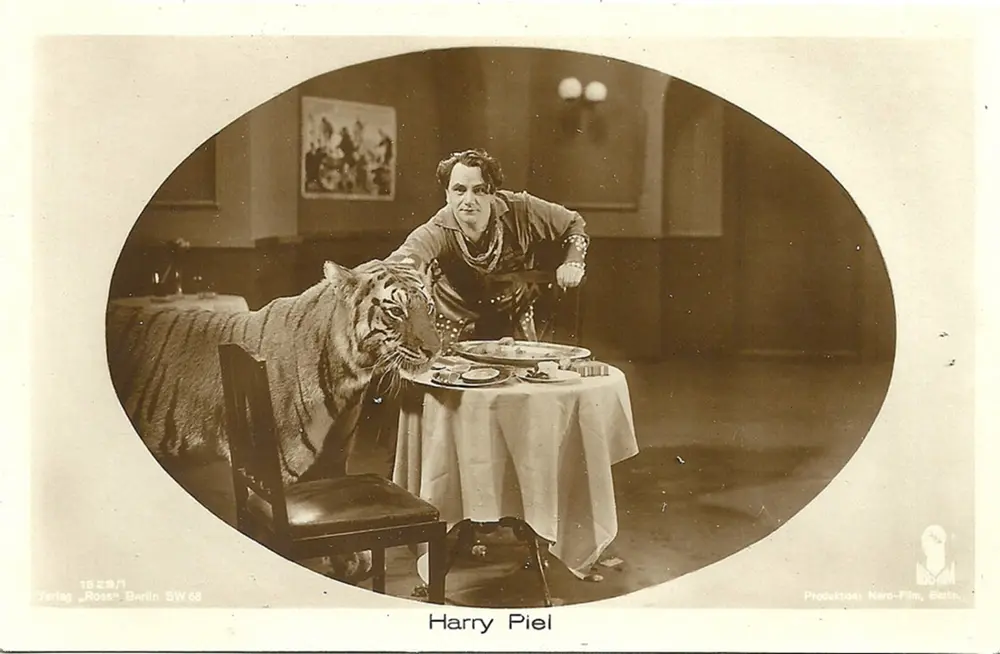
A definitive 5.9/10 rating for a film that redefined the boundaries of cult cinema. Was ist los im Zirkus Beely? remains a cornerstone of transgressive art.
Is 'Was ist los im Zirkus Beely?' a film worth tracking down in the vast archives of silent cinema? Short answer: yes, but with significant caveats that demand a particular kind of viewer. This early German thriller is a fascinating, if sometimes frustrating, artifact best suited for dedicated cinephiles and enthusiasts of early cinematic detective work, decidedly not for casual viewers expecting modern pacing or narrative sophistication. It’s a work that asks for patience, rewarding those who are willing to engage with its historical context and appreciate its raw, pioneering spirit.
This film works because of its bold central premise, the atmospheric setting of a circus, and the magnetic, physical presence of its star, Harry Piel. It successfully leverages the inherent theatricality of the big top to create an unsettling backdrop for its central mystery, even when the narrative falters. The sheer ambition of crafting a suspenseful story with the nascent tools of silent film is commendable, and Piel’s dynamic performance provides a much-needed anchor, drawing the eye even when the plot wavers. The film's commitment to its unique location truly elevates it beyond a generic crime drama.
This film fails because its narrative coherence often buckles under the weight of its own ambition and the limitations of its era's storytelling conventions. Character motivations can be opaque, plot points occasionally feel arbitrary, and the reliance on broad gestures over nuanced development can test the patience of even the most forgiving viewer. The exposition, while present, often struggles to convey complex ideas without the aid of spoken dialogue, leading to moments of confusion that modern audiences might find insurmountable.
You should watch it if you appreciate the raw, experimental energy of early cinema, enjoy piecing together a mystery from visual cues and broad performances, and have a particular fondness for German Expressionist influences, even if subtle. It's a journey into the foundational elements of genre filmmaking, offering insights into how cinematic language was first forged. Conversely, if you prefer brisk pacing, intricate plots with clear resolutions, or dialogue-driven character development, this may prove to be a challenging watch, more academic curiosity than gripping entertainment. It demands a viewer willing to meet it halfway.
The silent era, often romanticized for its grand melodramas and slapstick comedies, also birthed a vibrant tradition of thrillers and mysteries. 'Was ist los im Zirkus Beely?' stands as a fascinating, albeit imperfect, example of this genre’s early stirrings in Germany. Released at a time when cinema was rapidly evolving its narrative vocabulary, this film attempts to weave a complex web of intrigue within a highly theatrical setting. It’s a testament to the early filmmakers' eagerness to push boundaries, even without the benefit of synchronized sound.
The film’s title itself, roughly translating to 'What's going on in Beely's Circus?', immediately sets a tone of inquisitive suspense. It promises secrets, hidden dangers, and a world turned upside down beneath the big top. This promise is partially delivered, as the circus provides a rich tapestry for shadowy figures and unexpected twists, a far cry from the more conventional urban settings of many crime films of the period. The very nature of the circus – a transient community, a place of illusion and performance – lends itself naturally to a story steeped in deception.
The narrative hook of 'Was ist los im Zirkus Beely?' is undeniably compelling. Harry, played by the film's popular star Harry Piel, is anticipating a joyous reunion with an old friend returning from America. This anticipation, however, is brutally shattered when the friend is murdered before they can even meet. The only clue is a frantic, final phone call from the victim, placed from the Beely Circus – a property he had only just acquired. This single, desperate act transforms a celebratory return into a chilling crime scene, instantly raising the stakes for our protagonist.
From this tragic beginning, Harry is thrust into a world he likely never expected to inhabit: the enigmatic, often bizarre environment of the circus. He must piece together the fragmented clues left behind, navigating a community of performers, roustabouts, and animals, all of whom become potential witnesses or suspects. The plot, penned by Max Bauer, skillfully uses the circus setting not just as a backdrop, but as an integral element of the mystery. The inherent chaos and illusion of the big top reflect the tangled web of deceit Harry must untangle. The film excels in establishing this unique atmosphere, even if its subsequent unraveling of the mystery sometimes lacks the precision we now expect from the genre.
Harry Piel, a prominent figure in German cinema of the era, takes center stage, embodying the quintessential action hero long before the term was coined. Piel, often dubbed the 'German Douglas Fairbanks,' was known for performing his own stunts, and his physical prowess is evident throughout 'Was ist los im Zirkus Beely?'. His performance is less about subtle emotional nuance and more about dynamic presence and athletic capability. He moves with a purposeful intensity, whether he's scaling structures or confronting shadowy figures, bringing a raw, visceral energy to the screen that was groundbreaking for its time.
Piel's charisma, while undeniable, occasionally feels like a performance in search of a script that can fully harness it, rather than a character truly inhabiting his world. His Harry is determined, resourceful, and perpetually in motion, yet the internal struggles or deeper motivations behind his relentless pursuit are often left to the audience's imagination. This isn't necessarily a flaw, but a characteristic of silent-era acting, where broad strokes conveyed character. He is the archetypal hero, capable of navigating danger with a certain unflappable calm, making him a compelling focal point even when the plot itself might meander. His ability to command the screen without uttering a single word is a testament to his star power.
The direction, while certainly a product of its time, shows flashes of inventive staging. There are moments when the camera seems to almost dance with the performers, particularly during some of the circus acts, lending a dynamic energy to the spectacle. However, these are often interspersed with static, proscenium-arch-like compositions that remind us of film's theatrical roots. The cinematography, credited to a period where distinctions between director and cinematographer were often blurred, occasionally captures striking chiaroscuro effects, especially within the shadowy confines of the circus tents. A particular sequence involving a chase through the backstage labyrinth, though brief, demonstrates a nascent understanding of how to build tension through rapidly cut close-ups and dramatic angles – a technique that would be refined in later thrillers like The Brand of Satan. Yet, for every inspired shot, there are several that feel purely functional, serving only to convey information rather than evoke emotion or atmosphere. It’s a mixed bag, to be sure, but one that offers glimpses into the visual grammar of an emerging art form.
The use of light and shadow, while not as overtly Expressionistic as films like The Cabinet of Dr. Caligari, still contributes significantly to the film's mood. The flickering gaslights and deep shadows within the circus grounds effectively convey a sense of lurking danger and hidden truths. The director understands the inherent dramatic potential of the circus environment, framing shots to emphasize the scale of the big top or the confined intimacy of a backstage dressing room. This visual storytelling, despite its inconsistencies, is where the film truly shines, allowing the setting to become a character in itself.
While Harry Piel dominates the screen, the supporting cast, including Hanni Weisse, Ilona Karolewna, and Fritz Greiner, contribute significantly to the film's texture. Their performances, typical of the silent era, rely heavily on exaggerated facial expressions and broad physical gestures to convey emotion and intent. Hanni Weisse, in particular, often brings a necessary emotional counterpoint to Piel’s stoic hero, her reactions guiding the audience through moments of shock or fear. Ilona Karolewna's presence adds a touch of mystery, her character often shrouded in an enigmatic allure that enhances the film’s overall suspense.
However, the sheer size of the ensemble, combined with the limitations of silent film exposition, means that many characters remain thinly sketched. They serve primarily as plot devices or atmospheric elements rather than fully realized individuals. This isn't necessarily a fault of the actors, who perform admirably within the conventions of the time, but rather a structural challenge. The film utilizes the diverse types found in a circus — strongmen, acrobats, clowns — to populate its world, making the environment feel authentic, even if the individuals within it don't always leave a lasting impression beyond their archetypal roles. Their collective presence, however, successfully builds the unique, slightly off-kilter world of the Beely Circus.
The pacing of 'Was ist los im Zirkus Beely?' is, to put it mildly, inconsistent. It oscillates between moments of brisk action and stretches of more deliberate, almost languid, exposition. The opening, with the promise of reunion quickly turning to murder, sets an immediate, urgent tone. Yet, as Harry delves deeper into the investigation, the narrative rhythm can become somewhat erratic. This is a common characteristic of early silent films, where the conventions of editing for suspense were still being established, and the reliance on intertitles could disrupt the flow.
The tone, however, remains remarkably consistent: a blend of genuine suspense and a slightly unsettling, almost melancholic, atmosphere inherent to the circus setting. There's a persistent undercurrent of danger, punctuated by moments of lighthearted circus performance that serve as effective, if sometimes jarring, contrasts. The film manages to maintain a sense of unease throughout, ensuring that even when the plot feels a bit muddled, the overarching mood of mystery and potential peril remains intact. It’s a jittery journey, but one that largely keeps its emotional compass pointed towards suspense.
For the casual moviegoer, 'Was ist los im Zirkus Beely?' will likely prove a difficult watch. Its silent film conventions, including broad acting and reliance on intertitles, demand a different kind of engagement than modern cinema. The pacing can feel slow, and the plot, while intriguing, sometimes lacks the tight construction contemporary audiences expect.
However, for film historians, silent film enthusiasts, and those interested in the evolution of the thriller genre, it is absolutely worth seeking out. It offers a fascinating window into early German cinema, showcasing Harry Piel's unique star power and the ambitious use of an atmospheric setting. It's an important artifact, revealing how foundational cinematic storytelling was being forged in real-time. It works. But it’s flawed. Its historical value far outweighs its minor narrative shortcomings, making it a valuable, if niche, viewing experience.
One might expect a silent film set in a circus to lean heavily into overt melodrama or comedic slapstick. What's surprising about 'Was ist los im Zirkus Beely?' is its almost clinical detachment in certain moments, particularly surrounding the murder itself. There's a starkness to the violence that feels modern, even brutal, for its era, contrasting sharply with the often exaggerated emotional performances. This isn't a film that revels in the spectacle of suffering; it presents it as a blunt fact, a catalyst for the ensuing investigation, which I found genuinely unsettling and effective.
Furthermore, the film's greatest strength, paradoxically, might be its occasional narrative ambiguity. While frustrating for those seeking clear answers, this vagueness forces the viewer to engage actively, to interpret gestures and expressions, much like a detective piecing together fragmented clues. It's a stylistic choice, intentional or not, that grants the film a certain timelessness, inviting speculation long after the credits roll. Many contemporary critics would likely call this a flaw, but I argue it’s a strength, a testament to the power of suggestion in an era before explicit exposition became king. It encourages repeated viewings, a rare quality for a film of this vintage.
"The true star here isn't the mystery itself, but the palpable sense of a nascent film industry grappling with its own language, often stumbling, but always pushing forward, eager to tell bigger, bolder stories."
It’s also fascinating to observe how the film attempts to inject spectacle purely through physical action and set design, without the crutch of special effects we now take for granted. The real danger of a human performing stunts, or the sheer effort of managing large animals, feels more authentic than many CGI spectacles today. This reliance on practical, in-camera effects gives the film a grounded, if sometimes raw, authenticity that is often missing from modern blockbusters. It's a reminder of cinema's roots in vaudeville and live performance.
'Was ist los im Zirkus Beely?' is far from a perfect film, but its imperfections are part of its charm and historical value. It's a spirited, if sometimes muddled, attempt at a silent-era thriller, elevated significantly by its unique circus setting and the magnetic presence of Harry Piel. While its narrative often meanders, and the conventions of its time may require a specific kind of engagement, its ambition and flashes of visual brilliance make it a compelling watch for the right audience.
It's a film that asks you to adjust your expectations, to appreciate the nascent artistry of a medium still finding its voice. For those willing to make that adjustment, it offers a rewarding glimpse into the thrilling, experimental world of early German cinema. Don't approach it as a slick, modern mystery; instead, see it as a raw, energetic progenitor, a bold experiment in suspense that, despite its flaws, undeniably leaves its mark. It is a piece of cinematic history well worth preserving and experiencing.
IMDb 7.2
1923
Community
Log in to comment.