DbcultAccessing Vault...
6.3/10
Senior Film Conservator
A definitive 6.3/10 rating for a film that redefined the boundaries of cult cinema. Was She Justified? remains a cornerstone of transgressive art.
Was She Justified? is a film that lingers in the memory like a shadow cast by a flickering gaslight. Directed by Albert Varner, this 1920s silent drama unfolds with a deliberateness that mirrors the inner turmoil of its characters, each frame steeped in the somber hues of moral inquiry. The narrative, though rooted in the conventions of melodrama, transcends its genre through its unflinching examination of human fallibility and the societal pressures that shape individual choices.
Count Von Teyn, played with brooding intensity by Axel Mattsson, is a figure emblematic of a bygone aristocracy, his life tethered to the rigid expectations of nobility. His marriage to Lydia, portrayed with brittle fragility by Betty Nansen, begins as a fairytale romance but devolves into a collision of pride and insecurity. The inciting incident—the discovery of Lydia’s husband’s correspondence with Phoebe, a charismatic equestrienne—is not merely a plot device but a catalyst for exploring the corrosive nature of jealousy. Lydia’s reaction—a descent into emotional upheaval and social ostracization—is rendered with such visceral authenticity that one cannot help but question the boundaries between passion and possession.
The film’s second act pivots from domestic tension to physical and psychological devastation. The steeplechase sequence, a breathtaking interplay of motion and stillness, becomes a metaphor for the Count’s fate. Thrown from his horse during the King’s Cup race, his injuries mark a turning point: his body becomes a prison, his spirit a battleground for Lydia’s guilt. The decision to depict his paralysis with such clinical precision—through the consultations of specialists and the grim resignation of Lydia—elevates the narrative beyond a mere tragedy. It is a meditation on the inescapability of suffering and the paradoxical comfort of death as a release.
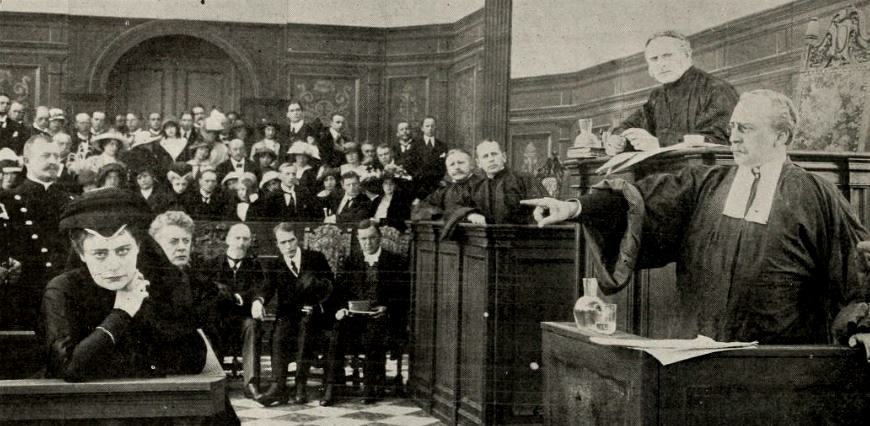
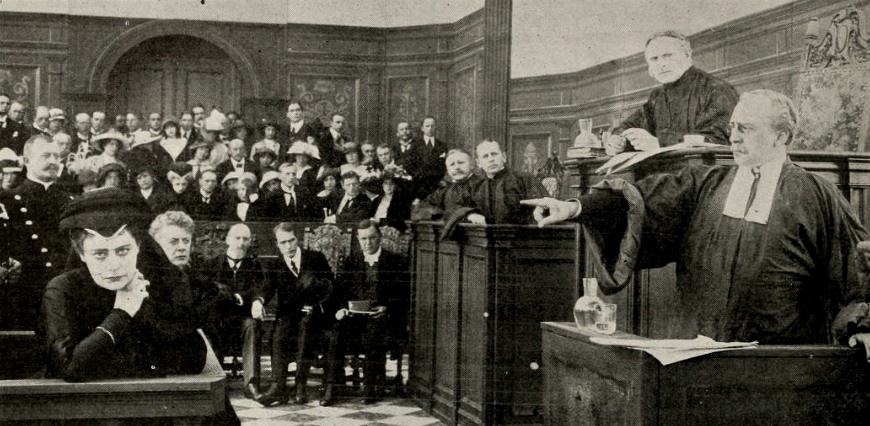
Lydia’s final act—granting her husband the means to end his life—is both a moment of catharsis and a moral precipice. The courtroom scene that follows is a masterclass in silent film storytelling. Without dialogue, the actors rely on micro-expressions and composed stillness to convey the weight of legal and ethical debate. Lydia’s acquittal, though legally justified, feels bittersweet; it underscores society’s tendency to absolve the guilty while condemning the vulnerable. This duality—wherein justice and mercy diverge—is what makes *Was She Justified?* a landmark in early cinema’s engagement with philosophical questions.
Visually, the film is a study in contrasts. Varner employs chiaroscuro to haunting effect, casting Lydia in pools of shadow as she grapples with her guilt. The use of negative space in scenes of the Count’s suffering amplifies his isolation, while the opulent grandstand at the steeplechase serves as a reminder of the social hierarchies that both elevate and entrap his characters. The score, though minimalistic, lingers in the periphery like a distant thunderstorm, underscoring the film’s emotional crescendos without overpowering them.
Comparisons to other works of the era are inevitable. Like L’hallali, *Was She Justified?* hinges on the intersection of love and violence, but it diverges in its focus on the psychological aftermath rather than action-driven tension. Its courtroom drama echoes the moral quandaries of The Crucible, yet Varner’s approach is more introspective, emphasizing personal rather than political justice. The film’s exploration of guilt and redemption also resonates with the existential themes of The World, the Flesh and the Devil, though it does so with a more restrained, almost tragicomic tone.
The performances in *Was She Justified?* are its beating heart. Betty Nansen, in particular, delivers a career-defining portrayal of Lydia. Her physicality—tense shoulders, trembling hands—conveys a woman torn between societal expectations and her own moral code. Axle Mattsson’s Count is a study in quiet despair, his eyes reflecting a soul in freefall. Supporting actors, such as Peter Jørgensen as the pragmatic father and Thorkild Roose as the conflicted officer, add layers of nuance without overshadowing the central tragedy.
What elevates *Was She Justified?* beyond its era is its prescient interrogation of consent and agency. Lydia’s acquittal is not a moral victory but a societal compromise, a recognition that her actions, while legally excusable, exist in a gray zone of ethical ambiguity. The film’s enduring relevance lies in its refusal to offer easy answers, instead inviting viewers to confront the uncomfortable truths of human nature. It is a work that demands reflection, its final scenes lingering in the mind long after the credits roll.
Technically, the film is a marvel of silent cinema. The editing is precise, the pacing deliberate, and the use of intertitles sparse yet impactful. The cinematography, particularly in the steeplechase and courtroom sequences, demonstrates an early mastery of visual storytelling. Even the film’s limitations—its reliance on melodramatic tropes—become strengths in Varner’s hands, as they ground the narrative in a tangible emotional reality.
In the broader context of early cinema, *Was She Justified?* occupies a unique space. It is neither a revolutionary experiment nor a derivative pastiche but a thoughtful, character-driven narrative that bridges the gap between artistic ambition and audience accessibility. Its themes of love, betrayal, and moral accountability transcend time, making it as compelling today as it was a century ago. For historians and cinephiles alike, it is a vital artifact of a period when film was beginning to grapple with its own potential as a medium for profound storytelling.
In conclusion, *Was She Justified?* is a film that rewards repeated viewings. Each layer of its narrative reveals new questions about human behavior and societal norms. It is a testament to the power of silent cinema to convey complex emotions without a single word. As such, it remains a cornerstone of early European film, a work that continues to challenge and inspire those who seek to understand the depths of the human condition.
IMDb 5.1
1934
Community
Log in to comment.