DbcultAccessing Vault...
5.4/10
Senior Film Conservator
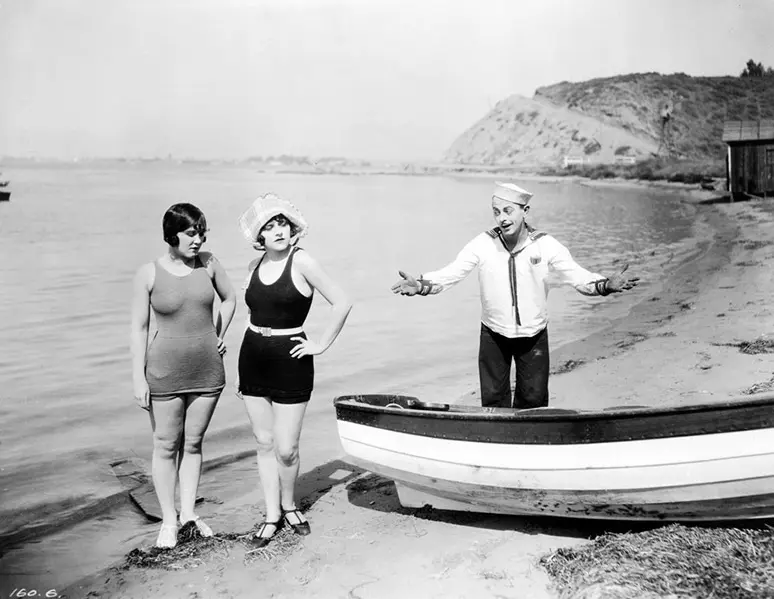
A definitive 5.4/10 rating for a film that redefined the boundaries of cult cinema. Water Wagons remains a cornerstone of transgressive art.
Is 'Water Wagons' worth watching today? Short answer: yes, but with significant caveats that demand a specific viewing disposition. This is not a film that casually endears itself to a modern audience; it requires patience and a keen eye for historical context.
This film is primarily for ardent fans of early silent cinema, particularly those with a deep appreciation for physical comedy and the rudimentary storytelling of the era. It is decidedly NOT for viewers seeking intricate plots, sophisticated humor, or modern production values. If you expect a narrative that holds up to contemporary standards, you will likely find yourself adrift.
This film works because of its raw, unadulterated slapstick energy. The performers commit fully to their exaggerated roles, delivering a brand of physical comedy that, while dated, retains a certain infectious charm for those attuned to it.
This film fails because its narrative thinness and repetitive gags struggle to sustain interest beyond its brief runtime. The humor often feels broad to the point of exhaustion, lacking the nuanced character work that would elevate it beyond mere spectacle. You should watch it if you're a film historian, a dedicated silent comedy enthusiast, or someone genuinely curious about the foundational elements of cinematic humor, willing to overlook considerable imperfections for a glimpse into the past.
The pacing of 'Water Wagons' is a fascinating study in early cinematic rhythm. On one hand, the film often feels frantic, with rapid-fire gags and exaggerated reactions from its cast. There's an undeniable energy to the physical comedy, particularly in the sequences involving Captain Barr's bumbling assistant, played by Leo Sulky, whose every attempt at assistance results in further chaos.
Yet, paradoxically, the film also suffers from moments of sluggishness. The setup for the race, while necessary, feels protracted. We spend a considerable amount of time watching Barr's 'innovative' boat construction, which, despite its comedic interruptions, doesn't always justify the screen time. It’s a common pitfall of silent comedies trying to stretch a simple premise.
The film’s biggest tonal shift, the kidnapping of Dolly by Captain Dangerfield, is handled with a swiftness that is almost jarring. One moment, we are in the realm of lighthearted rivalry; the next, a darker, more desperate act unfolds. This abruptness, while perhaps intended to inject immediate stakes, feels less like a natural narrative progression and more like a sudden, forced escalation to ensure the climactic race has sufficient dramatic tension. It's a testament to the era's storytelling simplicity, where character motivations were often secondary to the immediate plot thrust.
The performances in 'Water Wagons' are quintessential silent-era theatricality, relying heavily on exaggerated facial expressions and broad physical comedy. Andy Clyde, as Captain Dangerfield, embodies the villainous rival with a sneering glee that is both cartoonish and effective. His maniacal grin, particularly when enacting his sabotage, is a highlight of the film's visual humor. He’s a character you love to hate, even if his villainy is a bit one-note.
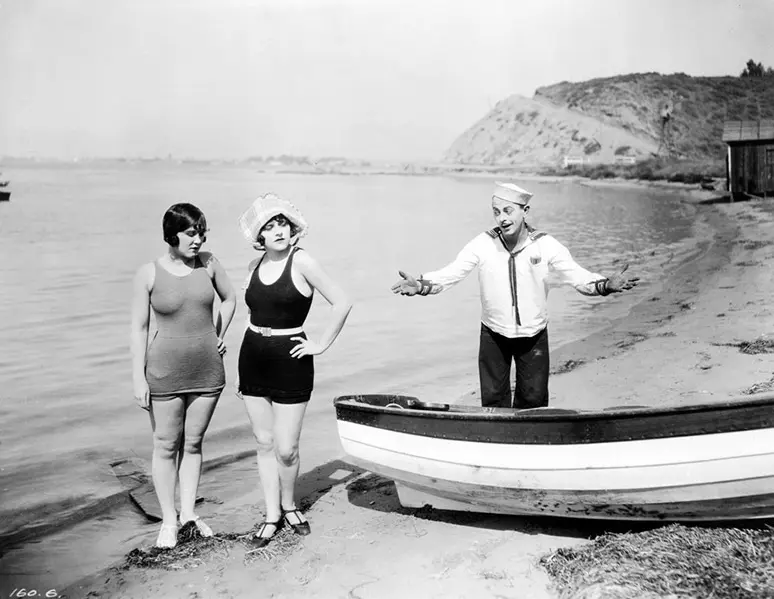
Leo Sulky, as Barr's inept assistant, is arguably the comedic core of the film. His constant stream of mishaps – dropping tools, getting tangled in ropes, inadvertently destroying parts of the boat – provides much of the genuine laughter. There's a specific moment where he fumbles a crucial piece of equipment, sending it tumbling into the water for the third time, that perfectly encapsulates his enduring ineptitude. This repetitive gag, while simple, is executed with a consistent, endearing clumsiness that doesn't overstay its welcome, unlike some other elements.
Bobby Dunn, as Captain Barr, plays the straight man to Sulky's antics and Clyde's machinations. His frustration is palpable, and he grounds the more outlandish elements of the comedy. It's a less showy role, but essential for providing an anchor to the comedic chaos. The supporting cast, including Elsie Tarron as Dolly, perform their roles adequately, serving the plot rather than delivering memorable characterizations. It’s a cast that understands the assignment for its time: be clear, be big, be funny.
The direction in 'Water Wagons', typical of many short comedies from the period, is functional and straightforward. The camera is largely static, framing the action to capture the full scope of the physical gags. There are no elaborate tracking shots or complex camera movements; the focus is squarely on the performers and their antics. This simplicity, while limiting, also allows the audience to fully appreciate the physical prowess and timing of the actors.
Cinematically, the film offers a raw, unfiltered look at early filmmaking. The lighting is basic, often relying on natural light, which gives the outdoor scenes a clear, if sometimes flat, aesthetic. The editing is brisk during the comedic sequences, cutting between reactions and actions to maintain a comedic rhythm. However, during more expositional scenes, the cuts are less frequent, allowing for longer takes that feel more like filmed stage plays.
One surprising observation is how well the action sequences, particularly the boat race itself, are captured despite the technical limitations. While not a spectacle by modern standards, the shots of the boats on the water, with actors genuinely performing stunts, convey a sense of genuine speed and excitement. It’s not flashy, but it’s effective. This is a film that makes the most of its limited resources, a hallmark of early independent productions.
At its heart, 'Water Wagons' is a story of rivalry, a timeless trope that has fueled countless narratives across all genres. Here, it’s stripped down to its most basic, almost primal form: two men, one honorable (if beleaguered), the other dastardly, vying for supremacy. The simplicity of this conflict is both its strength and its weakness.
For audiences accustomed to nuanced antagonists and complex moral quandaries, Dangerfield's villainy might feel too simplistic, almost childish. There's no exploration of why he's so determined to win by any means necessary, beyond the obvious desire for victory. This lack of depth can make the narrative feel hollow, reducing the characters to mere archetypes rather than fully realized individuals.
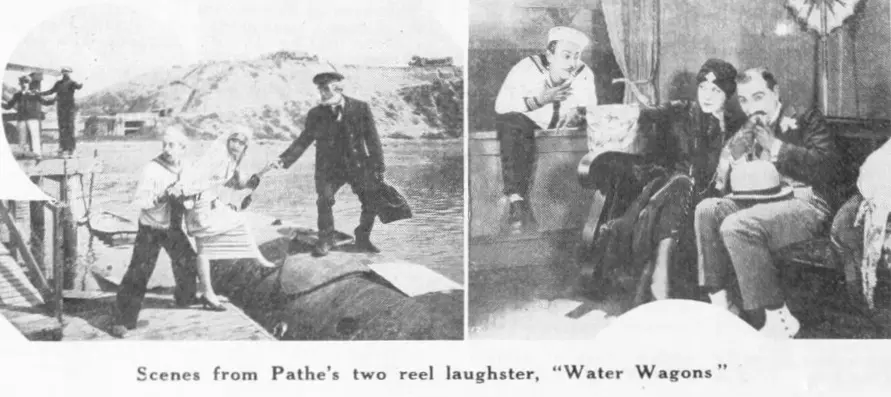
However, for those who appreciate the foundational elements of storytelling, this directness can be refreshing. It’s a clear-cut battle of good versus evil, or at least, good intentions versus bad ones, without the need for intricate backstory. The film's charm, for some, lies in this very straightforwardness. It's a reminder of a time when cinematic narratives didn't feel the need to justify every character decision with psychological depth, opting instead for immediate, understandable conflict.
One could even argue that the film, despite its comedic veneer, inadvertently reflects a darker truth about competition: the lengths some will go to achieve victory, even resorting to morally reprehensible acts like kidnapping. This unconventional reading transforms what might be seen as a silly plot device into a surprisingly cynical commentary on human nature. The film works. But it’s flawed.
The film’s reliance on slapstick is absolute. Every comedic beat is a physical one, from the pratfalls of Sulky's character to the exaggerated struggles during the boat race. This style of humor is a double-edged sword. When it lands, it’s genuinely funny, eliciting immediate, visceral reactions. The timing of certain physical gags, particularly those involving unexpected collapses or collisions, demonstrates a skilled understanding of comedic rhythm from the performers.
However, the sheer volume of slapstick can also lead to diminishing returns. After a certain point, the novelty wears off, and the gags begin to feel repetitive. This is particularly true for the sequences depicting Barr's assistant's incompetence. While initially amusing, the repeated failures can start to feel less like clever comedic construction and more like a lack of variety in the comedic arsenal. It's a limitation inherent in many films of this era, where the genre conventions often dictated a relentless pursuit of physical comedy without much narrative respite.
Comparing it to more sophisticated silent comedies, like some works by Buster Keaton or Charlie Chaplin, 'Water Wagons' lacks the thematic depth or the character-driven pathos that elevates pure slapstick into art. While The Adventures of Ruth might have offered more emotional resonance, 'Water Wagons' is content to remain a vehicle for immediate, if fleeting, laughs. It’s a film that prioritizes immediate comedic impact over lasting thematic resonance, a choice that defines its place in cinematic history.
‘Water Wagons’ is a fascinating, if imperfect, relic of early cinema. It offers a window into the boisterous, often unsubtle world of silent slapstick, driven by energetic performances and a straightforward, if somewhat morally ambiguous, rivalry. While it certainly doesn't hold a candle to the masterpieces of the era, nor does it possess the universal appeal to captivate a broad modern audience, it serves its purpose as a historical document and a source of rudimentary laughs.
For those willing to adjust their expectations and embrace its anachronisms, there are moments of genuine amusement to be found. It’s a film that demands a specific kind of appreciation, one rooted in curiosity for cinema's nascent forms rather than a desire for contemporary entertainment. It doesn't quite sink, but it never truly soars either; it simply chugs along, a charmingly flawed testament to a bygone era of filmmaking. Watch it if you're a scholar of silent film, skip it if you're looking for an easy, modern laugh.
IMDb 6.6
1929
Community
Log in to comment.