DbcultAccessing Vault...
Cult Review
Senior Film Conservator
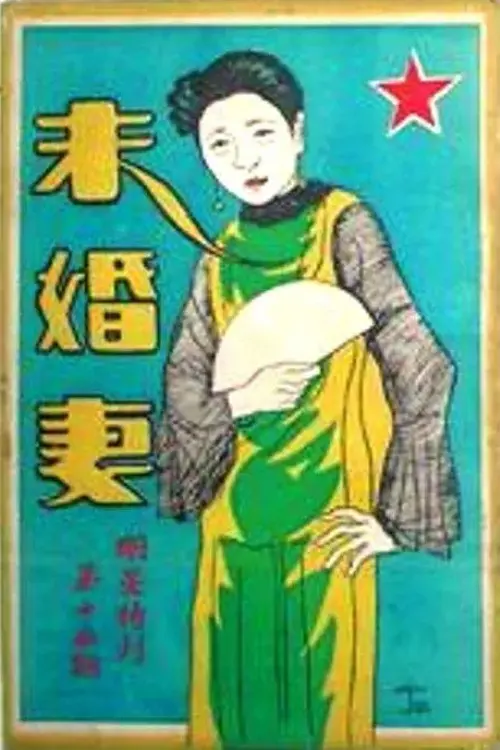
Is Wei hun qi worth watching today? Short answer: Yes, but only if you are prepared for the slow, methodical ache of a narrative that values emotional endurance over modern thrills. This film is a definitive requirement for those interested in the roots of East Asian melodrama and the 'New Youth' movement, but it is certainly not for viewers who crave the fast-paced cynicism of contemporary cinema.
This film works because it captures the genuine anxiety of a culture caught between the pull of Western progress and the gravity of domestic tradition through a singular, intimate relationship.
This film fails because its secondary characters are often reduced to moral signposts rather than living, breathing human beings, making the central conflict feel somewhat isolated.
You should watch it if you appreciate the visual language of silent film where a single close-up of a ring carries more narrative weight than ten pages of dialogue.
Wancang Bu’s Wei hun qi is a film about the tyranny of time. When Guangxin Zhou and Shouzhen exchange rings before his departure for America, the act is presented with a solemnity that feels almost funerary. It is a contract. In the 1920s, the concept of the 'Returned Student' was a potent cultural symbol in China, representing both hope and a potential betrayal of roots. Bu captures this tension perfectly in the early scenes. The way the camera lingers on the physical ring—a cold, hard circle of metal—suggests that this bond is as much a shackle as it is a comfort.
Consider the scene where Guangxin stands on the deck of the ship. The ocean is not just a geographical barrier; it is a temporal one. He is moving toward a future defined by American efficiency, while Shouzhen is left in a space where time seems to have curdled. The contrast is sharp. It works. But it’s flawed. The film’s insistence on Shouzhen’s absolute stasis can occasionally feel like a narrative limitation rather than a character choice, yet Lihua Shen’s performance ensures we feel every second of that waiting.
Wei hun qi remains worth watching because it provides a rare, unvarnished look at the psychological cost of modernization. Unlike more commercial Western imports of the time, such as The Show-Off, which leaned into comedic archetypes, Bu’s work is deeply earnest. It asks a question that still resonates: how much of our personal identity are we willing to sacrifice for the sake of a promise made to a version of ourselves that no longer exists? For the modern viewer, the film acts as a time capsule of Shanghai’s cinematic birth, offering a sophistication in framing that rivals the better-known European silents of the era.
The cinematography in Wei hun qi is surprisingly modern in its use of domestic space. The house where Shouzhen waits is filmed with a sense of encroaching shadows. As the years pass, the rooms seem to shrink. This isn't the grand, sweeping melodrama of a film like Camille; it is something more claustrophobic. Bu understands that the real drama isn't in the departure, but in the silence that follows it. The way the light hits the ring in the final acts—no longer shining, but dull with the dust of years—is a masterclass in visual storytelling.
The acting style, particularly from Zhiyun Zhang and Lihua Shen, avoids the frantic gesticulation common in early silent cinema. There is a stillness here. When Shouzhen looks at the calendar, her eyes don't bulge in theatrical despair; they simply hollow out. It is a brutal simplicity that feels more 'human' than many of the big-budget productions coming out of Hollywood at the same time, such as The Lone Wolf. This film doesn't need a mystery or a chase to keep the tension; the tension is built into the very fabric of the characters' lives.
One of the most debatable aspects of the film is its treatment of Guangxin’s journey. By focusing almost entirely on the emotional fallout in China, Bu makes a strong statement about the selfishness of ambition. Guangxin is not a villain, but his pursuit of 'progress' is framed as a form of ghosting. He becomes a phantom in his own life. This is a surprising observation for a film made in an era that generally championed Western education. Bu isn't anti-progress, but he is pro-humanity. He reminds the audience that every leap forward leaves someone behind.
The pacing, however, will be a hurdle for many. There are long stretches where the narrative seems to stall, mirroring Shouzhen's own stagnation. While this is thematically consistent, it can be a grueling experience. The film demands your full attention, not because it is complex, but because it is heavy. It is a weight that must be carried. If you go into it expecting the light-hearted charm of The Bachelor Daddy, you will be sorely disappointed. This is a story about the slow erosion of hope.
Pros:
- Exquisite, restrained performances that transcend the silent era's tropes.
- A nuanced take on the cultural conflict between East and West.
- Striking use of shadows and domestic interiors to heighten the mood of isolation.
Cons:
- The secondary cast feels underdeveloped and purely functional.
- Certain plot points in the middle act feel repetitive.
- The ending may feel overly moralistic to modern sensibilities.
Wei hun qi is a haunting, if occasionally laborous, exploration of fidelity. It doesn't offer easy answers or cinematic fireworks. Instead, it offers a mirror to the soul of a nation in transition. Lihua Shen’s performance is the anchor that keeps the film from drifting into pure sentimentality. It is a relic that still bleeds. While it lacks the polish of later Golden Age Shanghai cinema, its raw emotional honesty makes it a vital piece of film history. Watch it for the craft, stay for the heartbreak, but bring your patience. It is a film that earns its tears, one slow frame at a time.
"In the world of Wancang Bu, a promise is not just a word; it is a landscape that one must inhabit for a lifetime, regardless of how barren it becomes."
IMDb 5.6
1927
Community
Log in to comment.