DbcultAccessing Vault...
Cult Review
Senior Film Conservator
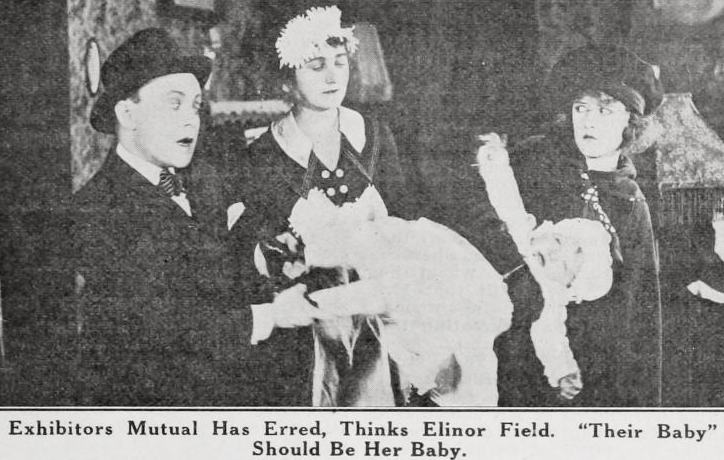
To watch Their Baby in the modern age is to engage in a form of cinematic archaeology that unearths the very foundations of the situational comedy. Released in 1917, a year defined more by global upheaval than by the trivialities of the nursery, this film offers a fascinating reprieve from the somber tones of contemporary dramas like The City of Tears. While much of the era's output focused on grand moral plays or sweeping tragedies, 'Their Baby' leans into the micro-aggressions of the household, turning the mundane into the monumental.
Harry Depp, often overshadowed by the larger-than-life personas of the decade, delivers a performance here that is remarkably grounded yet punctuated by moments of exquisite physical exaggeration. His counterpart, Elinor Field, serves as more than just a domestic foil; she is the gravitational center of a narrative that threatens to spin out of control at every turn of the crank. Unlike the more atmospheric and haunting vibes found in The Black Butterfly, 'Their Baby' thrives on the clarity of its light and the sharpness of its editing.
The chemistry between Depp and Field is the engine that drives this short. In the 1910s, screen acting was still shedding the skin of theatrical over-gesticulation. In 'Their Baby', we see the transition toward a more subtle, reactive style. When the central 'baby'—the catalyst for the film's escalating tension—enters the frame, the actors don't merely react with shock; they inhabit a space of genuine, recognizable panic. This isn't the melodramatic suffering seen in Magda, but a relatable, suburban desperation.
Field, in particular, showcases a range that was often denied to women in silent comedies. She isn't just a 'damsel in distress' or a 'nagging wife'; she is a participant in the chaos, her timing often surpassing Depp’s in its precision. If one compares her performance here to the more rigid structures of Her Soul's Inspiration, it becomes evident that 'Their Baby' was attempting something far more fluid and contemporary in its character dynamics.
The plot of 'Their Baby' is deceptively simple: a series of misunderstandings regarding the care and identity of a child lead to a crescendo of social embarrassment. However, the brilliance lies in the *geometry* of the scenes. The director utilizes the limited space of the 1917 interior set to create a sense of claustrophobia that mirrors the characters' mental states. Every door is a potential trap; every piece of furniture is a prop for a potential tumble.
There is a sequence involving a pram that rivals the kinetic energy of The Racing Strain, though the stakes are decidedly more intimate. Where other films of the time used speed for thrill, 'Their Baby' uses it for embarrassment. It’s the difference between the high-stakes mystery of A Study in Scarlet and the low-stakes, high-impact world of domesticity. The film understands that to a new parent, a misplaced bottle is as catastrophic as a misplaced clue in a murder mystery.
"Their Baby is not merely a comedy of errors; it is a rhythmic dance of early 20th-century anxieties, captured in the amber of nitrate film, proving that the terrors of parenthood are truly timeless."
When examining 'Their Baby' alongside its contemporaries, one must look at Love's Law. While the latter deals with the legalistic and moralistic boundaries of affection, 'Their Baby' suggests that the 'law' of the household is dictated by the smallest member. It subverts the patriarchal order of the time by showing the 'head of the house' reduced to a bumbling mess by an infant. This subversion is a common thread in the more daring comedies of the era, such as Madcap Madge, which similarly challenged social expectations through humor.
Furthermore, the film avoids the heavy-handed moralizing found in Az utolsó éjszaka. There is no tragic ending here, no grand lesson learned other than the survival of another day. It shares more DNA with the lighthearted spirit of There Goes the Bride, though it trades the romantic jitters of the altar for the sleep-deprived jitters of the nursery.
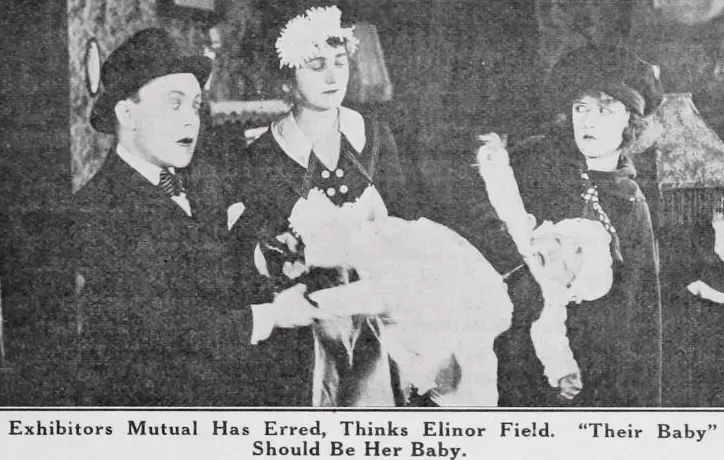
Technically, 'Their Baby' demonstrates a sophisticated grasp of visual storytelling. The use of intertitles is sparse, allowing the physical performances to carry the weight of the narrative. This is a far cry from the text-heavy expositions seen in The Sphinx. The cinematography, while static by modern standards, utilizes depth of field to keep the audience’s eye moving between the foreground chaos and the background reactions of the supporting cast.
Consider the lighting: it is bright, flat, and unforgiving, which works perfectly for comedy. There are no shadows to hide in, unlike the moody atmospheres of A Self-Made Widow. In 'Their Baby', everything is exposed—the dirt on the floor, the sweat on Depp's brow, and the sheer exhaustion in Field's eyes. This 'honesty' in the visual field enhances the relatability of the struggle. It feels less like a staged play and more like a captured moment of reality, albeit an exaggerated one.
One cannot discuss a 1917 comedy without acknowledging the economic realities of the time. While the characters in 'Their Baby' seem comfortably middle-class, the film subtly touches on the labor of domestic life. It’s a theme explored more overtly in They Do It on $8 Per, but here, the 'cost' of the baby is measured in sanity rather than just dollars. The film captures the 'long, long way' of parenting, a sentiment echoed in the title of A Long, Long Way to Tipperary, though the destination here is a quiet night’s sleep rather than a battlefield.
The film also touches on the 'putting it over' culture of the era—the idea of maintaining appearances at all costs. This is perfectly encapsulated in the scenes where the couple tries to hide the chaos from visiting neighbors. It’s a proto-sitcom trope that would be perfected in later decades, but its roots are firmly planted here, as seen in the social maneuvering of Putting It Over.
'Their Baby' deserves a place in the pantheon of silent shorts not because it reinvented the wheel, but because it greased the axle of the domestic comedy. Harry Depp proves himself a capable lead, possessing a rubber-faced elasticity that feels surprisingly modern. Elinor Field is a revelation, providing a blueprint for the comedic heroines of the 1920s.
The film is a brisk, unapologetic look at the absurdity of the family unit. It lacks the pretension of the era's 'great works' and instead opts for a direct, visceral connection with its audience. Whether you are a student of silent cinema or simply someone who has ever felt overwhelmed by the demands of a small human, 'Their Baby' resonates. It is a testament to the fact that while technology, politics, and film grammar may change, the sight of a grown man panicking over a diaper is a universal language that needs no translation.
In conclusion, while it may not have the haunting legacy of The Black Butterfly or the epic scale of some of its contemporaries, 'Their Baby' is a vital, vibrant piece of history. It is a reminder that in the infancy of cinema, the industry was already learning how to walk, talk (visually), and most importantly, make us laugh at ourselves.
IMDb —
1919
Community
Log in to comment.