DbcultAccessing Vault...
Cult Review
Senior Film Conservator
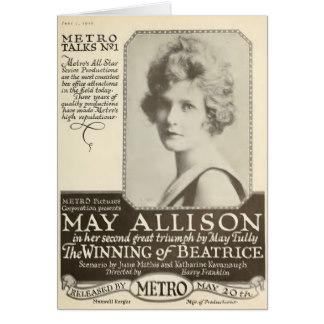
The year 1918 was a watershed moment for cinematic storytelling, a period where the medium began to shed its primitive skin and embrace the nuanced complexities of social commentary. The Winning of Beatrice stands as a testament to this evolution, offering a narrative that is as much a critique of the predatory nature of early 20th-century capitalism as it is a melodrama of the heart. While many contemporary films like Sirens of the Sea sought refuge in escapist fantasy, Beatrice grounds itself in the gritty reality of boardroom betrayals and the clatter of the factory floor.
At the center of this storm is May Allison, whose portrayal of Beatrice Buckley transcends the typical 'damsel in distress' trope prevalent in the silent era. Her transformation from a sheltered socialite to a savvy entrepreneur provides a compelling arc that mirrors the shifting gender dynamics of the post-war world. Unlike the more domestic focus found in Home, Sweet Home, this film positions its protagonist in the cutthroat arena of commerce, suggesting that a woman's place is not merely in the parlor, but in the executive suite. The chemistry between Allison and Hale Hamilton, who plays the steadfast Robert Howard, is palpable, yet it never overshadows Beatrice’s individual agency.
The villainy of John Maddox, Sr., played with a cold, calculating precision by Stephen Grattan, serves as the perfect foil to Beatrice’s burgeoning idealism. Maddox represents the worst impulses of the Gilded Age—a man for whom people are merely pawns in a grand game of accumulation. His willingness to frame his partner for embezzlement and suicide reveals a sociopathic devotion to the bottom line that feels remarkably modern. In many ways, the moral landscape of the film is as treacherous as the one depicted in God's Crucible, where the fires of trial either forge or destroy the human spirit.
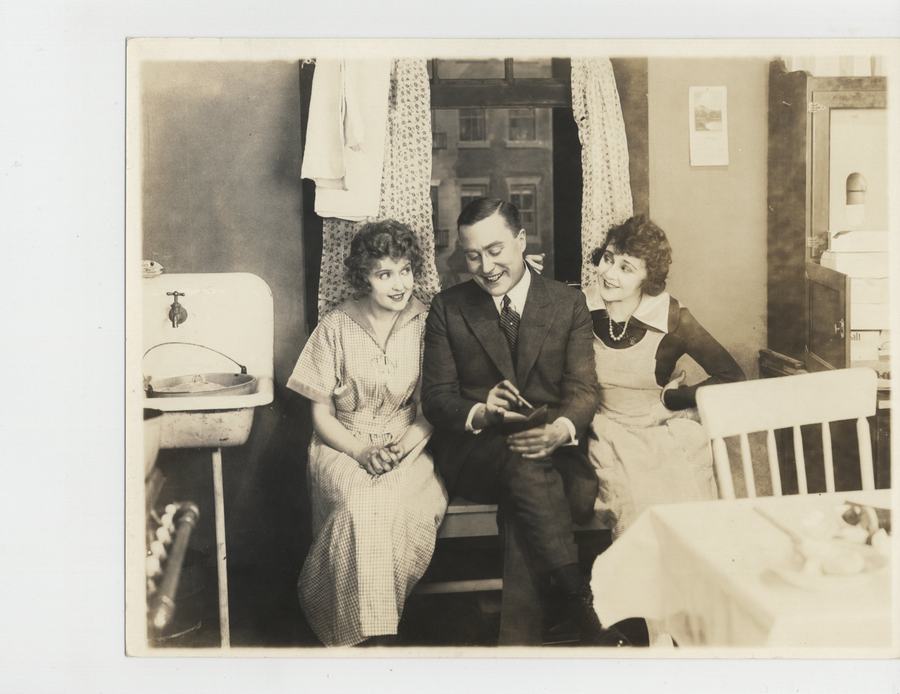
Visually, the film utilizes the limitations of its time to create a stark contrast between the opulent, mahogany-paneled offices of the Equity Trust Company and the bustling, steam-filled environment of the candy factory. This visual dichotomy underscores the central conflict: the old money, built on deception, versus the new industry, built on honest labor and innovation. The cinematography captures the frantic energy of the factory strike with a kineticism that predates the more polished action sequences of the 1920s. It lacks the pastoral beauty of Salomy Jane, but it compensates with a claustrophobic intensity that heightens the stakes of Beatrice’s struggle.
The screenplay, co-authored by the legendary June Mathis, is a masterclass in pacing. Mathis, who would later go on to script some of the decade's greatest hits, demonstrates an early knack for weaving multiple plot strands into a cohesive whole. The subplot involving Henry Jenkins, the burglar turned reluctant assassin, adds a layer of noir-ish dread to the proceedings. His eventual redemption, though a staple of the era's morality plays, feels earned rather than forced. It resonates with the same sense of tragic inevitability found in The Lost Chord, where past sins cast long shadows over the present.
One cannot discuss The Winning of Beatrice without addressing its socioeconomic implications. The film arrived at a time when the labor movement was gaining significant traction, and the depiction of a strike—even one instigated by a villain—would have been particularly resonant with audiences of 1918. By showing Beatrice winning over her workers through genuine care rather than Maddox’s manipulation, the film presents a vision of 'enlightened capitalism' that was quite radical for its time. This thematic depth elevates it above contemporaneous offerings like Wild Honey, which favored romantic whimsy over structural critique.
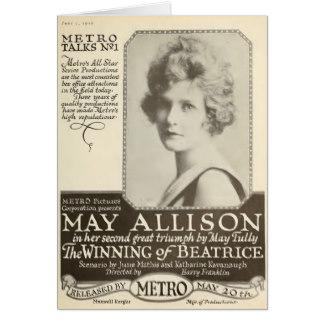
The casting of John Davidson as the younger Maddox provides a fascinating look at the 'weak scion' archetype. His abandonment of Beatrice upon her father’s disgrace is a moment of profound cowardice that sets the stage for her eventual triumph. It’s a character study in the fragility of social status, echoing the themes explored in European imports like Het geheim van Delft or the Russian drama Nye dlya deneg radivshisya. The film suggests that while wealth can be stolen or lost, character is an immutable currency.
The technical craftsmanship, from the set design to the editing, reflects the high standards of the Metro Pictures Corporation. There is a tangible sense of place in every scene, whether it’s the cluttered safe room where the murder occurs or the expansive floor of the confectionery. The use of intertitles is judicious, allowing the actors' expressions—particularly Allison’s luminous, expressive eyes—to carry the emotional weight. This expressive style of acting, while sometimes dismissed as 'over-the-top' by modern viewers, was a precise tool for conveying internal monologue in a world without sound, a technique also mastered in The Sparrow.
As the narrative hurtles toward its climax, the tension between the two candy companies becomes a metaphor for the battle between truth and falsehood. The strike sequence is particularly well-staged, utilizing a large number of extras to create a sense of genuine peril. When Jenkins is mortally wounded and begins his confession, the film reaches a crescendo of dramatic irony. The restoration of James Buckley’s reputation is not just a personal victory for Beatrice; it is a restorative act for the audience, a reassurance that the moral arc of the universe, however long, does indeed bend toward justice.
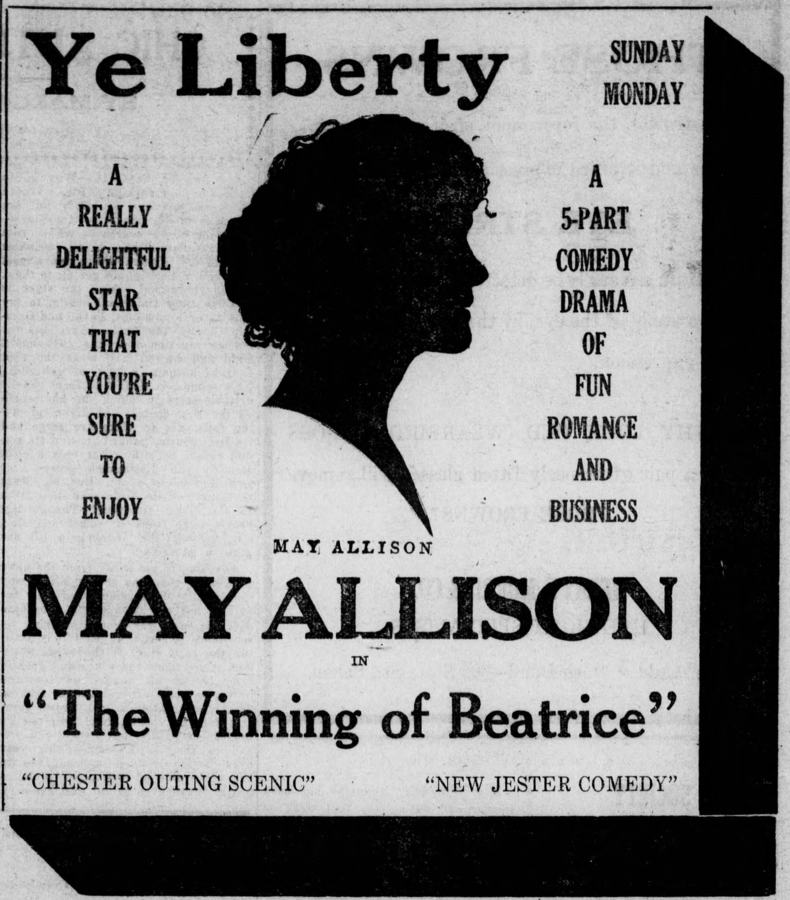
Comparing this work to Behind the Lines or Exile, one notices a distinct lack of cynicism. Even in its darkest moments, Beatrice maintains a core of optimism that is quintessentially American. It avoids the nihilism that would later characterize the post-war 'lost generation' cinema, choosing instead to believe in the possibility of redemption and the power of hard work. This makes the film a fascinating bridge between the Victorian morality of the early 1910s and the more cynical, fast-paced world of the 1920s.
In the broader context of May Allison’s career, this film remains a highlight. She managed to avoid the pigeonholing that affected many of her peers, such as those in Follow the Girl or The Girl of My Dreams. Her Beatrice is a fully realized human being—flawed, grieving, yet ultimately formidable. The film’s success paved the way for more stories centered on female entrepreneurs, a legacy that can be traced through decades of cinema.
Furthermore, the film’s exploration of the 'fake news' of its day—Maddox’s manipulation of the press to frame Buckley—feels eerily prescient. In a world where reputations can be destroyed with a single headline, Beatrice’s struggle to reclaim her father’s name feels deeply relevant. It shares this preoccupation with the fragility of truth with The White Scar, though it resolves the conflict with a much more satisfying sense of closure. The final union between Beatrice and Robert Howard is not just a romantic conclusion, but a partnership of equals, a 'winning' that is shared and sustainable.
Ultimately, The Winning of Beatrice is a vital piece of film history that deserves more than a cursory glance in the archives. It is a sophisticated, layered drama that balances its melodramatic impulses with keen social observation. For those interested in the roots of the corporate thriller or the evolution of the 'strong female lead,' this film is essential viewing. It lacks the decadent sprawl of Leon Drey, but its lean, focused narrative delivers a much more potent emotional punch. It remains a shining example of how silent cinema could speak volumes about the human condition without uttering a single word.
IMDb 5.7
1932
Community
Log in to comment.