DbcultAccessing Vault...
Cult Review
Senior Film Conservator
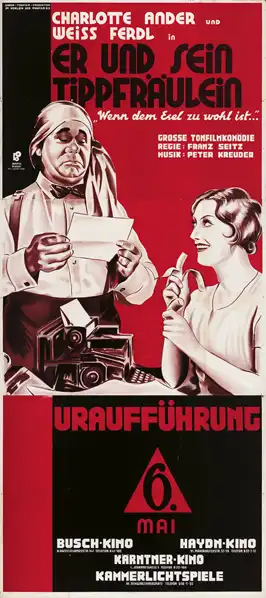
Honestly, only if you’ve got a weird itch for 1930s German cinema or you’re just really into historical curiosities. If you need fast pacing or clear motives, you’re going to hate this. It’s for the folks who like to see how comedy used to tick before everything became a franchise.
The whole thing centers on that German saying about the donkey getting too comfortable and going out on the ice to dance. That’s the vibe. It’s about someone who has it all and decides that’s not enough. It feels a bit like watching a slow-motion car crash, but with more slapstick and fewer seatbelts.
The acting is... definitely a thing. Ludwig Rupert is running around doing his best, and honestly, sometimes it works. Other times? It’s just loud. There’s a scene near the middle where he’s talking to Charlotte Ander, and the camera just sits there. It’s like they forgot to yell cut. You can actually see them trying to remember their next line. It’s charming, in a way.
It reminded me a bit of the frantic energy in Bab's Burglar, even if they aren't really the same genre at all. Just that feeling of people rushing around because they’re supposed to be funny.
It’s not trying to be a deep, philosophical piece of work. It’s just trying to be a distraction. Does it succeed? I don’t know. I found myself thinking about what I wanted for dinner halfway through. But then there’s a sudden burst of energy—someone trips, or a door slams—and I was back in it.
It’s not as polished as David Harum, but maybe that’s the point. It feels like a stage play that got lost on its way to the theater. If you’ve got a rainy afternoon and a lack of better options, give it a whirl. Just don’t expect to have your life changed by it. Sometimes, a movie is just a movie. And that’s fine.
Year
1932
IMDb Rating
—

Editorial
Deciphering the legacy of transgressive cult cinema.
Community
Log in to comment.