DbcultAccessing Vault...
Cult Review
Senior Film Conservator
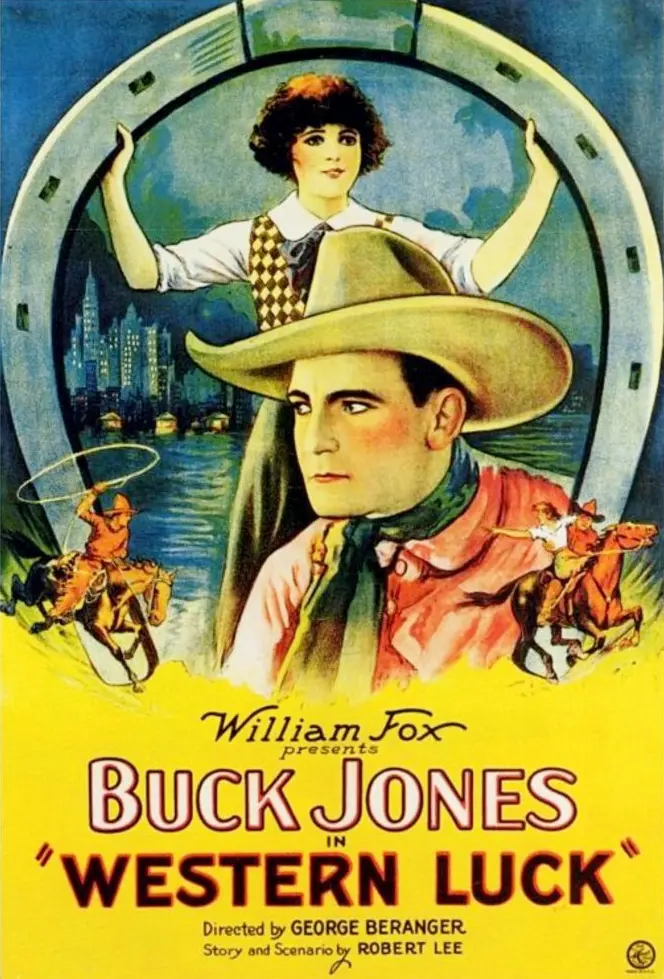
In the pantheon of silent cinema, few archetypes resonate with the same enduring vigor as the separated-at-birth trope. However, in the 1924 production of Western Luck, this narrative device serves as more than a convenient catalyst for melodrama; it functions as a profound sociological inquiry into the 'nature versus nurture' debate that captivated the American psyche during the burgeoning industrialism of the 1920s. Starring the incomparable Buck Jones in a dual capacity, the film juxtaposes the sprawling, untamed vistas of the West against the claustrophobic, moral decay of the Eastern financial centers.
The cinematic language employed here is a testament to the era's evolving visual grammar. While earlier works like The Birth of a Nation focused on the grandiosity of historical upheaval, Western Luck pivots toward a more intimate, character-driven conflict. The duality of Larry and Leonard is not merely a showcase for Jones' versatile acting range but a symbolic representation of a nation divided between its agrarian roots and its burgeoning mercantile ambitions. Much like the psychological complexity found in The Wolf Man (1923), there is an inherent tension in seeing the same visage portray both the savior and the scoundrel.
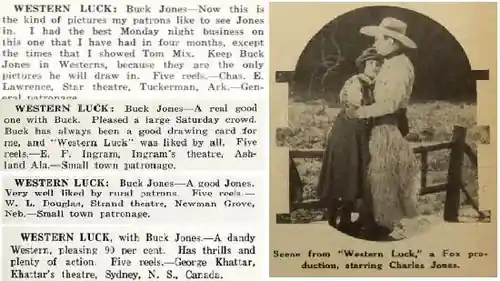
Buck Jones, often overshadowed in historical discourse by contemporaries like Tom Mix, delivers a performance here that warrants significant reappraisal. As Larry, he embodies the stoic, rugged individualism that defined the Western hero—a man of action whose moral compass is as unyielding as the terrain he inhabits. Conversely, as Leonard, Jones manages to project a veneer of effete sophistication that masks a hollow, predatory core. This performance is remarkably nuanced for the period, avoiding the pantomime excess that occasionally marred silent dramas of the time, such as some of the broader characterizations in The Man from Mexico.
The technical execution of the dual roles is particularly noteworthy. The use of double exposure and precise blocking allows for moments of propinquity between the brothers that would have seemed miraculous to audiences in 1924. This visual trickery serves the narrative's central theme: the haunting possibility that one's destiny is dictated by the caprice of geography. Had Larry been raised in the shadow of the New York Stock Exchange, would his innate goodness have been eroded by the same avarice that consumed Leonard? The film suggests a deterministic view of environment, a theme also explored in the gritty realism of The Border Legion.
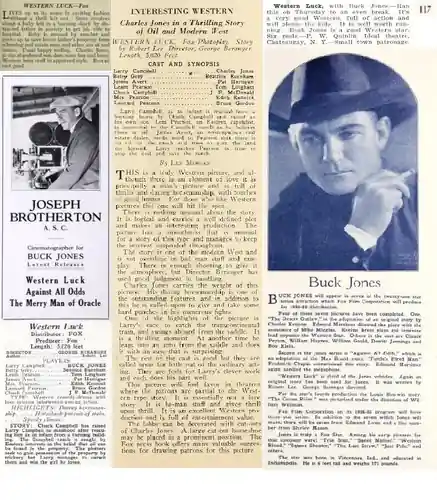
Writer Robert N. Lee constructs a screenplay that is deceptively simple yet laden with subtext. The central conflict—the attempted theft of ranch property—is a classic Western trope, yet here it is framed through the lens of familial betrayal. The property isn't just land; it represents a legacy, a sanctuary from the encroaching corruption of the 'civilized' world. In this sense, Western Luck shares a thematic kinship with The Evil Thereof, where the encroachment of vice upon innocence serves as the primary engine of drama.
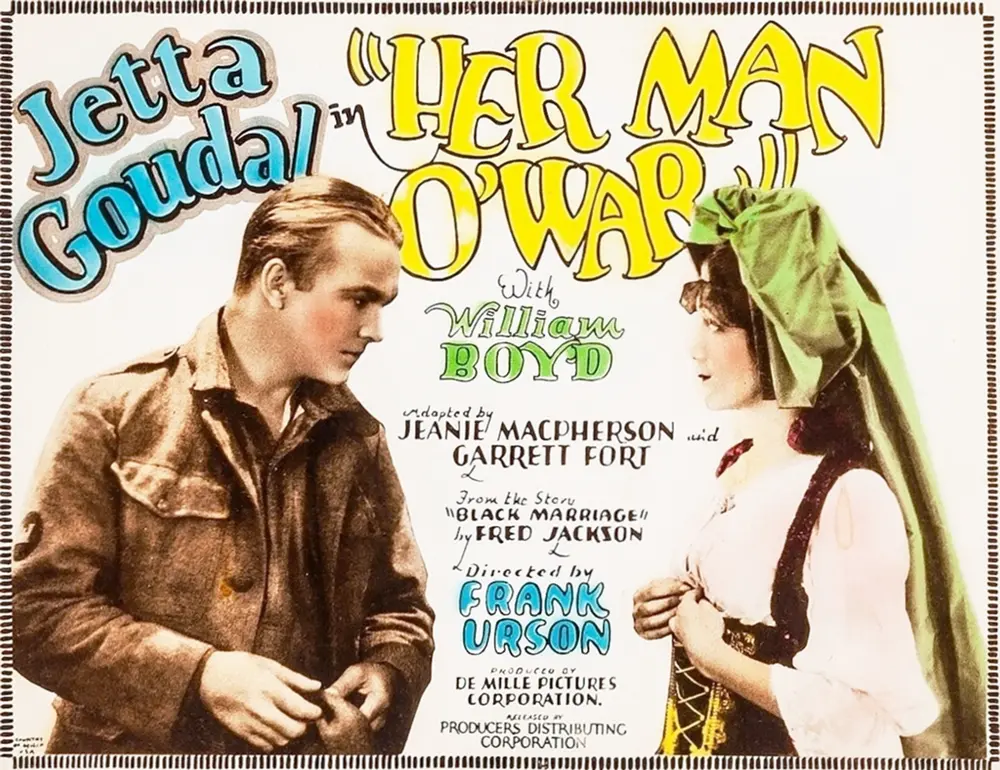
The pacing of the film is exemplary. It avoids the lethargy that occasionally plagues silent features like Her Reckoning, instead maintaining a kinetic energy that builds toward its inevitable confrontation. The inclusion of Beatrice Burnham and J. Farrell MacDonald provides a solid emotional grounding for the brothers' conflict. MacDonald, in particular, brings a gravitas that anchors the film, preventing it from descending into mere spectacle. His presence reminds us of the communal stakes involved; the ranch is not just a business, but a home, a distinction that the Eastern-reared Leonard fails to comprehend.
Visually, the film is a masterclass in the aesthetic of contrast. The scenes set in the West are characterized by high-key lighting and wide, expansive shots that emphasize the freedom and clarity of the frontier. In contrast, the segments involving the Wall Street banker and Leonard are shot with more restricted framing and a sense of gloom that mirrors their moral bankruptcy. This visual storytelling is far more sophisticated than the theatrical staging found in Lombardi, Ltd. or the somewhat static presentation of A Studio Rube.
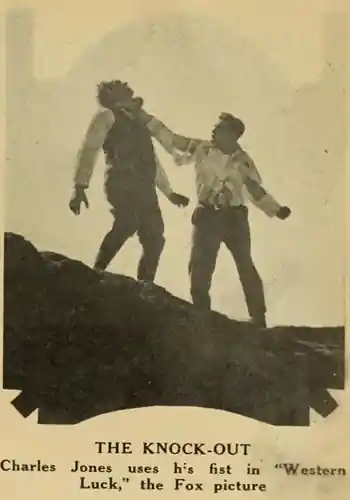
The action sequences are staged with a verisimilitude that remains impressive. Buck Jones, a former cavalryman, performs his stunts with a fluid grace that underscores the physical prowess of the Westerner. These sequences are not merely for excitement; they serve as a physical manifestation of Larry's superiority over the devious, but ultimately physically and morally weak, Leonard. This triumph of the physical over the cerebral-but-corrupt is a recurring motif in the American Western, a genre that often views intellectualism with suspicion if it is divorced from labor.
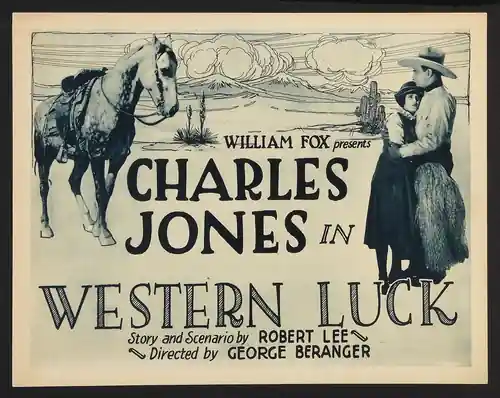
The resolution of Western Luck is as cathartic as it is predictable. The reunion of the brothers is handled with a restraint that prevents it from becoming overly saccharine. It is a moment of profound recognition, where the characters acknowledge the shared blood that binds them despite the disparate paths they have trod. This search for identity and belonging is a universal human experience, one that transcends the specificities of the 1920s setting. It echoes the emotional resonance found in The Girl of My Dreams, albeit in a much more rugged and confrontational context.
When comparing this film to other works of the era, such as the Swedish production Revelj, one can see the uniquely American preoccupation with the frontier as a place of moral cleansing. In Western Luck, the West is not just a location; it is a character in its own right, one that actively shapes the virtues of those who dwell within it. The film posits that while the East may offer wealth and power, it is the West that offers character and redemption.
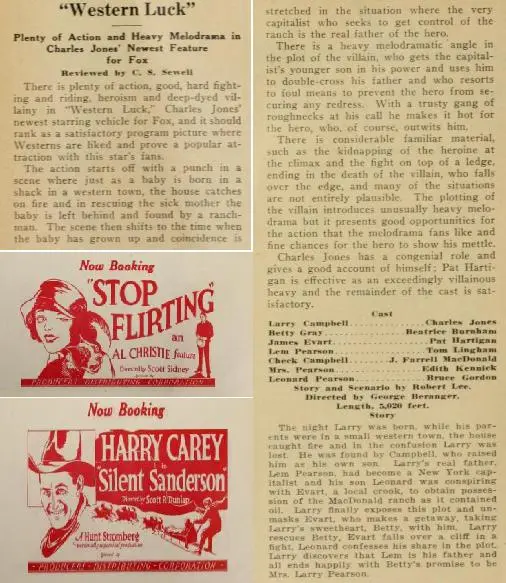
In the grand tapestry of film history, Western Luck stands as a vital link between the early, simplistic shorts and the complex, psychological Westerns that would emerge in the sound era. It possesses a narrative sophistication that belies its age, utilizing the dual-role conceit to explore deep-seated cultural anxieties. While it may lack the sheer destructive power depicted in The Volcano, it offers a more nuanced explosion of the human spirit.
The film also serves as a reminder of the fragility of cinematic history. Many films from this period, like Chains of Evidence or Black and Tan Mix Up, have struggled to maintain their visibility in the modern era. Preserving and discussing works like Western Luck is essential for understanding the evolution of storytelling. It is a film that demands to be seen not just as a relic of the past, but as a vibrant, breathing piece of art that continues to speak to the dualities within us all.
Ultimately, Western Luck is a triumph of silent era craftsmanship. From the robust direction to the stellar dual performance by Buck Jones, it manages to elevate a standard plot into something more profound. It is a story of redemption, identity, and the enduring power of the frontier mythos. It stands alongside other notable dramas like The Misleading Lady in its ability to blend genre expectations with genuine human insight. For any serious student of the Western or silent cinema, this film is an indispensable chapter in the chronicle of the American moving image. It captures a moment in time when the world was changing rapidly, yet the fundamental truths of family and honor remained as constant as the Western horizon.
The film’s exploration of the 'lost brother' motif also prefigures more modern cinematic endeavors, yet it retains a purity of purpose that is often lost in contemporary remakes. There is no irony here, only a sincere belief in the possibility of reconciliation. Even when compared to the darker themes of Life Story of John Lee, or The Man They Could Not Hang, Western Luck maintains a sense of hope that is quintessentially American. It is a cinematic journey worth taking, a reminder that sometimes, the greatest luck of all is finding where you truly belong.
IMDb 6.8
1931
Community
Log in to comment.