DbcultAccessing Vault...
Cult Review
Senior Film Conservator
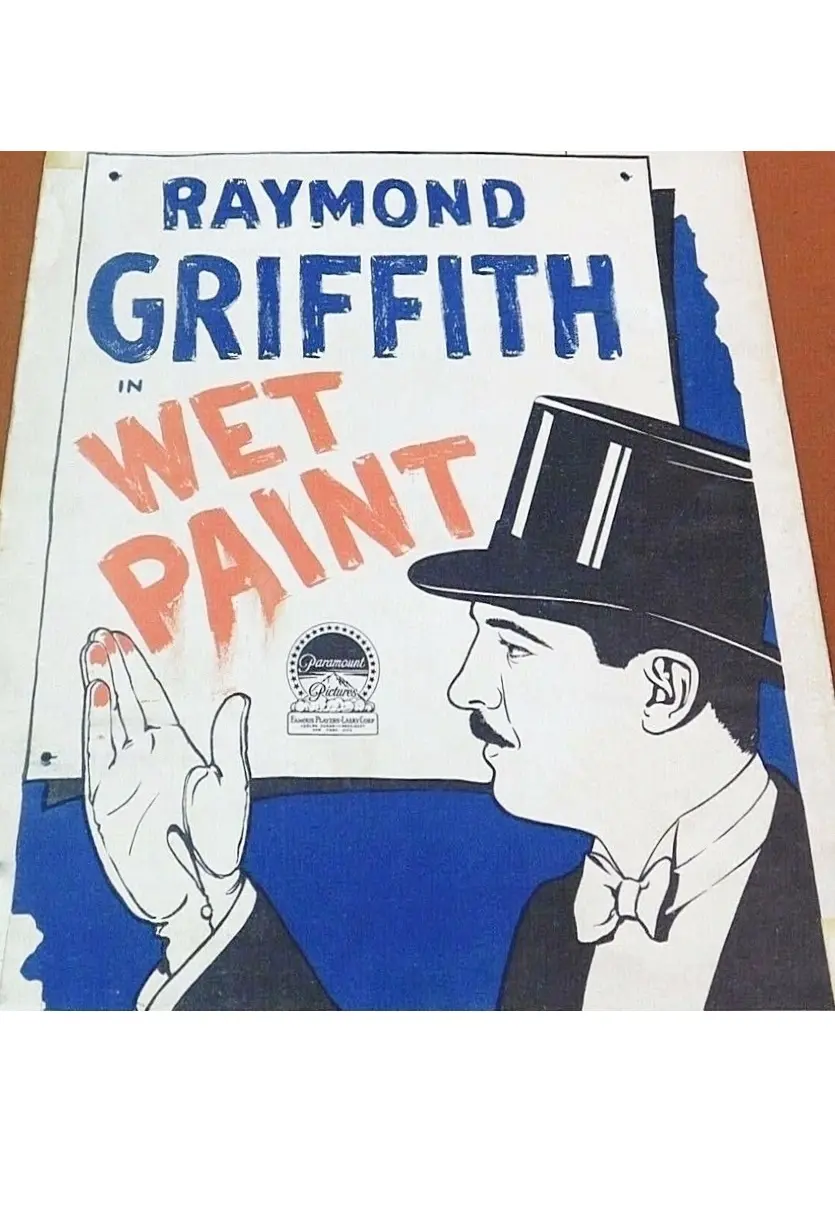
Is Wet Paint worth your time in the modern era? Short answer: Yes, but only if you appreciate the mechanical precision of silent-era physical comedy over deep character development. This film is a playground for fans of high-society slapstick, while it will likely frustrate those who demand a plot that makes logical sense.
This film works because Raymond Griffith possesses a singular, understated charisma that bridges the gap between the chaotic energy of Buster Keaton and the dapper charm of a stage magician. This film fails because its central conceit—a man deciding to marry a total stranger out of spite—is so thin it threatens to evaporate before the second act begins. You should watch it if you want to see a forgotten master of the 'Silk Hat' comedy subgenre operate at the peak of his physical prowess.
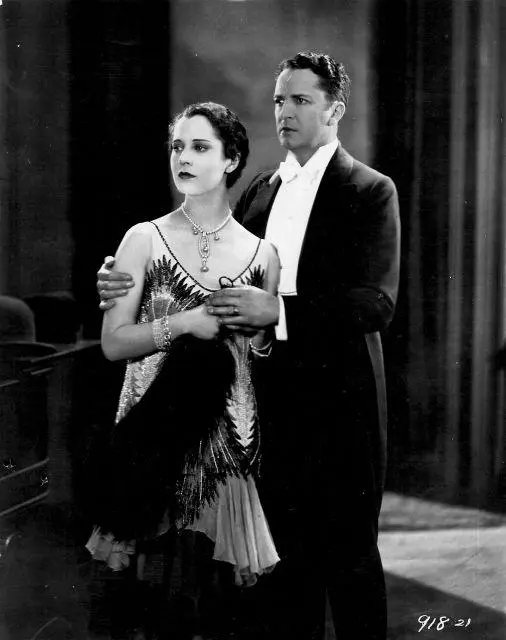
Raymond Griffith is often the forgotten man of the silent era, overshadowed by the holy trinity of Chaplin, Keaton, and Lloyd. However, Wet Paint serves as a definitive argument for his inclusion in the pantheon. Griffith doesn't rely on the pathetic 'Little Tramp' persona; he is the sophisticated man-about-town whose dignity is constantly being eroded by circumstance. In the opening scenes, his reaction to the misunderstanding with his fiancée isn't one of weeping, but of a cold, calculated, and entirely irrational stubbornness. It is this lack of sentimentality that makes his performance feel surprisingly modern.
Take, for instance, the sequence where he attempts to propose to women on the street. In the hands of a lesser comedian, this would be broad and perhaps even predatory. Griffith plays it with a frantic, groggy politeness that makes the absurdity the focus rather than the harassment. He is a man acting on a 'logical' conclusion that is fundamentally insane. His timing during the rejection montage is impeccable, using subtle shifts in his posture to convey a growing sense of existential dread. It’s a performance that demands your attention because it’s so quiet amidst the chaos.
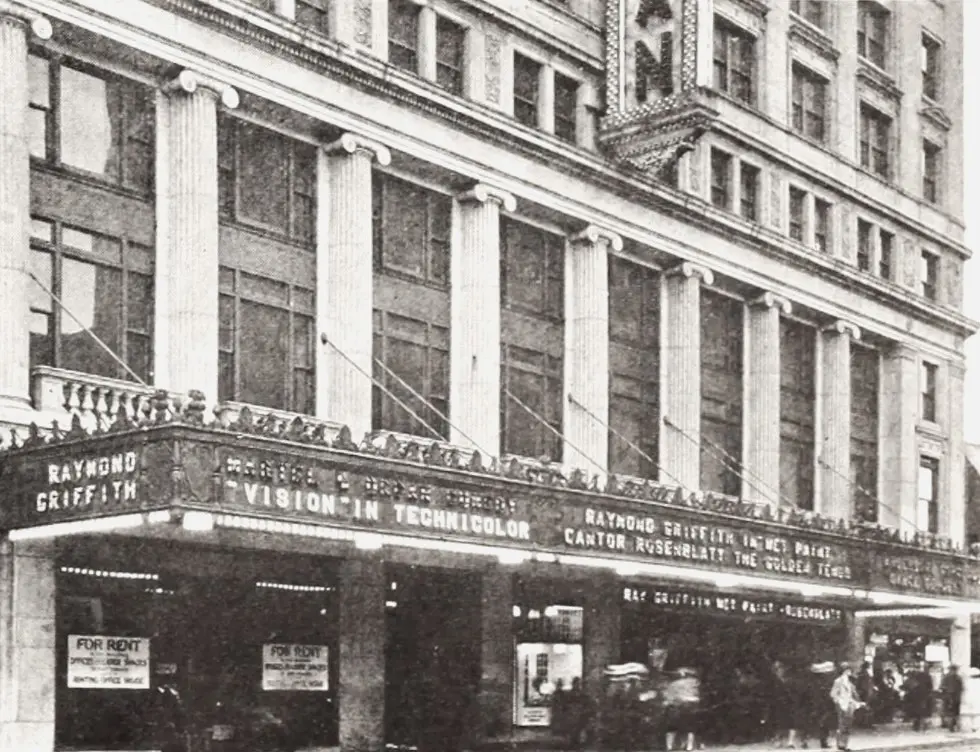
The second half of Wet Paint shifts gears into a proto-home invasion comedy. The moment Griffith enters the wrong house, the film adopts a claustrophobic tone that directors Lloyd Corrigan and Reggie Morris exploit for maximum tension. Unlike the sweeping landscapes seen in The Vanishing American, the world of Wet Paint is small, confined, and dangerous. The use of space is critical here. The house becomes a character in itself, with its confusing layout mirroring the protagonist's internal disorientation.
The scene involving the police officer helping a 'drunk' Griffith into the wrong house is a highlight of 1920s staging. It highlights the social commentary of the era: a well-dressed man is given the benefit of the doubt by authority, even when he is literally breaking and entering. This contrasts sharply with the gritty realism found in films like The Dixie Flyer. In Wet Paint, the tuxedo is a shield, but once he is inside the house with a married woman, that shield becomes a target. The tension is palpable, and the comedy stems from the genuine threat of social ruin.
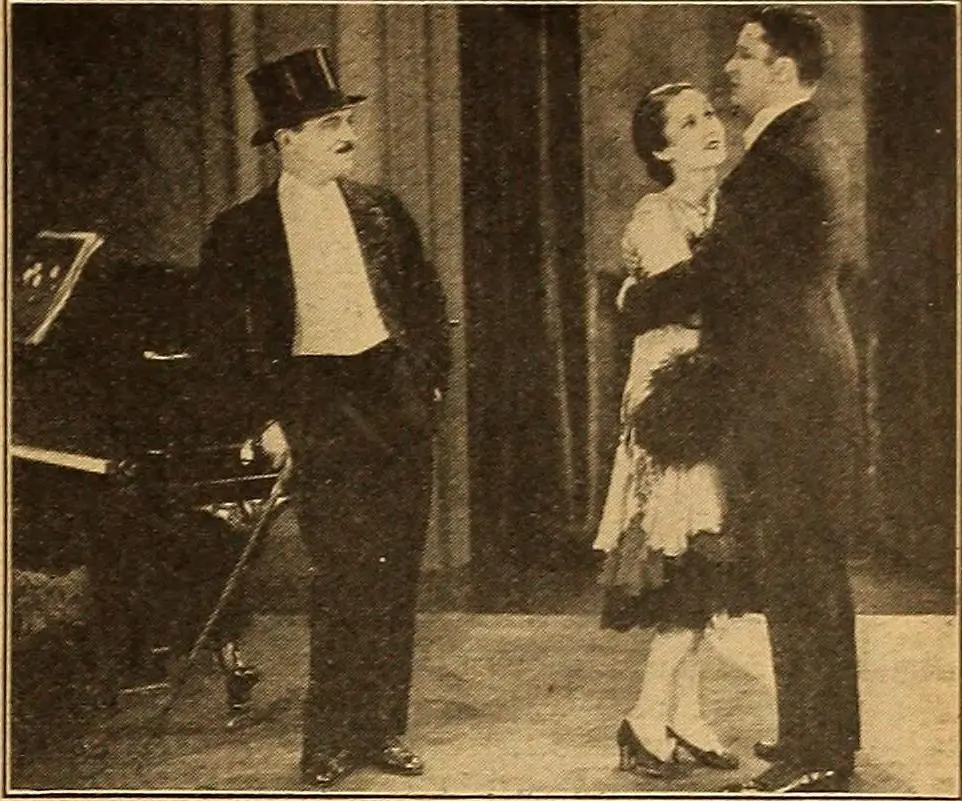
The pacing of Wet Paint is relentless. Once the 'random marriage' plot point is established, the film doesn't breathe until the final frame. This was a hallmark of Paramount's comedy output at the time, and it stands in stark contrast to the more deliberate, moralistic pacing of Faith. The cinematography by J. Roy Hunt focuses on medium shots that capture Griffith’s full-body movements, ensuring that every stumble and every frantic glance is visible to the audience.
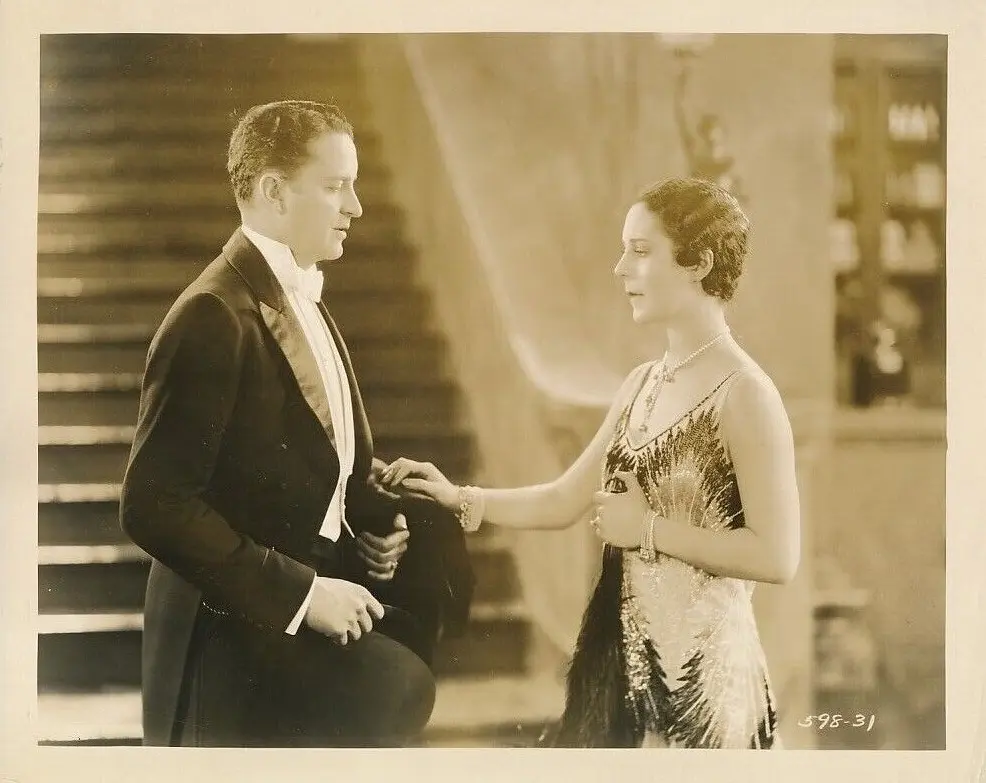
There is a specific visual gag involving a staircase that rivals anything Keaton did in terms of geometric humor. As Griffith tries to navigate the stranger's home without waking the husband, the camera tracks his movement with a fluidity that was quite advanced for 1926. It creates a sense of 'living theater' where the audience feels like an accomplice to his accidental crime. The lighting in these night scenes is appropriately moody, utilizing shadows to heighten the stakes of the farce.
If you are looking for a deep emotional resonance or a story that explores the human condition, Wet Paint will leave you cold. It is a surface-level film. But what a brilliant surface it is. It is worth watching for the sheer craft of silent comedy. It is a technical exercise in how to sustain a single, thin joke for over an hour without it becoming repetitive. It is a film for those who appreciate the 'how' of filmmaking more than the 'why'.
"Wet Paint is a reminder that in the silent era, a top hat and a misunderstanding were all you needed to build a world of chaos."
One surprising element of Wet Paint is how it treats the 'married woman' character. In many films of this era, like Molly and I, female characters are often relegated to being passive objects of the plot. Here, Helene Costello’s character has a palpable sense of agency and wit. Her reactions to Griffith’s presence in her home are not just screams of terror; there is a level of calculation in how she handles the situation that makes her a worthy foil for Griffith’s frantic energy.
Furthermore, the film’s title is a metaphor that is never explicitly hammered home, which is refreshing. The idea that the protagonist is 'wet paint'—something that looks finished but is actually dangerous to touch—is a subtle layer that adds a bit of bite to the comedy. It is a cynical film dressed in a tuxedo. It doesn't care about a happy ending as much as it cares about the next laugh.
Wet Paint is a lean, mean comedy machine. It is not a masterpiece of storytelling, but it is a masterclass in execution. Raymond Griffith proves that he was a comedic force to be reckoned with, delivering a performance that is both physically demanding and intellectually sharp. While it lacks the heart of a Chaplin film or the epic scale of The Vanishing American, it succeeds on its own terms as a pure, unadulterated farce. It works. But it’s flawed. If you can get past the absurdity of the premise, you’ll find a film that is as sharp as a razor and twice as fast.
IMDb 6.5
1933
Community
Log in to comment.