DbcultAccessing Vault...
6.1/10
Senior Film Conservator
A definitive 6.1/10 rating for a film that redefined the boundaries of cult cinema. What a Whopper! remains a cornerstone of transgressive art.
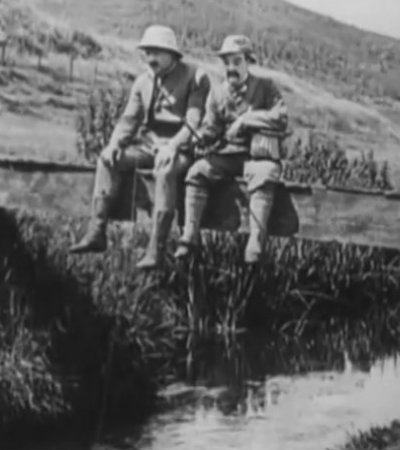
What a Whopper! is a testament to the power of simplicity in storytelling, where the collision of human folly and cinematic ingenuity creates an enduring classic. Hal Roach, the architect of slapstick cinema’s golden age, crafts a narrative that is as much about the mechanics of lies as it is about the anatomy of comedy. The film’s protagonists, Snub Pollard and Noah Young, are not mere caricatures but flawed, relatable figures whose desperation to outwit their spouses becomes a tragicomic ballet of misjudgment. Their plan—seemingly foolproof in theory—collapses under the scrutiny of minor details, a metaphor for how quickly control slips from even the most calculated schemes.
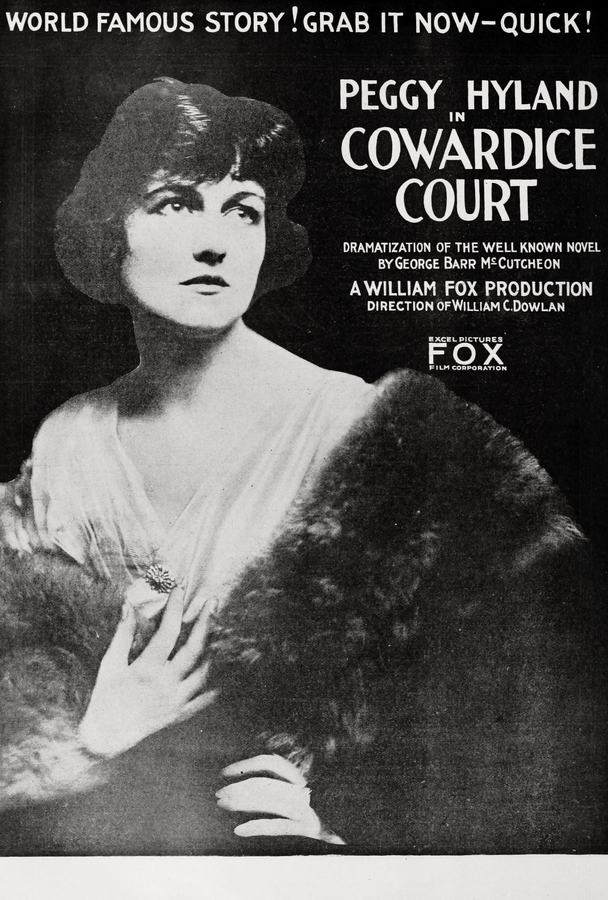
The film’s opening sequence is a masterstroke of economy. With barely a word of dialogue, Roach establishes the characters’ dynamic through visual cues: a shared glance of conspiratorial glee, a rehearsed line delivered with exaggerated confidence, and a mutual nod that speaks volumes about their shared delusion. This restraint is a hallmark of silent cinema’s best works, and Yes or No (1923) similarly employs visual storytelling to dissect marital tensions. However, What a Whopper! distinguishes itself by leaning into absurdity, transforming a simple lie into a labyrinth of escalating complications.
Snub Pollard’s physicality is the film’s beating heart. His facial expressions—microcosms of panic, bravado, and desperation—anchor the narrative in authenticity. When the facade begins to crack, his gestures grow frantic, a silent scream against the encroaching reality. Noah Young, meanwhile, plays the straight man with a charm that is both disarming and infuriating; his calm demeanor contrasts sharply with Snub’s unraveling, creating a push-and-pull dynamic that drives the film’s momentum. The supporting cast, particularly Owen Evans as a skeptical neighbor and Marie Mosquini as a sharp-eyed widow, injects the story with unpredictability. Their interactions with the leads are less about advancing the plot and more about amplifying the chaos, a technique echoed in The Girl and the Crisis (1924), where secondary characters serve as catalysts for the protagonists’ downfall.
What a Whopper! thrives on its structural audacity. The script, penned by Roach himself, embraces a non-linear rhythm, where each scene ends on a precarious cliffhanger only to reset the stakes in the next. This cyclical pattern mirrors the protagonists’ futile attempts to salvage their lie, a narrative choice that feels surprisingly modern. The film’s climax—a literal and metaphorical storm of confusion—is a tour de force of silent comedy. As the truth dawns on the characters, Roach employs rapid cuts, exaggerated close-ups, and a hauntingly ironic score to punctuate their panic. This crescendo of farce is reminiscent of In Wrong (1919), though What a Whopper! elevates the genre by infusing it with a self-awareness that borders on satire.
A recurring theme in Roach’s oeuvre is the fragility of human dignity, and What a Whopper! explores this with particular ferocity. The protagonists’ lies expose not just their incompetence but their inability to accept accountability. Their eventual humiliation is rendered with such pathos that the audience is left both laughing and empathizing. This duality is a hallmark of Roach’s work, as seen in Under Suspicion (1916), where comedic moments are intercut with moments of genuine emotional weight. The film’s resolution—where the truth is revealed not through grand gestures but mundane logic—is a quiet triumph, underscoring the futility of trying to outwit reality.
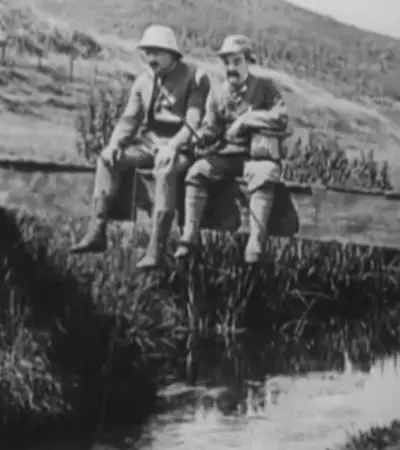
Technically, What a Whopper! is a marvel. The camera work is fluid yet deliberate, with Roach using long takes to heighten the tension of each scene. The editing, though rudimentary by today’s standards, is purposeful; jump cuts and cross-cutting between Snub and Noah’s parallel misadventures create a sense of simultaneity that amplifies the chaos. The film’s use of setting—from the cluttered interior of the protagonists’ home to the desolate outskirts where their fabricated hunting trip allegedly takes place—is both symbolic and practical. The home, with its ticking clocks and looming walls, becomes a prison of their own making, a motif that Out of the Night (1935) would later explore in a more dramatic context.
The film’s dialogue, though sparse, is meticulously crafted. Every line delivery is a performance within a performance, with the actors relying on inflection and timing to convey subtext. Snub’s stammered lies and Noah’s forced calm are not just comedic devices but psychological portraits of men on the brink. This attention to detail extends to the sound design (in its rudimentary state) and the score, which swells and recedes in harmony with the protagonists’ emotional arcs. The humor is not slapstick for its own sake but a vehicle for exploring deeper truths about human nature.
Comparisons to other Roach films are inevitable. Lasca (1925) shares a similar focus on marital deception, but What a Whopper! is more tightly woven, its narrative threads converging with surgical precision. The film also owes a debt to Ingeborg Holm (1913), which uses a similarly claustrophobic setting to explore moral dilemmas, though with far less levity. What a Whopper! is, in essence, a bridge between slapstick and social commentary, a genre blend that would later define Roach’s legacy.
The film’s legacy lies in its ability to balance absurdity with emotional resonance. It is a work that invites repeated viewings, with each watch revealing new layers of meaning in the characters’ choices and the script’s structure. For modern audiences, it serves as a reminder of the power of simplicity in storytelling—a lesson that even the most complex narratives can be reduced to a single, universal truth: lies, no matter how cleverly constructed, are never foolproof.
In conclusion, What a Whopper! is more than a comedy; it is a meditation on the human condition. Its enduring appeal lies in its authenticity, its refusal to sanitize the messiness of life, and its celebration of the small, everyday battles we all wage. Hal Roach’s vision, brought to life by a stellar cast, remains as fresh and relevant today as it was nearly a century ago—a testament to the timelessness of its message and the universality of its humor.
IMDb 6.6
1917
Community
Log in to comment.