DbcultAccessing Vault...
Cult Review
Senior Film Conservator
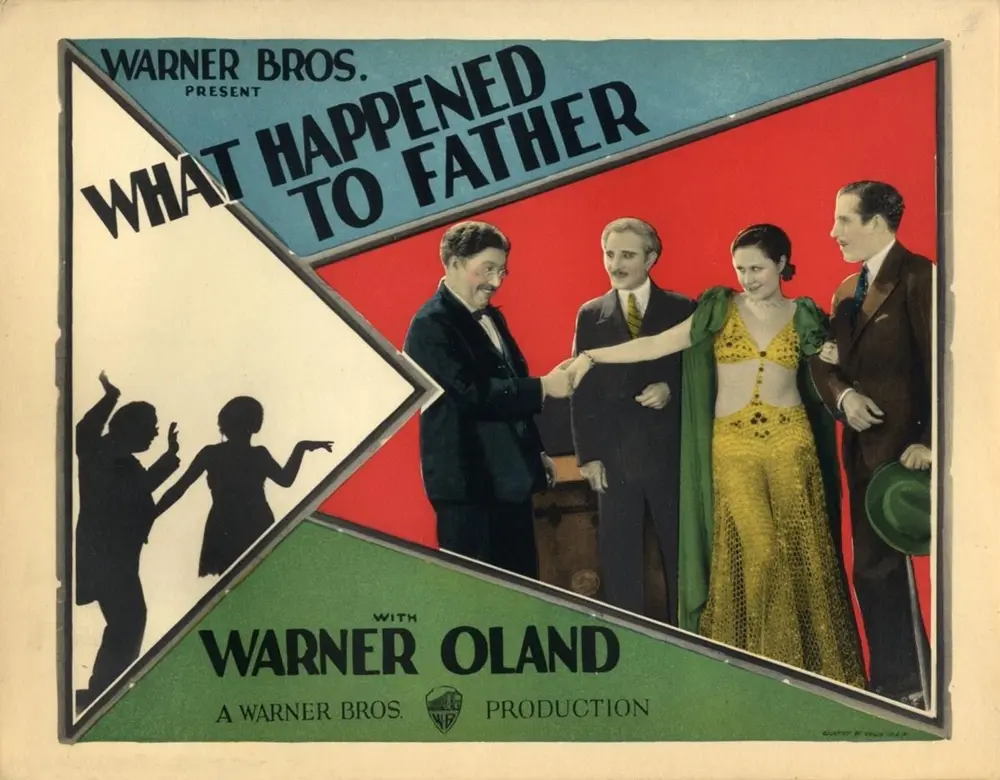
Is What Happened to Father (1927) worth watching today? Short answer: yes, but with significant caveats that demand a certain appreciation for its era. This silent comedy, often overlooked in the vast catalog of early cinema, offers a fascinating glimpse into the social dynamics and comedic stylings of the late 1920s, yet it struggles to fully resonate with modern pacing expectations.
This film is for dedicated silent film enthusiasts, those interested in the evolution of comedic storytelling, and viewers who appreciate character-driven narratives over rapid-fire plot twists. It is decidedly NOT for audiences seeking fast-paced action, complex visual effects, or contemporary humor that relies on overt irony or cynicism. If you require constant stimulation or find the conventions of silent acting laborious, you may struggle to connect with its subtle charms.
This film works because: It masterfully executes a character transformation, offering a surprisingly nuanced portrayal of domestic rebellion and self-discovery through Warner Oland’s central performance.
This film fails because: Its pacing can feel glacially slow by modern standards, and some of its comedic situations rely on tropes that have aged considerably.
You should watch it if: You are willing to engage with a film on its own historical terms and appreciate the quiet brilliance of its lead actor in a story about finding one’s voice.
The central conceit of What Happened to Father revolves around William Bradberry, an Egyptologist whose intellectual pursuits offer little defense against the domestic tyranny of his wife and the romantic distractions of his daughter. Warner Oland, a performer whose later career would be defined by more exotic and often villainous roles, here crafts a character of profound meekness, almost to the point of caricature. His early scenes portray a man physically shrinking under the weight of expectation, his gestures small, his eyes darting with a palpable anxiety. This initial characterization is crucial, setting the stage for a transformation that is both comedic and, in its own quiet way, empowering.
Bradberry’s secret life as a musical comedy writer is the engine of this change. It’s a beautifully simple, yet effective, narrative device that allows the film to explore themes of hidden talent and suppressed identity. The contrast between his dusty academic life and the vivacious world of musical theatre is stark, and the film leverages this dichotomy for both humor and character development. As he pours his spirit into these theatrical endeavors, a new assertiveness begins to manifest, subtly at first, then with increasing confidence.
This shift is not merely superficial; it’s depicted as a fundamental reordering of his personal agency. He moves from being a passive observer in his own home to an active participant, particularly when it comes to his daughter Betty’s romantic future. The film’s climax, where he intervenes to save Betty from the clutches of the “unsavory millionaire” Victor Smith, played with delightful smarminess by John Miljan, feels earned. It’s a testament to the character’s growth, rather than a deus ex machina. Betty, portrayed by Florence Fair (Florbelle Fairbanks), embodies a certain youthful naiveté, making her susceptible to Smith's charms, thus amplifying the stakes of Bradberry's intervention. Her eventual pairing with the earnest Tommy Dawson (Hugh Allan) feels like a natural, if somewhat predictable, resolution that reinforces traditional romantic ideals.
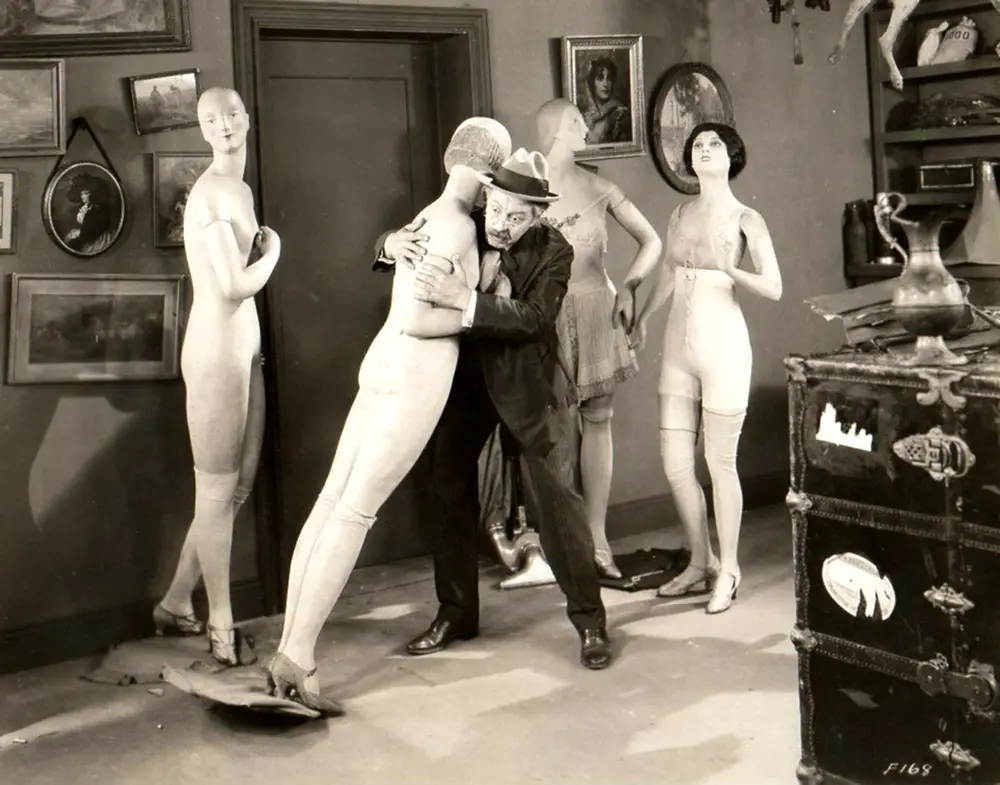
Warner Oland’s performance as William Bradberry is the undeniable anchor of What Happened to Father. Before he became synonymous with Charlie Chan, Oland possessed a remarkable range, and here he demonstrates an exquisite command of silent film acting. His initial portrayal of the henpecked scholar is a masterclass in physical comedy and subtle emotional expression. Watch his shoulders slump, his eyes cast downwards, or the way he nervously adjusts his spectacles when confronted by Vera Lewis’s formidable wife. These aren't grand gestures; they are nuanced, almost internal, expressions of a man utterly deflated.
The brilliance lies in the gradual nature of his transformation. It’s not an abrupt shift, but a slow burn, punctuated by moments of quiet defiance or newfound confidence. When Bradberry first begins to assert himself, it's often through a barely perceptible straightening of his posture or a slightly firmer gaze. This subtlety is a refreshing departure from the broader, more exaggerated performances often found in silent comedies. He truly sells the idea that creativity can be a catalyst for personal liberation.
Florence Fair, credited as Florbelle Fairbanks, as Betty, delivers a performance that, while less complex than Oland's, is perfectly suited to her role as the ingenue. Her wide-eyed innocence and susceptibility to Victor Smith's superficial charms are convincingly portrayed. John Miljan, as the villainous Smith, revels in his role, radiating a slick, untrustworthy charm that makes his eventual downfall all the more satisfying. Vera Lewis, as the domineering wife, provides a robust counterpoint to Oland's initial meekness, her stern expressions and commanding presence effectively establishing the domestic power imbalance.
One surprising observation about the film is how effectively it uses the domestic setting to explore a subtle critique of traditional gender roles. While Bradberry's wife is portrayed as a shrew, her control is ultimately challenged not by another man, but by her husband's embrace of a "feminine" art form: musical comedy. It's an unconventional path to patriarchal reassertion.
Directed by Charles R. Condon, What Happened to Father showcases a competent, if not groundbreaking, approach to silent film direction. Condon’s strength lies in his ability to frame scenes that highlight the emotional dynamics between characters. There are numerous instances where the spatial arrangement of actors within a shot visually communicates power imbalances. For example, early scenes often place Oland’s Bradberry physically lower or in the background, dwarfed by his wife or daughter, emphasizing his marginalized position.
The cinematography, while not employing the dramatic chiaroscuro of German Expressionism or the dynamic montage of Soviet cinema, serves the narrative effectively. The lighting is generally bright and naturalistic, accentuating the domestic setting. Close-ups are used judiciously to capture Oland’s subtle facial expressions during his transformation, allowing the audience to witness his internal shifts. One particular sequence, where Bradberry secretly works on his musical, utilizes softer lighting and a sense of quiet intimacy, contrasting sharply with the harsher, more brightly lit scenes of domestic confrontation.
The film’s visual storytelling relies heavily on established silent film conventions, but it executes them with a polished proficiency. There’s a clarity to the narrative progression that ensures even viewers unfamiliar with the genre can follow the plot without difficulty. The use of intertitles is efficient, providing necessary dialogue and exposition without over-reliance, allowing the visual performances to carry the bulk of the storytelling. While it won't be lauded for revolutionary camera work, its visual grammar is solid and supports the comedic and dramatic beats admirably.
The pacing of What Happened to Father is perhaps its most challenging aspect for contemporary viewers. It unfolds with a leisurely rhythm typical of many films from the mid-to-late 1920s, a period where cinema was still finding its narrative cadence before the advent of sound drastically altered editing speeds. The humor often builds slowly, relying on extended reaction shots and the gradual accumulation of character quirks rather than rapid-fire gags. This deliberate pace allows Oland’s character arc to breathe, giving ample time for his transformation to feel authentic.
The tone is predominantly lighthearted and comedic, but it’s tinged with an underlying social commentary about domestic roles and personal fulfillment. It’s a gentle satire, never veering into outright cynicism or harsh criticism. The film maintains a consistent optimistic outlook, even when depicting Bradberry’s
IMDb 7
1914
Community
Log in to comment.