DbcultAccessing Vault...
Cult Review
Senior Film Conservator
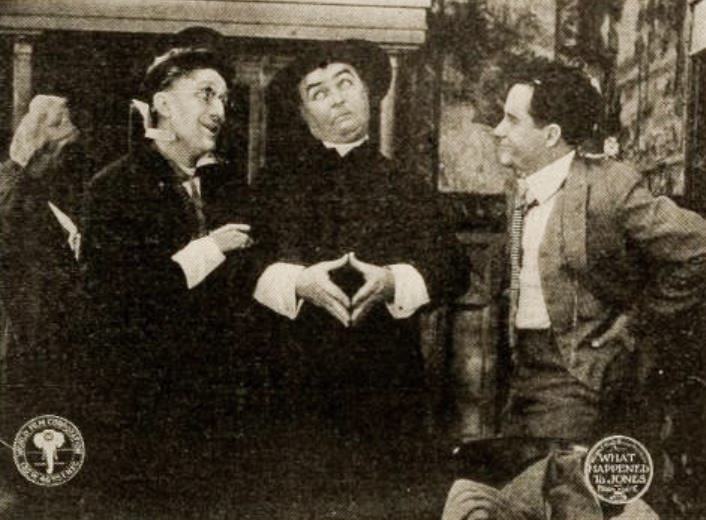
Picture a Victorian dollhouse hurled down a staircase—petticoats flutter like startled pigeons, calling-cards spin like shuriken, and somewhere a phonograph keeps playing a hymn off-key. That is the kinetic aftertaste of What Happened to Jones, George Broadhurst’s celluloid hurricane from the twilight of the silent era. Shot through with the same anarchic voltage that electrified The Ring and the Man, yet flecked with the domestic surrealism later refined in Mrs. Wiggs of the Cabbage Patch, this 1925 one-reel romp distills farce to a volatile perfume: one whiff and every etiquette manual in the parlor bursts into harmless flames.
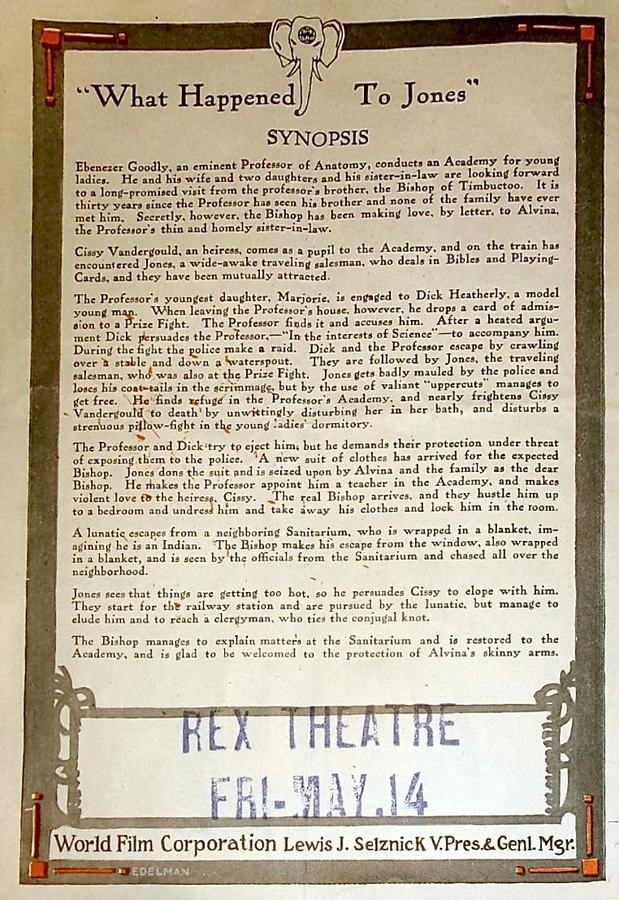
The film’s engine is misrecognition—those delicious moments when identity slips like a badly tied cravat. Jones, equal parts Elmer Gantry and spring-heeled harlequin, understands that in the bourgeois household the highest currency is not money but plausible respectability. By simply buttoning a cleric’s collar he purchases the run of the house, rewrites syllabi, and commandeers the marriage plot. Meanwhile the actual Bishop—an ivory-domed ascetic who has spent thirty years mapping the Niger—finds himself dragooned into a public asylum’s pageant of delusion. The gag is Swiftian: the man who once baptized entire villages must now prove he is sane to men who believe themselves to be Julius Caesar or the Apostate Donkey.
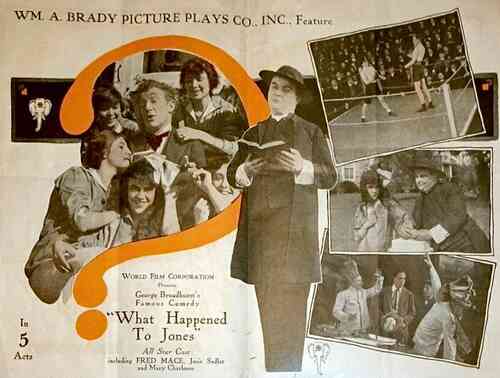
Broadhurst’s visual grammar favors the diagonal: no door opens straightforwardly, no corridor runs without a frantic detour. Note the prize-fight sequence, intercut with iris-shot close-ups of betting stubs fluttering to the sawdust like wounded moths. The camera pirouettes up to the rafters where policemen swarm, then plummets down a waterspout into the muck of the stable yard. Cuts arrive like uppercuts—each disruption of the 180-degree rule lands a tiny jolt of lawless glee. The result feels closer to Soviet agit-prop than to the polite proscenium staging still common in 1915 programmer comedies such as The Adventures of Kathlyn.
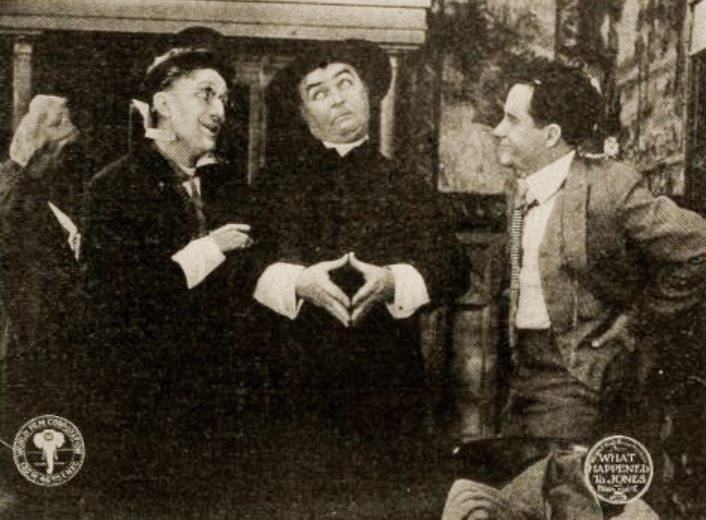
Performances oscillate between wax-museum stiffness and mercury frenzy. Bradley Barker’s Jones grins with the carnivorous bonhomie of a man who has already sold salvation to the choir; watch how he pockets the communion wafer between two flicks of a playing card. Marjorie Blossom’s Cissy is no flapper manquée but a Gilded-Age Circe—when she lowers her opera glasses the world rearranges itself into a more amusing disaster. Their chemistry crackles in a language of eyebrows and shoulders, the kind of semaphore that silent cinema, at its best, could make eloquent enough to shame talkie prose.
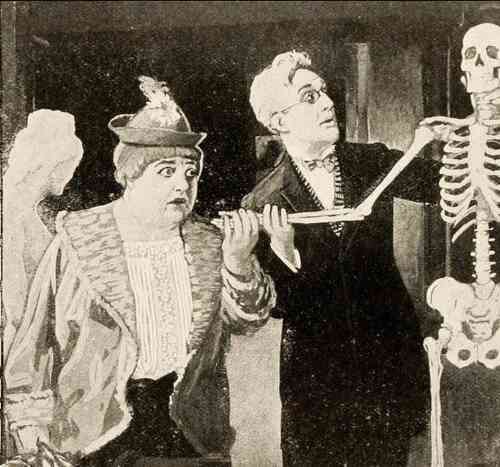
Yet the film’s slyest provocation is its sexual algebra. Beneath the censor-friendly veneer of chaperones and nightgowns, bodies swap permissions with libertine abandon. A single bathtub intrusion becomes a shotgun betrothal; a pillow-fight among schoolgirls prefigures an elopement. Even the spinster Alvina—described by an intertitle as "thin, homely, and resigned to the shelf"—archives an epistolary affair steamy enough to make the walls of Jericho blush. Broadhurst stages desire as centrifugal force: once set spinning, every door, corset, or social convention whirls outward until it can never quite resume its original shape.
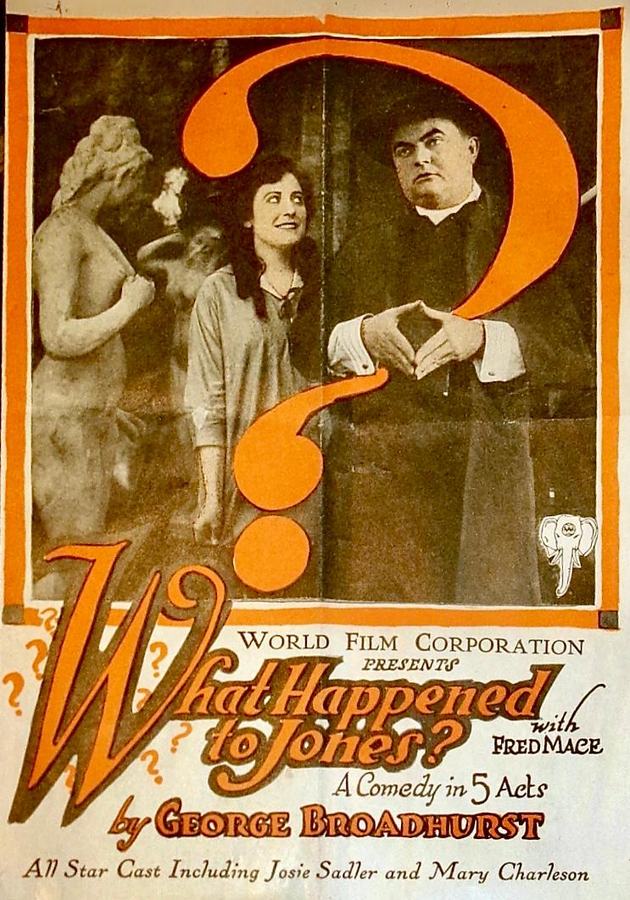
Compare this to the more sedate The Goddess, where illicit love brings tragic retribution. In Jones, adulterous letters and secret prize-fights are comedic catalysts, not moral indictments. The picture insists that transgression is the only reliable locomotive—once boarded, it delivers you, disheveled but beaming, straight into the arms of a waiting clergyman who will, with conspiratorial wink, tie the knot before the ink on the scandal dries.
The asylum subplot, often dismissed as mere slapstick garnish, actually serves as the film’s cracked mirror. If the academy polishes girls into marriageable statuettes, the sanitarium releases men into delusional grandeur—both institutions manufacture acceptable identities. When the two populations collide on midnight streets, wrapped indistinguishably in white sheets, the film asks: who is more delusional—the man who believes himself a bishop, or the society that needs the title more than the man?
Technically, the print survives in 16mm reduction, yet the nitrate shimmer still haunts certain frames: moonlit roof tiles glisten like black butter, and Cissy’s satin robe pools into a molten gold puddle at her feet. The tinting—amber for interiors, cerulean for exteriors—obeys emotional rather than diegetic logic, a strategy Kalmus would later systematize for Technicolor. Listen with a modern score (I recommend a brass-heavy quartet improvising over a prepared piano) and the anachronistic dissonance makes every pratfall feel like a prophecy of the Jazz Age about to detonate.
Of course, the picture is not without fissures. The racial imaginary remains trapped in minstrel aftertaste: the very name "Bishop of Timbuctoo" exoticizes Africa into a vaudeville backdrop. And the lunatic designated only as "Indian" perpetuates the savage-crazy binary endemic to early Hollywood. These caricatures, though peripheral, snag contemporary eyes like burrs—reminders that even anarchic comedy can police the same hierarchies it pretends to lampoon.
Still, the final elopement序列—shot with a hand-cranked camera bolted to a Model T—delivers a libertine rush that outpaces most twenty-first-century rom-coms. As Jones and Cissy speed toward the station, the frame wobbles with piston-jolt authenticity; the roadside grass stroboscopes into emerald ribbons. They are not merely escaping propriety—they are outrunning narrative itself, punching through the fourth wall into a future where marriage can be a prank and identity a rented costume.
So, a century later, What Happened to Jones remains a fizzy concoction: part bedroom farce, part social cartoon, part manifesto for perpetual reinvention. It will never occupy the pantheon beside The Labyrinth’s mystical grandeur or Sealed Valley’s pastoral melancholy. Yet its very slightness is its stealth weapon—it sneaks past your critical defenses, then detonates a confetti storm of subversive mirth. Watch it when the world feels over-regulated, when passports and algorithms pin you to an immutable self. Watch it, and for seventy breathless minutes you will remember that a collar can be reversed, a name borrowed, a life eloped—so long as you keep sprinting, laughing, and never look back to see whose coattails are scrabbling after you in the dust.

IMDb 6.1
1933
Community
Log in to comment.