DbcultAccessing Vault...
7.8/10
Senior Film Conservator
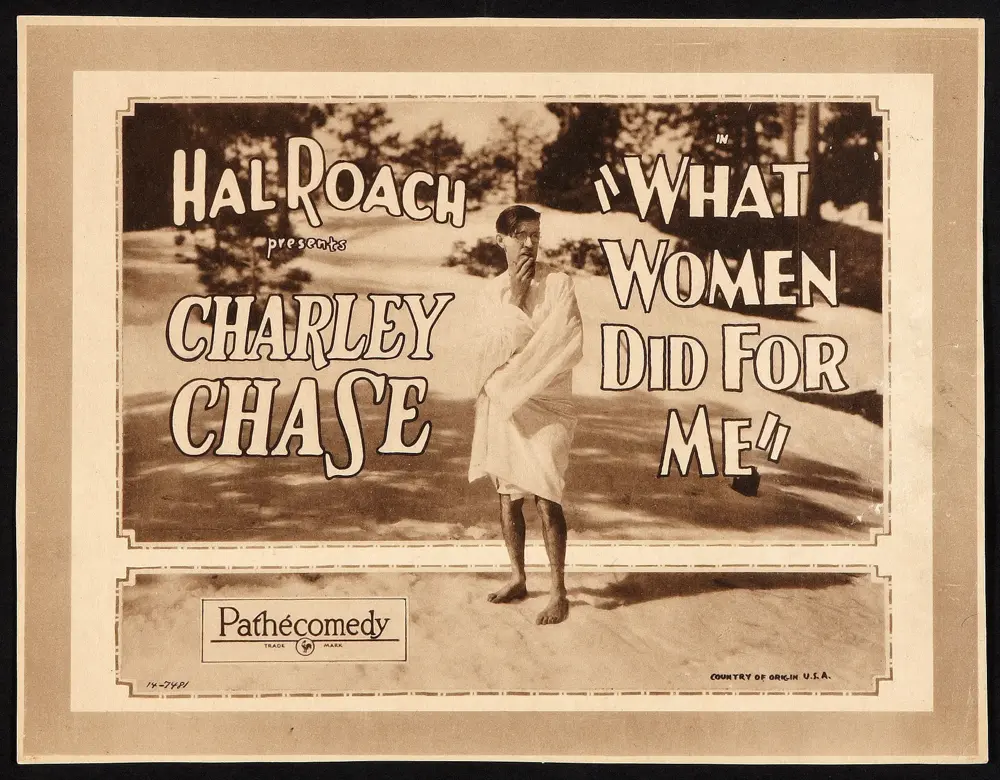
A definitive 7.8/10 rating for a film that redefined the boundaries of cult cinema. What Women Did for Me remains a cornerstone of transgressive art.
Is "What Women Did for Me" worth watching today? Short answer: yes, but with significant caveats that demand a particular kind of cinematic palate.
This silent comedy is undeniably for those with a deep appreciation for the era's unique humor and a willingness to overlook some truly uncomfortable social dynamics, yet it will likely alienate anyone seeking modern sensibilities or a truly progressive narrative.
Early in its runtime, a few things become clear about "What Women Did for Me."
This film works because: It commits wholeheartedly to its central comedic premise, leveraging Broderick O'Farrell's physical comedy and the farcical situations with surprising consistency, offering genuine, if dated, laughs.
This film fails because: Its core narrative, centered on "curing" a man of his fear of women, feels deeply uncomfortable and often regressive by contemporary standards, undermining much of its potential charm.
You should watch it if: You are a silent film enthusiast eager to explore lesser-known works, appreciate broad physical comedy, and can critically engage with historical depictions of gender without expecting modern enlightenment.
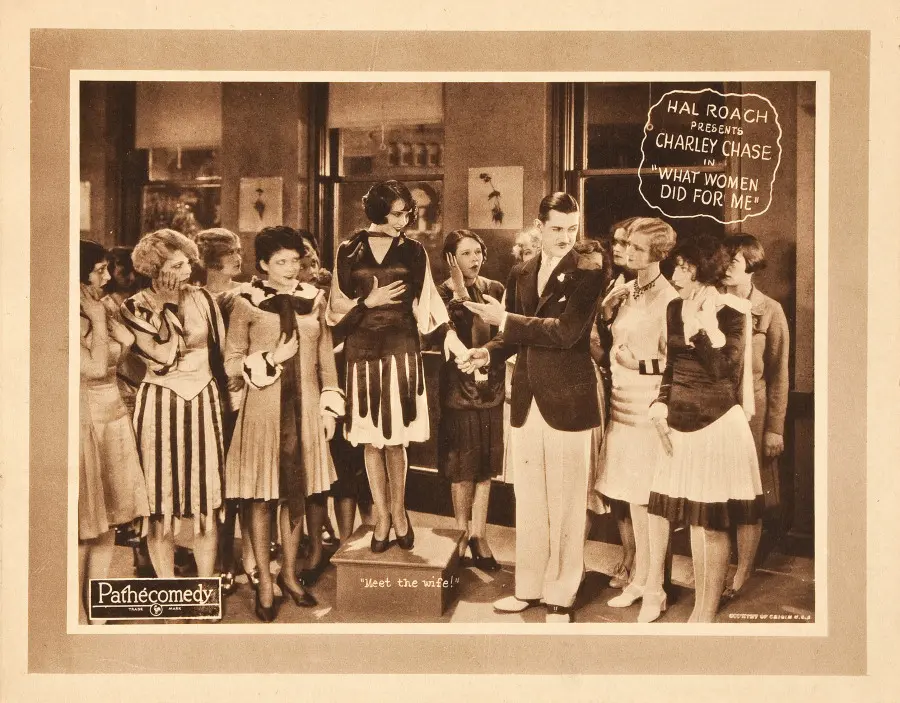
The premise of "What Women Did for Me" is, at its heart, a classic fish-out-of-water scenario, albeit one steeped in the social anxieties of the late 1920s. We are introduced to a professor, played with a delightful blend of terror and resignation by Broderick O'Farrell, whose every fiber recoils at the mere presence of women. This isn't just shyness; it's a full-blown phobia, a source of constant, exaggerated distress that the film mines for its primary comedic gold.
His unexpected appointment to an all-girls school forces him into the very environment he dreads. The narrative then pivots on the well-meaning, if utterly misguided, efforts of the school's dean, portrayed with vibrant energy by Lupe Velez. She positions herself as his personal therapist, devising increasingly elaborate schemes to desensitize him. From forced proximity in classrooms to awkward social engagements, the professor is subjected to a barrage of feminine interaction, each instance designed to push him further into his comedic discomfort.
The film doesn't delve into the psychological roots of his gynophobia, nor does it offer a nuanced exploration of the dean's motivations beyond a simple desire to "fix" him. Instead, it presents a series of escalating gags: the professor cowering behind furniture, attempting to flee through windows, or simply freezing in wide-eyed panic. It's a testament to the era's comedic sensibilities, where character development often took a backseat to the sheer spectacle of physical farce. The plot is less a journey of self-discovery and more a relentless assault on one man's personal space, all in the name of a cure.
While no specific director is credited in the film's available information, the production exhibits a clear understanding of silent comedy's mechanics. The pacing is brisk, a necessity for a short feature that relies on visual gags and rapid-fire reactions. There's little room for lingering shots or contemplative moments; the film moves from one awkward encounter to the next with an almost relentless efficiency.
The filmmakers effectively utilize intertitles not just for dialogue, but for setting up punchlines or conveying the professor's internal, often panicked, monologue. This provides a crucial layer of context to the visual humor. Consider the sequence where the professor is forced to sit amidst a group of giggling students; the intertitles often highlight his inner turmoil, contrasting sharply with the innocent, if overwhelming, presence of the girls. This technique, common in silent cinema, is particularly well-employed here to amplify the comedic effect of O'Farrell's physical reactions.
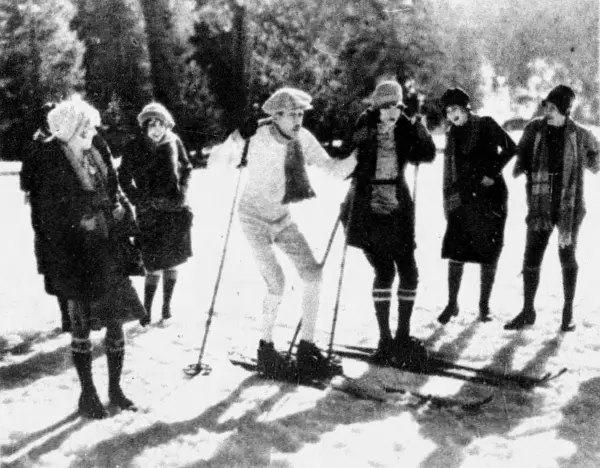
The direction orchestrates a series of well-timed physical jokes. There are moments reminiscent of early Trolley Troubles era slapstick, where the environment itself becomes a character, conspiring against the professor. Doors slam, chairs tip, and the sheer number of female students creates a constant, swirling threat. It's a style that prioritizes immediate, visceral laughs over subtle character beats, a choice that largely pays off within the confines of its genre and runtime. The film never overstays its welcome, ensuring that the gags, while repetitive in theme, don't become stale.
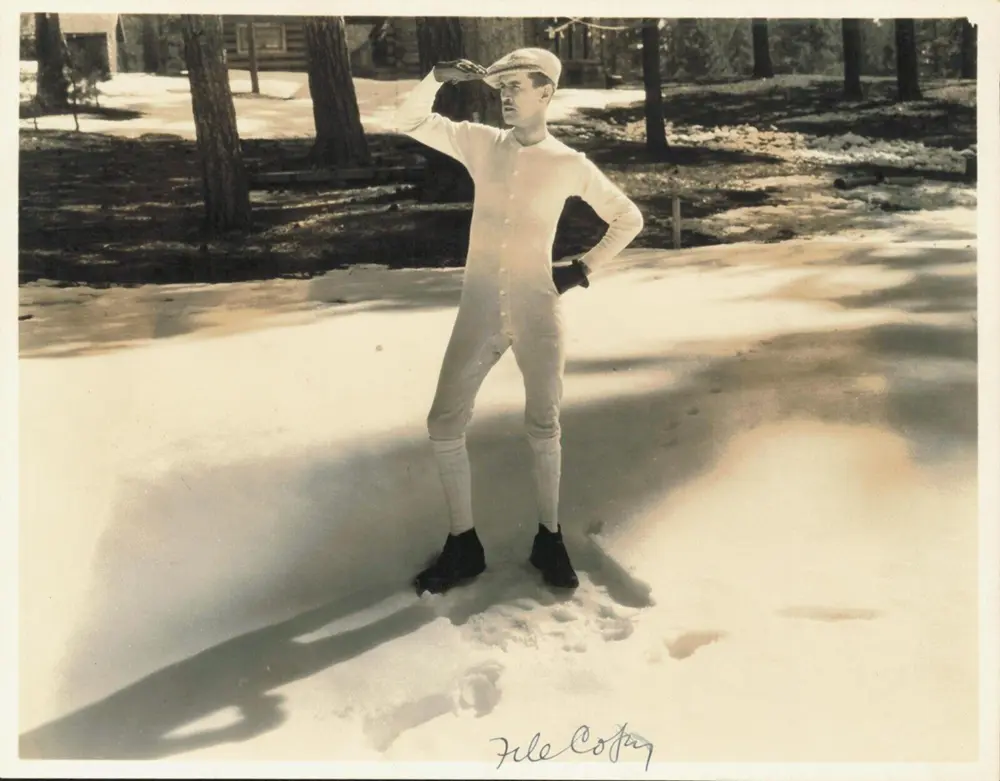
Broderick O'Farrell is the undisputed comedic anchor of "What Women Did for Me." His portrayal of the gynophobic professor is a masterclass in exaggerated physical comedy, a staple of the silent era. He doesn't just act afraid; he embodies terror with every twitch, flinch, and wide-eyed stare. His body language is a constant narrative in itself, conveying a profound internal struggle without uttering a single word. From his hunched shoulders to his desperate attempts to become invisible, O'Farrell sells the premise with unwavering commitment.
There's a touch of Harold Lloyd's earnest anxiety in O'Farrell's performance, but with a more pronounced, almost frantic, physicality. His facial expressions are particularly effective, shifting from mild discomfort to abject horror in mere frames. One memorable moment sees him attempting to lecture while simultaneously trying to avoid eye contact with an entire row of students, his eyes darting frantically, a bead of sweat seemingly forming on his brow. It’s a performance that demands attention, even as the character himself yearns for anonymity.
Lupe Velez, as the dean, provides a compelling counterpoint. Her energy is undeniable, a force of nature that contrasts sharply with O'Farrell's timidity. She plays the role with an almost aggressive benevolence, her determination to "cure" the professor often bordering on harassment. This is a debatable point: while her character is clearly intended to be sympathetic in her efforts, modern viewers might find her methods intrusive, even cruel. Velez's performance, however, is undeniably charismatic, injecting a vibrant, assertive feminine presence that drives much of the conflict.
The central theme of "What Women Did for Me"—a man being "cured" of his fear of women—is where the film truly shows its age. In 1928, the concept of a male phobia being a comedic device, and its solution being forced exposure, might have been seen as harmless farce. Today, it's difficult to view without a critical lens. The film treats gynophobia not as a genuine psychological condition requiring empathy and understanding, but as a quaint eccentricity to be overcome through social conditioning, often against the protagonist's will.
The tone is undeniably farcical, leaning heavily into slapstick and situational comedy. There's no attempt at nuanced character development or a deeper exploration of gender dynamics. Women are largely presented as either a source of terror (from the professor's perspective) or as benevolent, if somewhat overbearing, figures (the dean). This simplistic portrayal is a product of its time, but it certainly limits the film's appeal to contemporary audiences.
Yet, an unconventional observation arises: the film, perhaps inadvertently, highlights the sheer power dynamics at play in a female-dominated environment, particularly for a male protagonist in an era where male authority was largely unquestioned. The professor's discomfort isn't just about women, but about the loss of control, the reversal of traditional societal roles. It’s a subtle undercurrent that adds an unexpected layer to the otherwise straightforward comedy. The film essentially flips the script on traditional power structures, even if it does so through caricature.
Visually, "What Women Did for Me" is a competent example of late silent era filmmaking. The cinematography, while not groundbreaking, effectively serves the comedic narrative. Close-ups are frequently employed to capture O'Farrell's priceless expressions of terror and dismay, allowing the audience to fully appreciate his non-verbal performance. The camera work is straightforward, focusing on clarity and the precise framing of gags.
The production design is functional, depicting a believable, if somewhat generic, all-girls school. Sets are detailed enough to provide context without distracting from the action. Classrooms, dormitories, and the dean's office are all rendered with a sense of period authenticity. Costumes, too, are typical of the era, further grounding the film in its historical context. The students' uniforms and the dean's more formal attire contribute to the institutional feel, enhancing the professor's sense of being trapped in an alien world.
The lighting is standard for the period, largely bright and even, ensuring that all the physical comedy is clearly visible. There are no dramatic shadows or experimental flourishes; the emphasis is purely on storytelling through action. This straightforward approach allows the performances and the gags to take center stage, a hallmark of many successful silent comedies. It works. But it’s flawed.
If you are a devoted fan of silent cinema, particularly early comedies, then "What Women Did for Me" offers a fascinating glimpse into the genre's enduring appeal. Broderick O'Farrell's performance alone makes it worth seeking out for its sheer comedic commitment. It's an interesting historical artifact.
However, for casual viewers or those unfamiliar with silent film conventions, its dated premise and broad humor might prove challenging. The central conflict, while intended as lighthearted, can feel uncomfortable through a modern lens, making it less accessible than more timeless silent classics.
It is not a film for everyone. But it offers genuine laughs for those who appreciate its specific brand of humor.
"What Women Did for Me" is a comedic time capsule, reflecting both the ingenuity and the limitations of its era, particularly in its portrayal of gender and psychological conditions. It's a film that demands historical context from its audience.
"What Women Did for Me" is a curious relic from the silent era, a film that, despite its considerable comedic energy and a standout performance from Broderick O'Farrell, is undeniably a product of its time. Its central conceit, while once fodder for easy laughs, now serves as a stark reminder of how much societal attitudes have evolved. It's a film that will resonate deeply with silent cinema aficionados who appreciate broad physical comedy and can contextualize its problematic themes within its historical framework.
For others, it might be a challenging watch, a quirky historical footnote rather than an essential viewing experience. I recommend it with a strong caveat: approach it as an academic exercise in comedic history, rather than a timeless piece of entertainment. It's a film that did something for me, certainly, by offering a window into a bygone era's humor, but that window also reveals some rather uncomfortable truths.

IMDb 7.3
1931
Community
Log in to comment.