DbcultAccessing Vault...
5.5/10
Senior Film Conservator
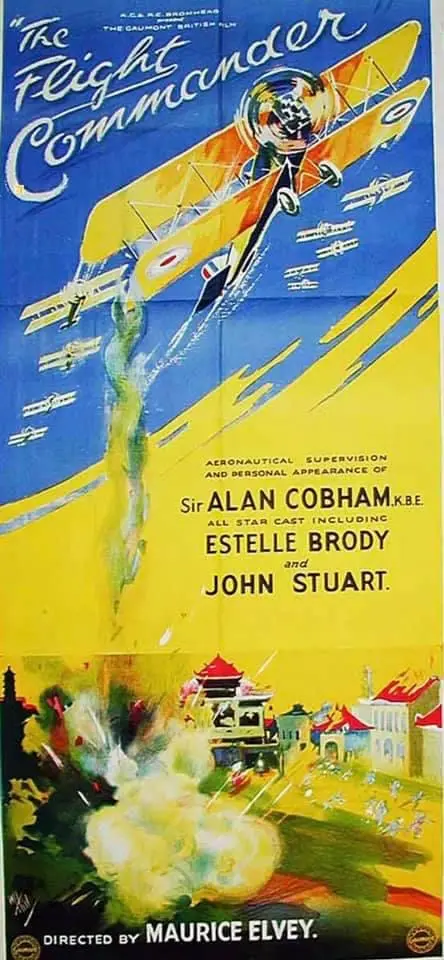
A definitive 5.5/10 rating for a film that redefined the boundaries of cult cinema. The Flight Commander remains a cornerstone of transgressive art.
Short answer: No, unless you are a dedicated archivist of British silent cinema or an aviation enthusiast. It is a rigid, period-locked artifact that prioritizes imperial signaling over genuine character growth.
This film is for historians interested in 1920s propaganda and the technical evolution of aerial photography. It is NOT for modern audiences seeking nuanced storytelling or a balanced historical perspective.
This film works because it captures the genuine physical peril of early flight, using real aircraft in sequences that feel tactile and dangerous compared to modern digital effects.
This film fails because its script relies on cartoonish villainy and a pacing structure that grinds to a halt during its middle act, focusing too much on mundane social interactions among the British residents.
You should watch it if you want to see how British cinema in the 1920s used the 'Bolshevik' threat as a universal boogeyman to justify colonial intervention.
Maurice Elvey was perhaps the most prolific director in British history, and in The Flight Commander, his workmanlike efficiency is on full display. He doesn't waste time with the poetic visual metaphors found in German Expressionism of the same era. Instead, he treats the camera like a journalist.
The scenes involving the airfield are the film's only moments of true energy. When John Stuart’s character prepares for takeoff, Elvey focuses on the mechanical grit—the spinning propellers, the goggles, the wind-whipped scarves. It feels authentic. It feels heavy.
However, once the camera moves indoors to the British residence, the energy evaporates. Elvey struggles to make the domestic threat feel as visceral as the physical threat of a crashing plane. Compared to the raw intensity of The Fight, this film feels trapped in its own decorum.
John Stuart provides a performance that is almost aggressively British. He is a statue of duty. While this fits the 'Flight Commander' archetype, it leaves the audience with very little to latch onto emotionally. He doesn't have a character arc; he has a mission.
Estelle Brody offers a bit more spark, but her role is largely reactive. She exists to be saved, a trope that was already tired by 1927. In one specific scene, where she stares out a window awaiting the sound of an engine, her performance manages to convey the isolation of the expatriate experience, but the script quickly smothers this nuance in favor of the impending massacre plot.
The 'Bolshevik' villains are portrayed with zero interiority. They are a faceless, looming mass of 'red' aggression. This lack of a compelling antagonist makes the eventual rescue feel inevitable rather than earned. It lacks the gritty character work seen in Red Courage, where the stakes felt personal.
The cinematography is the film's strongest asset. For 1927, the mounting of cameras on the wings and fuselages was a feat of engineering. These shots provide a sense of scale that the grounded scenes desperately lack.
There is a specific shot where the plane banks over a rural Chinese landscape (likely a British countryside stand-in). The way the horizon tilts and the struts of the plane frame the world below is genuinely impressive. It captures the 'god-like' perspective that early pilots must have felt.
But the lighting in the interior scenes is flat. It lacks the shadows and depth found in American films of the same year, such as Sunlight's Last Raid. The visual contrast between the 'freedom' of the air and the 'stagnation' of the ground is likely unintentional, but it is the most interesting thing about the film’s look.
The film’s biggest enemy is its own runtime. At nearly 100 minutes, the first two acts are leaden. There are endless scenes of British residents discussing their fears, drinking tea, and waiting. It attempts to build tension through delay, but it results in boredom.
A tighter edit would have focused on the pilot’s journey and the logistical hurdles of the rescue. Instead, we get a bloated domestic drama that feels disconnected from the action. It lacks the propulsive energy of The Mystic, which understood how to balance mystery with movement.
The climax, when it finally arrives, is over in a flash. The rescue is efficient, clinical, and strangely devoid of suspense. The plane arrives, the day is saved, and the credits roll. It’s a mechanical conclusion to a mechanical film.
For a casual viewer, the answer is no. The Flight Commander is a slow, politically dated drama that only finds its wings during its brief flight sequences. If you are looking for a thrilling silent-era adventure, there are far better options available. However, if you want to study how 1920s Britain viewed its place in the world, it is a fascinating, if uncomfortable, watch.
Pros:
Cons:
The Flight Commander is a film that exists more as a historical document than a piece of entertainment. It is a product of its time—arrogant, technically ambitious, and narratively thin. It works as a showcase for Maurice Elvey’s ability to manage a large-scale production, but it fails to resonate as a human story.
It’s a movie that flies, but it never truly soars. If you’ve already seen the more dynamic The Collegians or the character-driven Frontier of the Stars, you might find this one a bit too dry to enjoy. It’s a museum piece. Look, but don't expect to be moved.
IMDb 6.3
1936
Community
Log in to comment.