DbcultAccessing Vault...
Cult Review
Senior Film Conservator
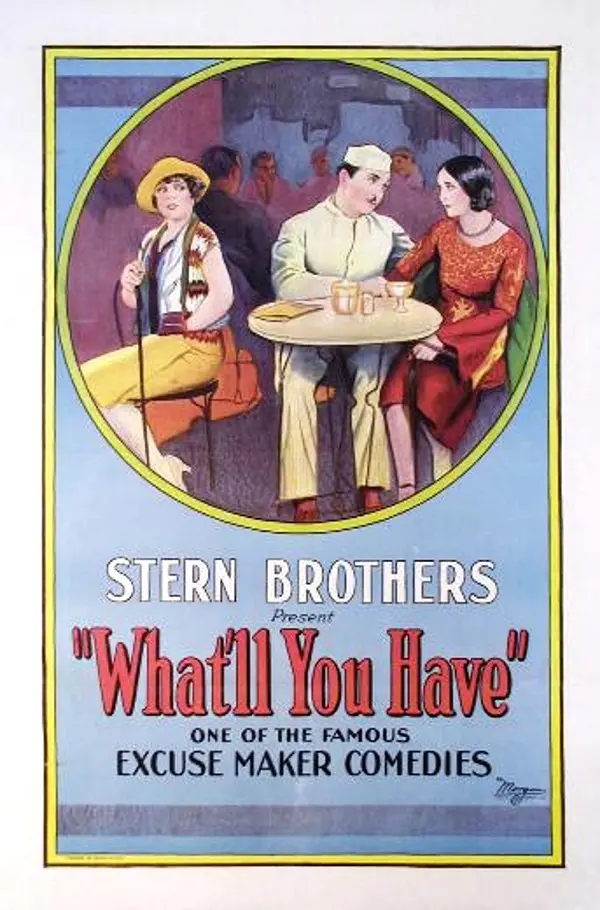
Is What'll You Have?, a 1919 silent comedy starring Charles King, worth your precious viewing time in the modern era? Short answer: yes, but with significant caveats that demand a specific kind of appreciation. This film is an absolute must-see for dedicated silent film enthusiasts, film historians, and anyone deeply curious about the foundational elements of physical comedy and early cinematic storytelling.
However, for viewers accustomed to contemporary pacing, sophisticated narrative arcs, or humor derived from witty dialogue, this charming relic will likely test your patience. It's a film for those who can find joy in raw, unrefined energy and appreciate the historical context over polished production. It is decidedly not for those seeking a passive, easily digestible entertainment experience or who are put off by the inherent limitations of early cinema.
This film works because of its unpretentious charm, Charles King's undeniable physical presence, and its valuable insight into the comedic sensibilities of its time.
This film fails because its plot is undeniably thin, its humor is profoundly dated for a general audience, and its likely un-restored state can make for a challenging viewing experience.
You should watch it if you're keen to explore the origins of slapstick, appreciate the art of silent performance, or simply enjoy a lighthearted, historical romp that asks little more than a smile.
Stepping into What'll You Have? is akin to opening a time capsule, offering a direct line to the comedic sensibilities and narrative simplicity that defined early American cinema. Directed by William Anthony, this 1919 production is a delightful, if fleeting, example of the era's popular short-form comedies, designed to elicit immediate laughter and provide a brief escape from the everyday. It's a testament to the power of pure performance in an age before synchronized sound, where every gesture, every exaggerated facial expression, had to convey entire paragraphs of emotion and intent.
The film places us squarely in a soda establishment, a quintessential social hub of the early 20th century. Here, Charlie, played with indefatigable energy by Charles King, embodies the everyman whose life is about to take an unexpected turn. King, a performer whose career spanned both vaudeville and early Hollywood, brings a theatricality to the screen that is both endearing and, at times, overwhelmingly boisterous. His character is less a nuanced individual and more a vehicle for a series of escalating gags, a common approach in comedies of this period.
Constance Darling, as the pretty heiress, fulfills the role of the charming ingenue, the catalyst for Charlie's misadventures. Her presence is largely reactive, serving as the object of Charlie's affection and the damsel in distress (however briefly) that allows him to prove his worth. The dynamic between them is less about romantic chemistry and more about the classic comedic setup of an unlikely suitor pursuing an unattainable prize, a trope that was hugely popular and consistently successful with audiences.
The true engine of What'll You Have? is the unbridled physicality of Charles King. In an era where silent actors were expected to project emotion and action without dialogue, King delivers a masterclass in expressive, often exaggerated, performance. His movements are broad, his reactions instantaneous, perfectly suited for the rapid-fire gags that characterize the film. This isn't subtle comedy; it's a full-frontal assault of pratfalls, frantic gestures, and wide-eyed astonishment.
One of the film's early highlights, and a clear indicator of King's comedic style, is the 'Sir Walter Raleigh' moment. Faced with a muddy crossing, Charlie chivalrously (and clumsily) lays down his coat to allow the heiress to mount a taxi without soiling her shoes. It's a simple gag, but King's execution – the earnest effort, the slight miscalculation, the triumphant flourish – sells the scene. It immediately establishes Charlie as a character whose heart is in the right place, even if his methods are a bit rough around the edges.
The comedy escalates further within the soda establishment itself. Charlie's attempts to disguise himself to avoid recognition by the heiress, post-chivalry, are a riot of quick changes and frantic hiding. This sequence showcases King's ability to transition between personas, albeit comically, and maintain a high level of energy. The sheer absurdity of his efforts, coupled with the confined space of the store, generates genuine laughter, demonstrating the enduring power of situational irony when paired with committed physical acting.
However, the pinnacle of King's performance, and indeed the film's comedic climax, arrives when Charlie confronts the burglars. The plot description's reference to a 'Van Bibber style' is particularly insightful here. Richard Harding Davis's gentleman adventurer, Van Bibber, was known for his suave, yet effective, handling of urban mischief. Charlie, the soda clerk, channels this spirit not with elegance, but with a raw, almost desperate, physicality. The ensuing brawl is a whirlwind of flailing limbs, improbable dodges, and accidental victories. It's less a choreographed fight and more a chaotic explosion of energy, perfectly befitting the slapstick genre. King's commitment to the chaos makes this segment surprisingly engaging, even if the staging is rudimentary by today's standards.
The plot of What'll You Have?, while straightforward, serves as an excellent framework for its comedic set pieces. It adheres to a classic rags-to-riches, accidental-hero narrative that was deeply satisfying to audiences of the era. Charlie, the ordinary man, through a combination of circumstance and innate, if clumsy, goodness, rises to an extraordinary occasion. This aspirational element, the idea that anyone could be a hero and win the girl, resonated powerfully in early 20th-century America.
The film's resolution, where Charlie is not only hailed as a hero and given a 'fat check' but also 'claims the girl,' is a product of its time that warrants a critical eye today. While charmingly direct in its simplicity, it reflects a period when women in narratives were often presented as prizes to be won, rather than independent agents. This aspect, while historically accurate for the era, can feel jarringly simplistic to a modern audience, reducing the heiress to a mere reward for Charlie's valor. It’s a debatable point: does this dated convention detract from the film's overall charm, or does it simply serve as a historical marker of evolving social narratives?
Despite this, the film's ability to transition from lighthearted flirtation and disguise to genuine heroic action is quite effective. William Anthony's direction, while not groundbreaking, keeps the pace brisk and the focus firmly on King's performance. There's a clear understanding of comedic timing for the silent screen, ensuring that each gag lands with maximum impact, even if the narrative logic occasionally takes a backseat to the laughs. The film doesn't aim for deep thematic resonance; its goal is pure, unadulterated entertainment, and in that, it largely succeeds.
Evaluating the technical merits of a 1919 silent film, especially one that may not have undergone extensive modern restoration, requires a particular lens. The cinematography in What'll You Have? is functional rather than artistic. Shots are typically static, framing the action clearly and allowing King's physical comedy to take center stage. There's little in the way of complex camera movement or innovative editing, which was still in its nascent stages for mainstream cinema.
The pacing, while brisk for its time, might feel slow to contemporary viewers accustomed to rapid cuts and constant narrative propulsion. Silent films often relied on longer takes to allow audiences to absorb the visual information and react to the comedic beats. The tone is consistently light and farcical, never veering into genuine danger or dramatic tension, even during the burglar sequence. It's a commitment to pure comedy that defines its aesthetic.
An unconventional observation here is how the physical state of such historical films often becomes part of the viewing experience. Grainy images, scratches, and missing frames (if applicable) paradoxically don't always detract. Instead, they can add a layer of authenticity, a tangible connection to the past that forces the viewer to engage more actively, filling in the visual gaps with imagination. It's a reminder of cinema's fragile history and the dedicated efforts required to preserve these early works. The film's 'look' is therefore not just about its original artistic intent, but also about its journey through time.
Yes, What'll You Have? is worth watching today, but only if you approach it with the right mindset. It is a valuable historical document.
For silent film enthusiasts, it offers a window into the comedic style of Charles King and the narrative conventions of the late 1910s. It provides insights into how basic comedic tropes were executed without sound.
For general audiences, it can be a challenging watch. The humor is broad and physical, lacking the quick wit of modern dialogue-driven comedies. The pacing is deliberate, and the visual quality may be rough.
However, if you appreciate the foundational elements of slapstick and wish to understand cinema's evolution, this film offers a genuine, albeit brief, glimpse into that world. It's a reminder of simpler times and simpler laughs.
What'll You Have? is more than just a forgotten film; it's a vibrant, if somewhat faded, snapshot of early 20th-century entertainment. It works. But it’s flawed. Its primary appeal lies in its historical value and the sheer, unadulterated energy of Charles King, whose performance single-handedly elevates what would otherwise be a rather forgettable short. The film is a valuable artifact for understanding the evolution of cinematic comedy, showcasing the raw ingredients that would later be refined by giants like Chaplin and Keaton.
For the casual viewer, its dated humor and basic plot might make it a curiosity more than a compelling watch. But for anyone with a genuine appreciation for the origins of cinema, for the art of silent performance, and for the simple, boisterous joy of physical comedy, What'll You Have? offers a charming, if brief, journey back in time. It's a delightful reminder that even in its infancy, cinema had the power to transport, entertain, and, most importantly, make us laugh.
So, if you're willing to adjust your expectations and embrace the quirks of a bygone era, pull up a chair at Charlie's soda fountain. You might just find yourself surprisingly entertained by this spirited slice of cinematic history. It's not a masterpiece, but it's an important piece of the puzzle.
IMDb 5.5
1934
Community
Log in to comment.