DbcultAccessing Vault...
Cult Review
Senior Film Conservator
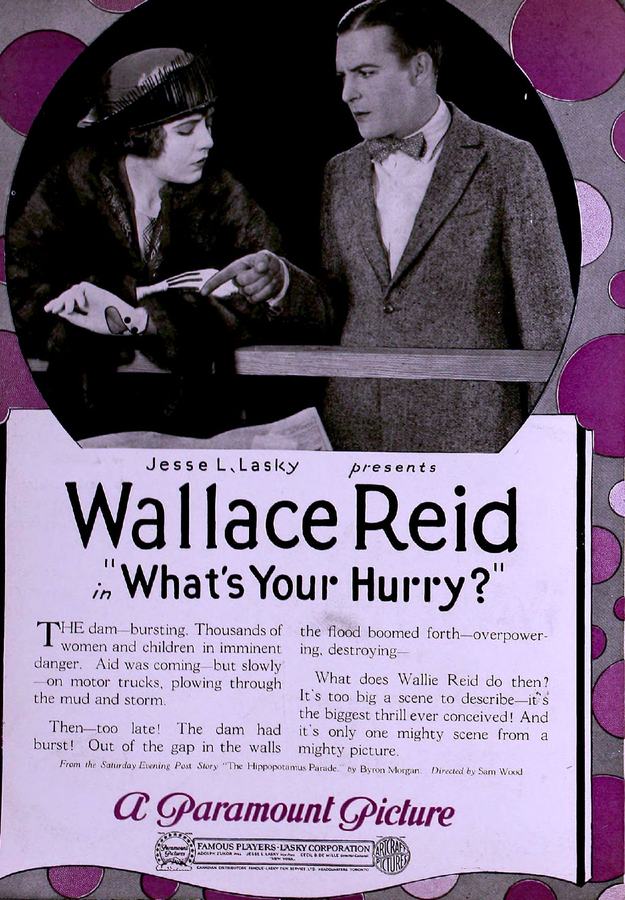
In an era when cinematic storytelling relied solely on the power of visual narrative, expressive acting, and the evocative strains of a live orchestra, films like 1920's "What's Your Hurry?" carved out their niche with raw, unadulterated tension. Directed with a clear vision by Wallace Reid himself, who also takes the lead role, this feature is a masterclass in silent-era suspense, a visceral race against time that still manages to grip the viewer a century later. It's a testament to the fundamental human drama that transcends dialogue, relying instead on the universal language of peril, determination, and heroism.
The premise, deceptively simple, unravels into a complex web of logistical nightmare and existential threat. We are introduced to Dusty Rhoades, portrayed with characteristic vigor and charm by the era's heartthrob, Wallace Reid. Rhoades is not just a truck driver; he's the quintessential embodiment of a working-class hero, possessing both the grit of the road and an innate sense of responsibility. His mission, alongside a cadre of fellow truckers, is nothing less than salvific: to transport critical emergency supplies across terrain so treacherous it would make lesser men falter. The stakes are monumental, amplified by the looming catastrophe of a dam on the brink of collapse. The very pulse of the community, its survival, hinges on these deliveries, on the success of these men and their formidable machines.
Wallace Reid, a name that once commanded immense box office draw, brought a unique blend of athleticism and understated intensity to his roles. In "What's Your Hurry?", he isn't just acting; he's embodying the very spirit of the era's nascent industrial might and rugged individualism. His Dusty Rhoades is a character of few words (naturally, given the medium), but his every gesture, every furrow of his brow, every determined set of his jaw, speaks volumes. He conveys the immense pressure of his burden without uttering a single syllable, a feat that underscores the sheer talent required of silent film stars. It's a performance that reminds us why Reid was so beloved, why his premature passing was such a significant loss to early cinema. He had an innate ability to connect with the audience, to project sincerity and strength, making the seemingly impossible task of delivering supplies feel genuinely urgent through his sheer force of presence.
"The very pulse of the community, its survival, hinges on these deliveries, on the success of these men and their formidable machines."
Lois Wilson, as the likely romantic interest or perhaps the embodiment of the community's hope, provides a crucial counterpoint to Reid's stoic resolve. While the plot summary doesn't explicitly detail her role, one can infer that her presence would have added emotional depth, perhaps depicting the anxieties of those waiting for rescue or offering a beacon of encouragement. Silent film heroines often served as the emotional anchor, reflecting the audience's fears and hopes. Ernest Butterworth Jr., Charles Ogle, Jack Young, Clarence Burton, and Ernest Joy fill out the supporting cast, likely providing the necessary backdrop of fellow truckers, townsfolk, or even antagonists who might impede Rhoades' progress. Each actor, in their own way, contributes to the tapestry of a community grappling with an impending disaster, their performances relying on exaggerated expressions and body language to communicate their inner turmoil and determination.
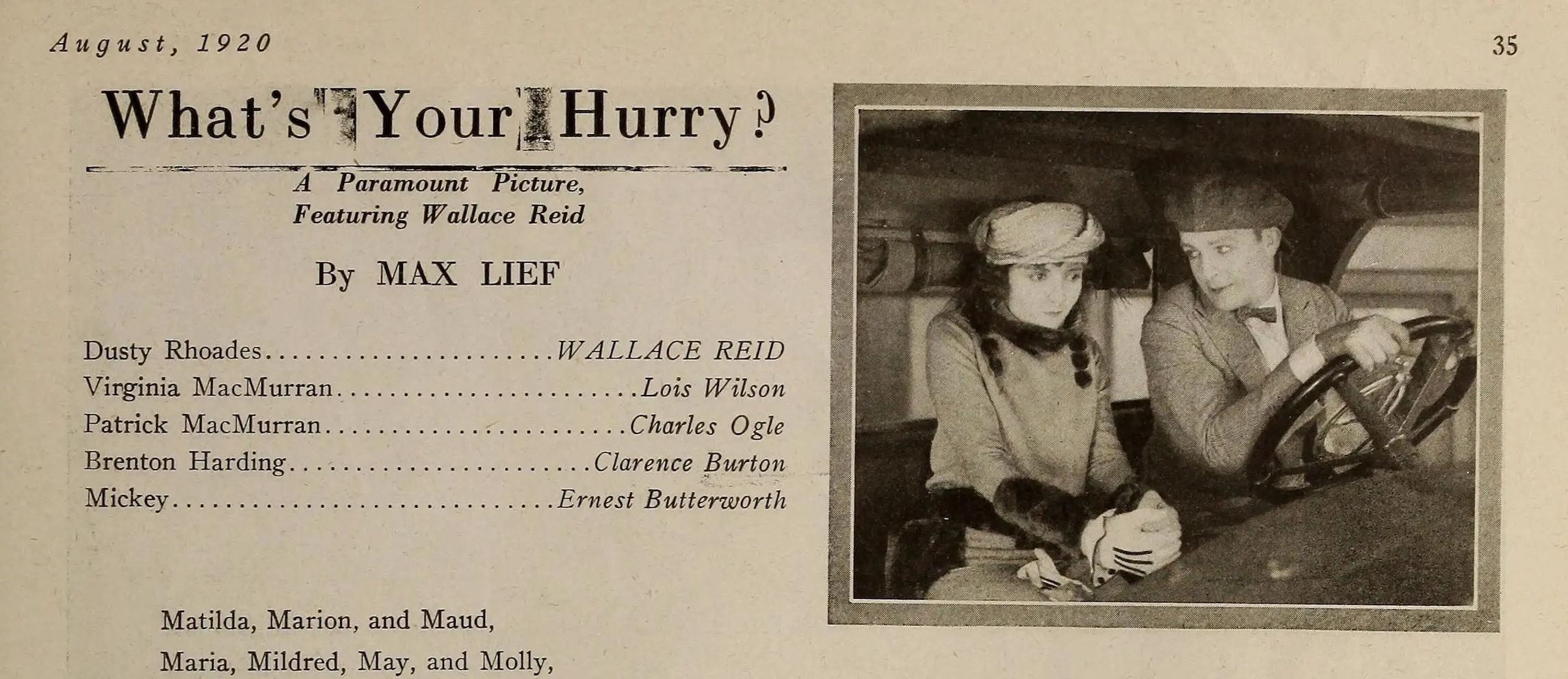
Byron Morgan's screenplay, even without dialogue, must have been meticulously crafted to build tension and propel the narrative forward. The concept of a race against a breaking dam is inherently cinematic, offering ample opportunities for thrilling sequences: trucks navigating perilous mountain passes, close calls with collapsing bridges, the relentless visual of rising water levels. The director, likely Wallace Reid himself (though sometimes uncredited in early films, his involvement was often substantial), would have employed dramatic camera angles, rapid cutting during moments of crisis, and close-ups to emphasize the actors' emotional states. This film, like many of its contemporaries, would have been a spectacle of visual storytelling, designed to elicit gasps and cheers from a captivated audience.
Consider the technical challenges of filming such a story in 1920. Practical effects would have been paramount, involving real trucks, real dangerous roads, and perhaps miniature work for the dam sequences. The sheer logistical undertaking of staging such a production speaks volumes about the ambition of early filmmakers. The authenticity of the locales, the dust, the sweat, the grime – these elements would have lent a gritty realism to the narrative, immersing the audience in the arduous journey. This tactile quality is something often lost in modern, CGI-heavy productions, making silent films like this a fascinating window into a different approach to cinematic realism.
Beyond the thrilling action, "What's Your Hurry?" likely delves into profound themes that resonate across time. The most prominent is human resilience in the face of overwhelming natural forces. The dam, a symbol of human ingenuity, also represents vulnerability when confronted by nature's power. Dusty Rhoades and his team become symbols of communal strength, individuals banding together for the greater good. This theme echoes in other adventure narratives, even those with different settings, such as the quiet determination seen in Far from the Madding Crowd, where characters grapple with the unforgiving demands of nature and fate. The selflessness required to undertake such a perilous journey speaks to an inherent nobility, a willingness to sacrifice personal safety for the collective. It's a timeless message, perhaps even more poignant in an era recovering from the devastations of a world war and grappling with rapid industrialization.
The film also subtly explores the burgeoning influence of technology in everyday life. The trucks, mere machines, become vital instruments of salvation, highlighting the complex relationship between humanity and its creations. They are both tools and potential liabilities on the treacherous roads. This duality adds another layer of tension: will the machines hold up? Will they fail at the most crucial moment? This mechanical suspense is a hallmark of many early 20th-century action films, where the reliability of new technologies was often a dramatic focal point.
The inherent "race against time" structure of "What's Your Hurry?" places it firmly within a lineage of suspenseful narratives. While it may not share direct plot parallels with a film like The Hostage, both films leverage a high-stakes scenario to drive their narrative, creating a palpable sense of urgency. The perilous journey aspect could also find a distant cousin in the desperate searches seen in films like The Lurking Peril, where danger is a constant companion. However, "What's Your Hurry?" distinguishes itself by intertwining natural disaster with human endeavor, making the antagonist as much the elements as any human foe. The relentless ticking clock is not merely a plot device; it is the very engine of the narrative, dictating the pace and amplifying every obstacle.
This film also stands in stark contrast to lighter fare of the period, such as the comedic antics one might find in a short like Charley at the Beach, highlighting the vast spectrum of silent cinema. It's a serious, dramatic undertaking, designed to elicit genuine concern and excitement from its audience, a far cry from the slapstick and gentle romance that also populated the screens. The gravitas of the situation – a dam breaking, lives at stake – elevates it beyond mere adventure, positioning it as a stark portrayal of communal survival.
While not as widely discussed today as some other silent epics, "What's Your Hurry?" represents a significant piece of cinematic history. It showcases the ingenuity of early filmmakers in crafting compelling narratives without the aid of synchronized sound. It also serves as a poignant reminder of Wallace Reid's star power and his ability to carry a film with his sheer presence. For modern viewers, it offers a fascinating glimpse into the concerns and entertainment values of a bygone era, demonstrating how universal themes of courage, sacrifice, and the fight against overwhelming odds have always resonated with audiences. The film's emphasis on practical effects and on-location shooting also provides a valuable historical document of early 20th-century American landscapes and industrial machinery.
The enduring appeal of such a film lies in its unfiltered emotional core. There's no dialogue to distract, no complex sound design to manipulate; only the raw performances, the compelling visuals, and the inherent tension of the plot. The urgency embedded in the title is mirrored in every frame, making it a captivating watch for those willing to engage with the unique artistry of silent cinema. It’s a film that, despite its age, still manages to ask its audience: what's your hurry? – and then proceeds to show them exactly why speed and determination are of the essence when disaster looms. Its narrative, while straightforward, is imbued with a sense of epic struggle, a small team battling forces far greater than themselves, a trope that continues to captivate audiences in every generation of cinema.
In conclusion, "What's Your Hurry?" is more than just an artifact; it's a vibrant, pulse-pounding adventure that deserves renewed attention. It’s a testament to the power of pure cinema, where visual storytelling reigns supreme, and the stakes are communicated through action and expression rather than exposition. It’s a film that speaks to the enduring human spirit, the courage to face down calamity, and the camaraderie forged in the crucible of shared peril. For enthusiasts of early American cinema, or anyone seeking a thrilling narrative stripped down to its most essential elements, this film offers a compelling and surprisingly modern viewing experience, proving that true suspense never goes out of style, regardless of whether a single word is spoken on screen.
IMDb —
1929
Community
Log in to comment.