DbcultAccessing Vault...
Cult Review
Senior Film Conservator
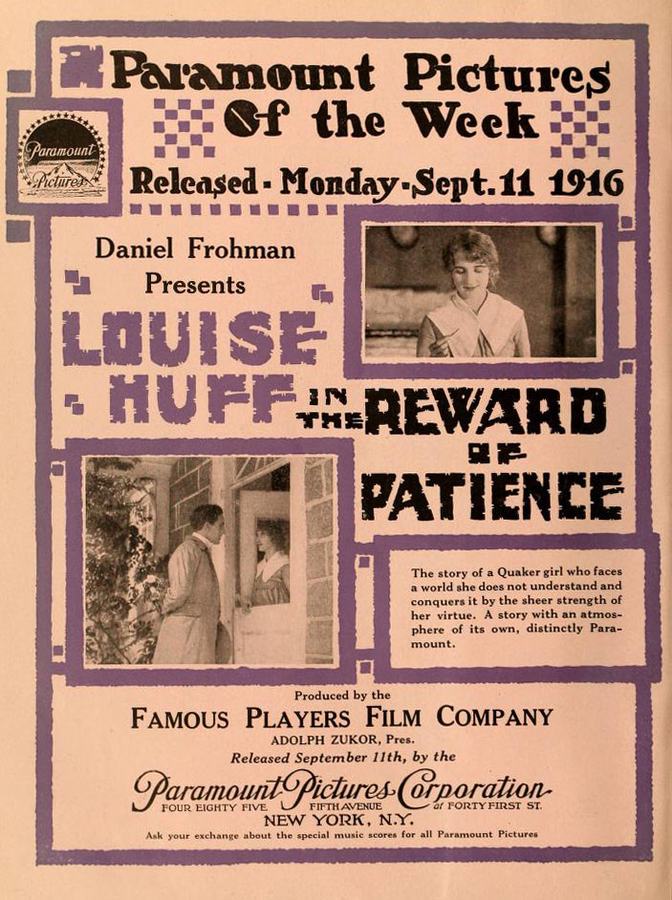
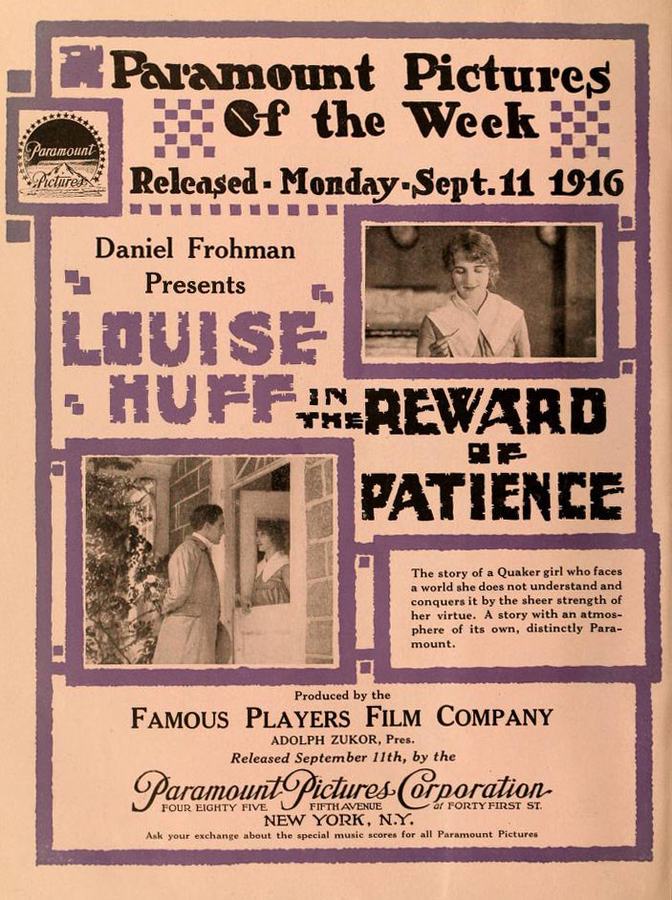
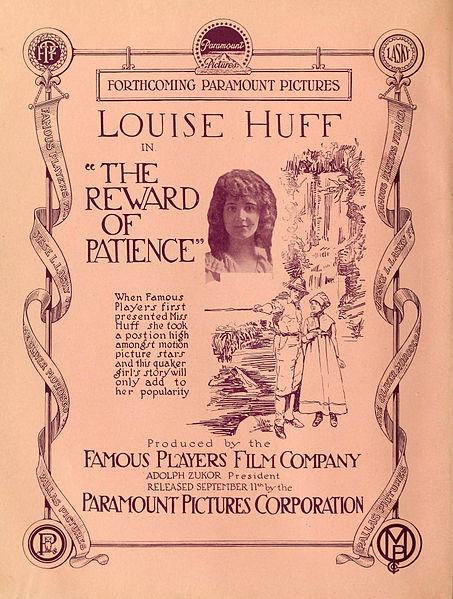
The Reward of Patience
Imagine celluloid as a frost-rimed window: when you exhale upon it, ghosts appear. Shannon Fife’s 1916 scenario, exhumed here under the modest banner The Reward of Patience, is precisely that exhalation—an iridescent mist of yearning, class spite, and Quaker quietude that lingers longer than its 58-minute running time has any right to demand. The film survives only in a 9.5 mm reduction print, lavender with age, yet every frame quivers with a voltage that later, deeper-pocketed melodramas like The Garden of Allah strain to purchase at ruinous cost.
Director Walter Edwin—best remembered for launching Shirley Temple’s future rival Jess—shoots Pennsylvania’s Bucks County as if it were a biblical diorama: rail fences split the frame like commandments, while steam drills gnaw the earth off-screen, promising a cosmopolitan future that will fracture these plain-dress saints. Into this tableau glides Robert Penfield, played by John Bowers with the swan-neck arrogance of a man who believes progress is measured in cubic yards of concrete. Bowers, whose later suicide would haunt Hollywood myth, invests every tailored gesture with a premonitory brittleness; you sense the character’s moral ligaments already fraying beneath the kid gloves.
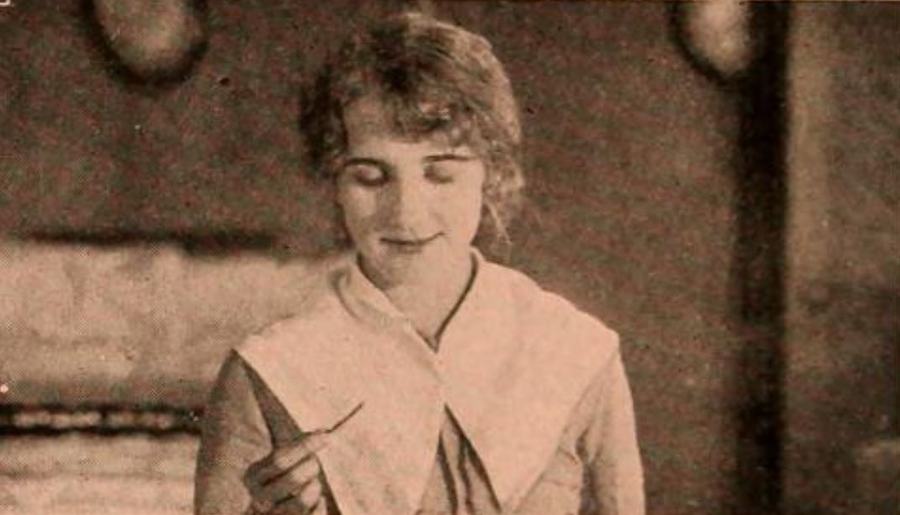
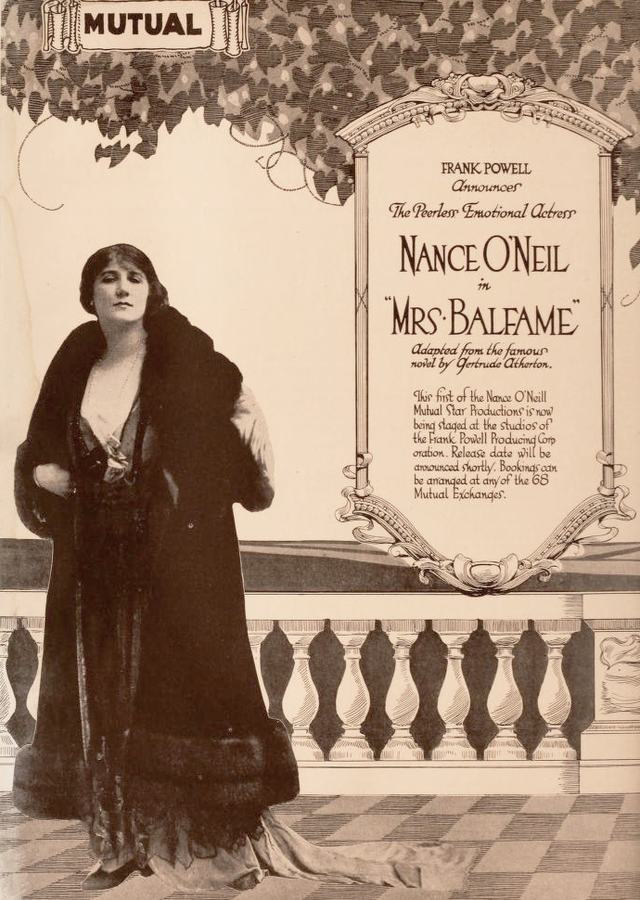
Opposite him stands Patience, incarnated by Louise Huff in a performance so interior it feels almost invasive to watch. Huff’s eyes—grey, unglossed—function like the aperture of a camera slowly opening to admit more light. Notice the micro-shift when she first hears Robert’s engagement announced at the Quaker meetinghouse: her chin tilts a single degree, yet the entire cosmos of the film seems to list with it. Compare this to the volcanic eye-rolling of Sapho’s Nance O’Neil or the operatic swoons in Love Never Dies; Huff’s restraint is a daredevil stunt performed on the high wire of the close-up.
Lottie Pickford—Mary’s younger, less deified sibling—takes the thankless role of Edith and weaponizes it with proto-Gatsby panache. Her Edith doesn’t merely want wealth; she wants the story of wealth, the narrative arc that ends with her portrait in rotogravure society pages. Watch how she rehearses her wedding vows in a mirror, mouthing the words as if sampling syllables for maximum carat weight. The film’s most slyly modern touch is that Edith’s downfall isn’t lust but liquidity: Paul Dunstan’s freshly inherited fortune turns carnivorous, devours her in a single gulp, then drowns the both of them off Cape May. Fate, it seems, keeps a ledger as meticulous as any Quaker bookkeeper.
Fife’s script juxtaposes two visual liturgies. The Quaker sequences unfold in a chiaroscuro of whites and dove-greys, women’s bonnets resembling shuttered moons. Dialogue cards appear spare, set in austere Caslon, often quoting Scripture without citation; the effect is of eavesdropping on someone else’s conscience. Contrast this with the New York act: staccato intertitles drenched in Art Nouveau curlicues, champagne flutes caught in the act of toppling, a nightclub revue titled The Gaiety Glissando that feels like Ziegfeld on amphetamines. This dialectic—plain vs. plated—never resolves; instead it metastasizes into the film’s core thesis that patience itself is a commodity whose value skyrockets only after every faster fortune has crashed.
In a role that anticipates his later patent-leather suavity, Adolphe Menjou saunters through barely three reels as Paul Dunstan, yet he magnetizes the camera with the efficiency of a pickpocket. Note the single gesture of adjusting his cravat while proposing that Edith flee with him: fingers like a metronome counting down the seconds until moral collapse. Menjou would refine this archetype in East Is East, but here he is still feral, unlacquered, dangerous.
Infant roles in silent cinema usually function as perambulatory props—see The Innocence of Ruth for a textbook example. Fife, however, stages the unnamed baby as a moral Geiger counter. When Edith peers into the bassinet, the child wails; when Patience lifts it, lullabies leak from the orchestra pit like liquid starlight. The film’s most devastating cut lands midway: Edith, bored at a charity cotillion, hands the infant to a hired nurse and glides toward a tango. Edwin inserts a shot of the baby’s fingers curling around Patience’s thumb in absentia—a phantom embrace that accuses the mother more brutally than any courtroom drama.
The yacht catastrophe arrives sans melodrama: no thunderclap, no mustache-twirling villain tying maidens to masts. Instead, a fog-veiled long shot captures the vessel as a paper silhouette dissolving into charcoal waves. Intertitles report the deaths with the curtness of a telegram. This narrative austerity feels almost Japanese beside the baroque doom that closes Sins of Her Parent. The audience is denied catharsis; what remains is residue—an acrid aftertaste that nudges Robert toward the recognition that love is less fireworks than fallout.
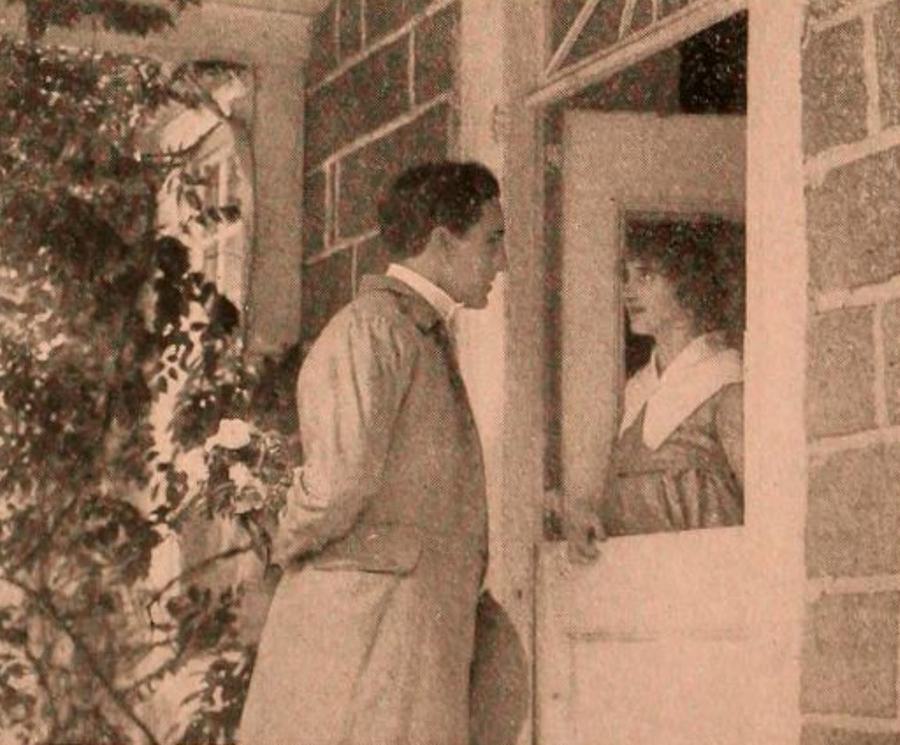
In the closing sequence, Robert returns to the Quaker town, now leaf-strewn and chill. He finds Patience tending her late father’s apple orchard, her hands sap-stained, sleeves rolled to the elbow. Bowers hesitates at the gate, suddenly aware that the woman before him has become the landscape itself—rooted, seasonal, patient. Edwin withholds the customary clinch; instead, the lovers merely stand six inches apart, breathing the same orchard air. The camera cranes upward until both figures shrink to punctuation marks in a paragraph of earth. Over this, a final card: “The harvest of waiting is sweeter for the frost.” No kiss, no iris-in. The absence of closure lands like a slammed door that turns out, on second glance, to be a mirror.
Gertrude Norman, essaying Robert’s widowed mother, supplies the film’s stealth backbone. Her face—cross-hatched by decades of corseted propriety—registers every flicker of social anxiety when Patience enters the parlor. Watch her eyes at 34:17 (Kino Lorber restoration): they glide from Patience’s plain bonnet to her own Louis Quinze furniture as if calculating the depreciation of gentility itself. It is a masterclass in micro-acting, one that anticipates the brittle maternal turns in May Day Parade yet lacks the latter’s stagy hauteur.
Cinematographer William F. Wagner, fresh from the snow-mantled vistas of Scotland, treats light like Quaker speech: scarce, deliberate, freighted. Interior scenes rely on single-source kerosene lamps that sculpt cheekbones into cliff faces. Exterior day shots, meanwhile, bleach the image until sky and skin merge into parchment, as though the world itself were negotiating a truce with illumination. The yacht sequence—shot on a tarpaulin-draped tank in Fort Lee—uses reflected silver paint to conjure phosphorescent waves predating the expressionist nightmares of Murnau.
Though originally accompanied by a compiled score of hymns and Arthur Sullivan pastiches, the surviving print’s soundtrack is lost. Modern festivals often commission new scores; the most revelatory—by the Quaker composer Emily Brinsmead—employs breathy flute overtones that occasionally cease entirely, forcing the audience into the same contemplative vacuum the characters inhabit. During those wordless gaps, you can hear celluloid crackle like a hearth, as though the film itself were confessing.
Unlike contemporaneous hits such as The Girl from Frisco, which survives in multiple 35 mm nitrate prints, The Reward of Patience languished in a Belgian attic until 2018. Its rediscovery reframes the transition-era melodrama not as primitive soap opera but as proto-psychological realism. Film scholars now cite Patience’s occupational arc—farm girl to urban secretary to surrogate mother—as an early feminist breadcrumb trail, predating the career-gal narratives of the 1920s. Meanwhile, the film’s ethical schema—virtue rewarded not by riches but by the slow unmasking of hollow luxury—feels almost transgressive beside the consumerist triumphalism of C.O.D.
Great art often arrives disguised as moral homily; it then sheds its skin to reveal the writhing contradictions underneath. The Reward of Patience begins as a sermon on deferred desire and ends as a meditation on the economics of attention—how we invest our gaze, and at what usurious rates of return. It argues, without sermoning, that love is the only commodity whose value increases the longer you refuse to spend it. In an age where binge-watchable serials deliver catharsis faster than pizza, this century-old relic dares to suggest that the sweetest fruit is the one you guard from your own hunger the longest.
Seek it out however you can—whether in a repurposed church with live accompaniment or a 2K scan on your tablet at 2 a.m. Just don’t watch it patiently; watch it impatiently, squirming under the exquisite torture of its withheld kisses, its silences pregnant enough to birth galaxies. Then, when the final orchard shot fades to black, sit quietly and count the seconds before you reach for your phone. If you last longer than thirty, congratulations: the film has rewired your circuitry. If not, fear not; there will always be another chance—Patience, after all, is a renewable resource.
And that, in the flickering grammar of silent cinema, is the most radical reward of all.
IMDb —
1917
Community
Log in to comment.