DbcultAccessing Vault...
5.4/10
Senior Film Conservator
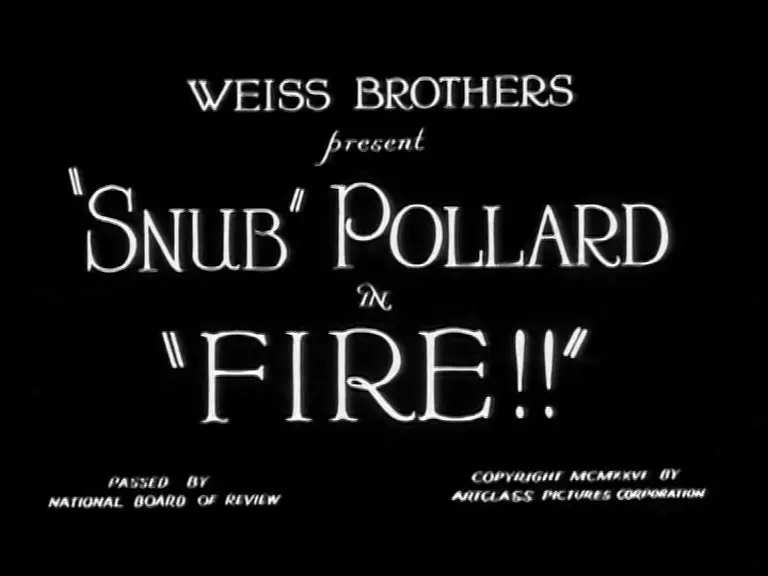
A definitive 5.4/10 rating for a film that redefined the boundaries of cult cinema. Fire!! remains a cornerstone of transgressive art.
Is Fire!! worth your attention in the modern era of high-octane blockbusters? Short answer: yes, but only if you approach it as a frantic, fascinating time capsule of pre-WWI physical comedy.
This film is for cinema historians and those who find joy in the raw, unpolished energy of early slapstick. It is definitely NOT for anyone who requires a coherent three-act structure or high-fidelity production values.
1) This film works because it captures the unbridled, experimental energy of the Joker Comedies era, where physical risk-taking compensated for a lack of narrative depth.
2) This film fails because its reliance on the 'jealous husband' trope feels repetitive even within its short runtime, lacking the sophisticated layering found in later works like Never Touched Me.
3) You should watch it if you want to see 'Snub' Pollard before he became an icon, or if you have a niche interest in how early cinema portrayed urban anxieties through the lens of fire safety.
If you are looking for a casual Friday night movie, look elsewhere. However, if you are a student of the medium, Fire!! offers a masterclass in the 'Dutch' comedy style championed by Max Asher. It is a relic of a time when cinema was still figuring out its own language. The film moves at a breakneck speed that puts modern editing to shame. It’s loud, even in its silence.
The setting of the Sans Scruples Hotel is perhaps the film's most inspired element. In 1916, the hotel was a symbol of transient modernity, a place where social norms could be skirted—hence the name. Unlike the more grounded domestic drama of The Neglected Wife, Fire!! treats the hotel as a literal playground for disaster.
Max Asher plays the fire inspector not as a figure of authority, but as a man constantly on the verge of a nervous breakdown. His performance is a whirlwind of facial contortions and frantic gestures. When he is cornered by the 'vamp' (played with delightful over-the-top menace by Jean Hope), the comedy stems from his visible terror. This isn't the suave heroism of A Gun Fightin' Gentleman; this is the comedy of the common man overwhelmed by forces beyond his control.
Seeing 'Snub' Pollard in this early role is a revelation for fans of silent comedy. Even here, his timing is impeccable. He acts as a perfect foil to Asher’s more abrasive style. The chemistry between the cast members suggests a troupe that had worked together frequently, moving with a synchronized rhythm that is essential for physical gags to land.
The pacing is relentless. There is no room for the slow-burn character development seen in Brothers Divided. Instead, Fire!! relies on a constant stream of action. One specific moment involves a ladder gag that, while simple by today's standards, required precise coordination to avoid actual injury. It’s raw. It’s dangerous. It works.
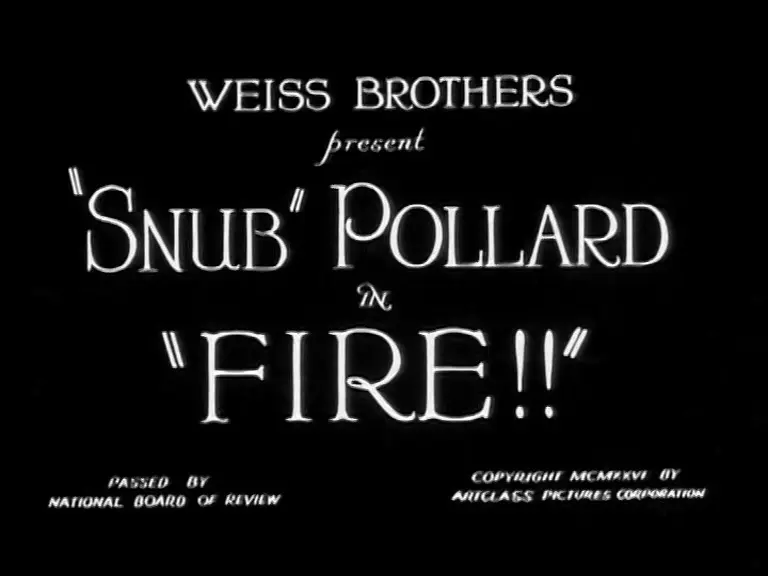
The cinematography in Fire!! is typical of the mid-1910s: mostly static wide shots that treat the screen like a theater stage. However, director Fred Myers (who also wrote the script) utilizes depth in a way that many of his contemporaries ignored. By having action occur simultaneously in the foreground and background, he creates a sense of genuine panic during the fire sequences.
Compare this to the more atmospheric lighting found in While London Sleeps. Fire!! doesn't care about mood; it cares about clarity. Every kick, every fall, and every puff of smoke is framed to ensure the audience doesn't miss a single beat of the mayhem. The flat lighting might seem uninspired, but it serves the frantic nature of the slapstick perfectly.
While it’s primarily a comedy, there’s an undercurrent of genuine anxiety regarding fire safety in early 20th-century urban life. The fire inspector is a figure of ridicule, suggesting a public skepticism toward new safety regulations of the time. This satirical edge gives the film more weight than a standard 'man gets hit with a pie' short.
It lacks the heavy moralizing of Tyrant Fear, opting instead for a cynical, punchy look at human frailty. The husband’s jealousy is portrayed as an absurd obstacle rather than a tragic flaw. It’s a world where everyone is slightly unhinged, and the only sane response is to run.
The character of the 'vamp' is a fascinating inclusion. In 1916, this was a relatively new cinematic archetype. Here, she is used as a comedic engine rather than a femme fatale. Her pursuit of the inspector is relentless, turning the traditional gender dynamics of the era on their head. It’s a bold choice that adds a layer of unpredictability to the plot.
This character type would later be refined in films like Sandra or Paris, but in Fire!!, she exists purely to facilitate chaos. The scene where she traps the inspector in her room while her husband pounds on the door is a masterclass in tension-building through editing, even if the resolution is purely for laughs.
When compared to high-concept films of the era like Titanenkampf or the nautical adventure of Flygande holländaren, Fire!! feels decidedly small-scale. But that is its strength. It doesn't try to be an epic; it tries to be a riot. It shares the same DNA as Smarty, focusing on the friction between individuals in tight spaces.
The film also lacks the emotional resonance of Body and Soul or the childhood whimsy of Penrod and Sam. It is a cynical, fast-paced machine designed to elicit guffaws through the spectacle of a man being chased, hit, and nearly burned alive. It’s primitive, but there is an honesty in that primitivity.
One surprising element is the lack of actual firefighting until the final act. For a film titled Fire!!, the majority of the conflict is social and domestic. This subversion of expectations keeps the audience on their toes. You expect a disaster movie; you get a comedy of errors that happens to end in a disaster.
"The inspector isn't fighting the fire; he's fighting the absurdity of the human condition."
This quote from a 1920s retrospective on Asher’s work rings true. The fire is merely a catalyst for the inspector to finally take control of his life. It’s a blunt metaphor, but in the context of 1916, it was effective storytelling.
Fire!! is a loud, messy, and occasionally brilliant example of early American comedy. It burns. Then it ends. It doesn't overstay its welcome, but it leaves a lasting impression of a time when the world was changing faster than people could keep up with. It’s flawed. But it works as a visceral experience of comedic history. If you can handle the flicker of the old film stock and the over-the-top acting, there is a lot to love here. Just don't expect a masterpiece. It's a firecracker, not a symphony.
IMDb 6.1
1924
Community
Log in to comment.