DbcultAccessing Vault...
Cult Review
Senior Film Conservator
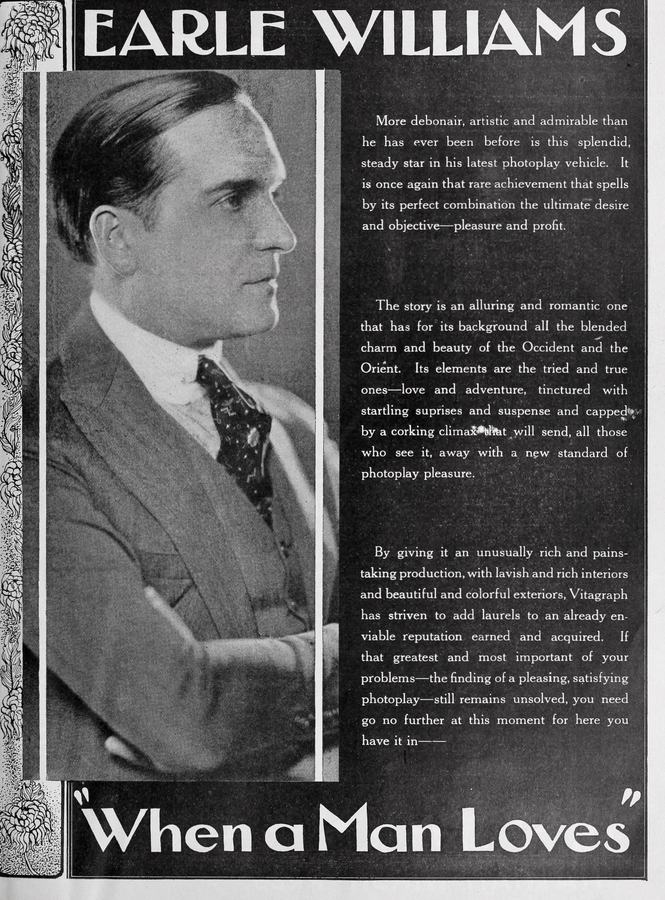
Amidst the glut of post-WWI melodramas, 'When a Man Loves' emerges like a rediscovered ukiyo-e print—faded in places yet vibrating with cross-cultural urgency. Director Wesley Ruggles crafts a bittersweet symphony of Edwardian repression and Taishō-era fluidity, using the silent medium to transcend linguistic barriers through gesture and composition. The film’s genius lies in its subversion: what appears a conventional 'exotic East' narrative gradually reveals itself as a scalpel dissecting English class pathology.
Margaret Loomis’ Yuri San is no porcelain doll. Her performance—all lowered eyelids and restrained hand movements—conveys tectonic emotional shifts beneath cultural propriety. Watch the scene where Charlotte destroys John’s letter: Yuri doesn’t collapse, but her spine stiffens as if struck by winter wind, fingers tightening around a teacup until knuckles blanch. Contrast this with Barbara Tennant’s Charlotte, whose venom simmers beneath crinoline and feathered hats. Tennant employs predatory stillness, her smile never reaching eyes that calculate like abacus beads.
Earle Williams’ John avoids white-savior tropes through palpable vulnerability. His breakdown upon discovering Charlotte’s deceit plays out in a single take: crumpling against a shoji screen, he becomes a study in masculinity unraveling. Japanese actors fare better than most period productions—George Hale’s Takamura radiates paternal warmth without caricature, while Tom Guise’s Ando channels societal shame into violence rather than mustache-twirling villainy.
Cinematographer H. Lyman Broening crafts dialogue through chiaroscuro. English interiors loom with oppressive symmetry—high ceilings dwarfing characters amid velvet drapes and mahogany. Tokyo sequences breathe with asymmetrical compositions: lantern light carving golden pools in ink-black alleys, John’s silhouette framed by circular gateways suggesting life’s cyclicality. The attempted murder sequence remains a masterclass: Ando’s shadow engulfs Yuri before John bursts through rice paper doors, backlit like a Kabuki hero.
Costuming becomes coded warfare. Charlotte’s suffocating lace collars and bustles parody English gentility, while Yuri’s hybrid wardrobe—kimono sleeves peeking beneath Western coats—mirrors her dual identity crisis. Lord Bannister’s (John Elliott) monogrammed dressing gown becomes a robe of prejudiced authority, literally unraveling when Sir Robert (William Buckley) reveals Yuri’s lineage.
Van Loan and Schayer’s script smuggles radical themes beneath romantic trappings. Takamura’s refusal of Ando’s proposal—“Her blood is English”—lands like a grenade, exposing the hypocrisy of colonial blood-purity obsessions. This isn’t mere plot convenience; it’s the film’s throbbing core. When Sir Robert confesses to abandoning his mixed-race child, the revelation indicts an empire that exported morality while practicing eugenics.
The film’s daring lies in equating English aristocracy with spiritual impoverishment. John’s voyage east parallels explorers seeking terra incognita, but his salvation comes not through conquest but cultural surrender. Climactic scenes in Bannister Hall gain power through inversion: Yuri isn’t “elevated” by her English blood; her dignity exposes the aristocracy’s decay.
Compared to 'The Sex Lure'’s sensationalism or 'Algie’s Romance'’s camp, 'When a Man Loves' approaches intercultural romance with rare solemnity. Its closest kin is 'Soldiers of Fortune'—both films use adventure tropes to critique imperialism—yet Ruggles replaces swords with psychological nuance. The identity-revelation trope predates contemporary DNA plots by decades, executed with more grace than later melodramas reliant on contrivance.
Modern eyes will note problematic elements. The third-act revelation risks validating blood quantum—suggesting Yuri’s worth derives from lineage rather than intrinsic humanity. Charlotte’s cartoonish villainy occasionally tips into xenophobic caricature, though Tennant’s commitment salvages complexity. The surviving print’s nitrate decomposition haunts several reels, obscuring Broening’s meticulous compositions—a tragedy demanding restoration.
Beyond entertainment, the film documents transnational anxieties in 1919. Japan’s rising global stature post-Russo-Japanese War permeates every frame—Takamura’s shop overflows with export-quality art, symbolizing cultural confidence. Simultaneously, England’s post-war identity crisis manifests in Lord Bannister’s terror of lineage contamination. This duality makes 'When a Man Loves' more than a romance; it’s a cipher for geopolitical shifts, anticipating debates about globalization that still resonate.
The climactic reunion transcends melodrama through staging: Sir Robert kneels before Yuri not as supplicant but in shared penitence, their figures framed by a stained-glass window scattering prismatic light across Bannister’s ancestral portraits—literally reframing history through new optics. It’s a daring visual metaphor for reconciliation, marred only by the abruptness of Charlotte’s offscreen departure.
Surviving fragments suggest a lost subplot involving Gladys Lee (Lillian Langdon), whose brief appearance hints at parallel disappointments in the marriage market. Perhaps future restorations will unveil richer textures, but even incomplete, 'When a Man Loves' achieves something extraordinary: a silent film where the loudest statements emerge from cultural collisions and trembling hands.
While not without creaks—the runtime sags with excessive establishing shots, and the orchestral score in current prints often overwhelms subtle performances—its heartbeat persists. In an era of prison dramas and bacchanalian farces, Ruggles gambled on emotional authenticity across cultural divides. A century later, as Yuri lifts her eyes to meet John’s aboard the England-bound steamer, we witness silent cinema’s unique power: a love letter to the spaces between languages, written in light and longing.

IMDb 6.9
1928
Community
Log in to comment.