DbcultAccessing Vault...
Cult Review
Senior Film Conservator
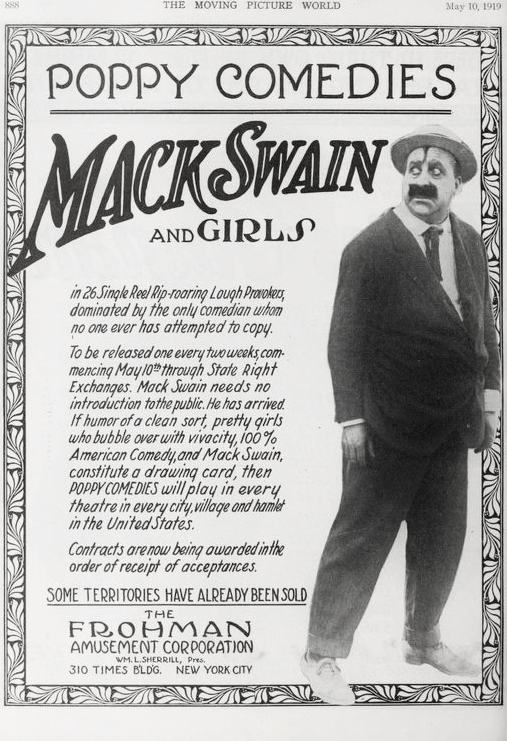
A house is a machine for living, Le Corbusier claimed; in 1920 Mack Swain retorted that it is also a machine for falling on your head.
Viewed today, Ambrose's Bungled Bungalow plays like an architectural exorcism compressed into twelve minutes of nitrate frenzy. Swain, whose girth alone deserves separate billing, projects the dignity of a bank president and the equilibrium of a gyroscope on the fritz. The bungalow—white clapboard, rose-trimmed windows, the very postcard of domestic aspiration—arrives on a wagon like a Trojan horse gift-wrapped in American optimism. Once the front door is opened, the dream instantly curdles: hinges squeal diabolically, a bucket of pitch descends like a guillotine blade, and the floorplan folds in on itself with the malicious grace of a baroque origami swan.
What elevates this from mere demolition derby to comic poetry is the timing. Directors (often anonymous in two-reel factories) here choreograph collapse with the precision of Rube Goldberg on amphetamines. Beams don’t simply fall; they hesitate, wobble, confer with gravity, then choose the least convenient vector toward Ambrose’s coccyx. The result is slapstick that feels oddly fair: every catastrophe is foreshadowed by a smirk in the woodwork, a creak that whispers “duck now” milliseconds too late.
The film is also a sly satire on post-WWI real-estate mania. Veterans returned to find cities inflamed by speculation; bungalows—cheap, portable, “modern”—sprouted like toadstools across subdivided farmland. Swain’s character buys not shelter but a credulous future, signing papers with the sweaty eagerness of a man betting his savings on a tulip bulb. When the walls cave in, the gag lands harder because 1920 audiences recognized the same plywood promises peddled on every street corner.
Comparisons? In Mr. Fix-It a handyman renovates chaos into order; Ambrose inverts the formula—he is the wrecker renovated into a punchline. Terror Island stages peril amid collapsing masonry, yet its thrills are heroic. Here, heroism is impossible; dignity itself is the joke, and Swain’s slow-burn mortification—eyebrows ascending like twin elevators of disbelief—pays off in the democratic laughter of humiliation.
Technically the short is a bridge between Sennett’s custard-pie anarchy and the spatial sophistication of Keaton. Notice the use of depth: when Ambrose pries up a floorboard, the camera reveals the support beam below already sawn halfway through by a prior prankster; we foresee doom seconds before he does, a gag structure Keaton would refine in One Week. The seaside setting is no accident either—open sky and rolling surf provide a horizon line that measures every vertical tumble, turning pratfalls into vectors of graphic wit.
Mack Swain is often remembered as Chaplin’s foil in The Gold Rush, but here he occupies the center with a poise that is both regal and ridiculous. Watch how he removes his gloves—each finger tugged with the solemnity of a bishop disrobing—seconds before a wall splinters across his back. The juxtaposition of ritual and rupture is pure comedy alchemy.
Unfortunately, prints circulate in 8-to-10-minute abridgements; original intertitles—reportedly laced with puns on “mort-gage” and “mort-al wounds”—are lost. Even truncated, the rhythm is relentless. Editors stitched gags using match-cuts on motion: Ambrose hammers a nail, smash-cut to the hammer slamming a bee hive; the sonic suggestion is enough to make you flinch even in silence. These proto-jump-cuts anticipate the kinetic punctuation of modern action trailers, proving that two-reelers were already fluent in the grammar of velocity.
Gender politics sneak in sideways. A stenographer arrives to inspect the property; her skirt is snagged by a protruding nail, launching a titter that feels creaky today. Yet the film flips the power dynamic—she strides away with the deed while Ambrose dangles from a rafter, trousers around ankles. The final image asserts property as fleeting, masculinity as scaffolding, and both are ultimately left to the women who know when to exit before the roof caves in.
Sound would have ruined it. The physics of collapse depend on the delicious vacuum of anticipation—Timber!—followed by the crash you hear in your mind, a frequency more vivid than any Foley effect. Contemporary critics praised the short as “a cyclone in a dovecote,” a phrase that captures both the chaos and the flutter of feathers—white paint, white dust, white seagulls—all swirling around one hapless black derby.
Restoration efforts have stabilized the image, revealing textures previously smothered under nitrate bloom: the glint of brass tacks on Swain’s waistcoat, the velvet nap of collapsing wallpaper, the phosphorescence of surf that seems to jeer at every human pretense of permanence. These details matter; slapstick is philosophy in the language of surfaces, and each texture is a footnote on folly.
Why seek it out? Because hidden among the slapstick detritus is a prophecy: the century-long American romance with home ownership ends in splinters and laughter. Swain, with his walrus mustache drooping like a spent crescent moon, is the first casualty of a bubble that bursts and reinflates every generation. His bungalow sinks, yet his hat bobs—a black spot of absurd hope—promising that we, too, will survive our own mortgaged farces.
So queue it between A Tray Full of Trouble and A Sagebrush Gentleman for a triple bill of entropy. Watch the roof fly off, the doorjambs pirouette, the very notion of “equity” reduced to matchsticks. Then, when the screen fades to white, glance at your own four walls and wonder—are they chuckling yet?
IMDb —
1919
Community
Log in to comment.