DbcultAccessing Vault...
Cult Review
Senior Film Conservator
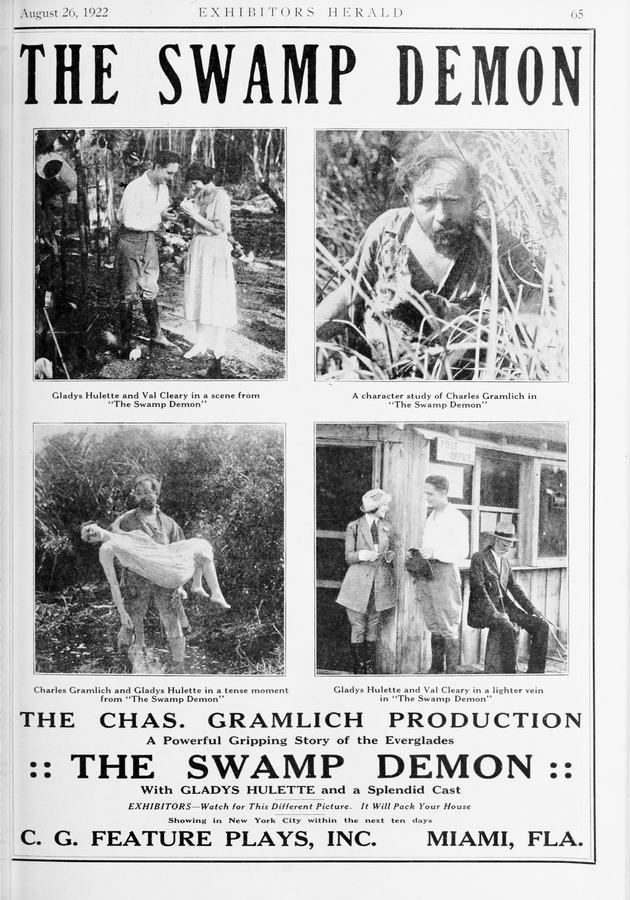
There are films that merely tell a story, and then there are those that etch themselves into the very fabric of memory, leaving an indelible impression long after the final frame fades. Whispering Palms, a cinematic artifact from 1921, firmly belongs to the latter category. It is a work that transcends its silent era origins, offering a potent cocktail of psychological horror, familial betrayal, and a desperate quest for justice, all set against the suffocating, primal backdrop of the Florida Everglades. This isn't just a film; it's an experience, a journey into the darkest corners of human avarice and the fragile precipice of sanity.
At its core, Whispering Palms spins a yarn that feels both timeless and unsettlingly modern. Dr. Culthers, portrayed with a captivating blend of intellectual gravitas and tragic vulnerability by Val Cleary, is a man of profound scientific dedication. His discovery of a cure for drug addiction is not merely a medical breakthrough; it's a testament to his philanthropic spirit, a desire to alleviate suffering on a grand scale. The doctor's decision to entrust this life-altering formula to his daughter, Mary, with instructions for its release only after his passing, speaks volumes about his foresight and perhaps, a subtle premonition of the dangers inherent in such a valuable secret. This paternal act of faith, however, inadvertently sets the stage for a harrowing drama, a Shakespearean tragedy cloaked in the humid embrace of the American South.
The catalyst for Dr. Culthers' torment arrives in the form of his nephew, Vance Gordon, a character whose moral compass is irrevocably skewed by an insatiable hunger for wealth. Gordon, brought to chilling life by Charlie Joy (who also penned the screenplay, a dual role that speaks to his profound understanding of the narrative's dark heart), is no mere villain. He is a meticulously crafted antagonist, embodying the insidious nature of greed that can corrupt even the closest familial bonds. His accomplices, Casper Darnell and Janet Warner, serve as extensions of his malevolence, each contributing their own brand of cunning to the nefarious plot. The way they conspire to lure Dr. Culthers into the treacherous Florida Everglades is a masterclass in cinematic manipulation, a slow-burn of deceit that tightens its grip with each passing scene.
The Everglades itself transforms into a character in this macabre play. It is not merely a setting; it is an active participant, a vast, indifferent swamp that mirrors the moral quagmire into which Dr. Culthers is plunged. The decision to tie him to a tree, exposed to the relentless, scorching sun, is a stroke of pure, unadulterated cruelty. This isn't a quick, merciful end, but a prolonged, torturous descent into madness. The sun, usually a symbol of life and warmth, becomes an instrument of psychological destruction, baking away his sanity, stripping him of his intellect, and reducing him to a primal state. The film's portrayal of this agonizing transformation is remarkably effective, relying on the visual storytelling prowess of the silent era to convey unspeakable horror without a single spoken word.
The emergence of the maniacal "Swamp Demon" from the shattered vestiges of Dr. Culthers' mind is a pivotal moment, a truly unsettling shift in the film's tone. This isn't just a man driven mad; it's a symbolic rebirth, a monstrous entity born from profound suffering and injustice. Val Cleary's physical performance here is nothing short of extraordinary. He sheds the refined demeanor of the doctor, adopting a feral intensity, a wildness that is both terrifying and profoundly tragic. The audience is left grappling with the horrifying realization that this creature, lurking in the shadows of the swamp, is the very man who sought to heal humanity. This aspect of the narrative resonates with the unsettling psychological explorations found in films like Malombra, where madness and identity become fluid, blurring the lines between the self and the monstrous.
The film effectively uses the dense, mysterious atmosphere of the Everglades to amplify the terror associated with the Swamp Demon. The rustling palms, the unseen creatures, the oppressive humidity – all contribute to a sense of pervasive dread. It's a masterclass in environmental storytelling, where the setting itself becomes a character, an extension of the internal turmoil plaguing Dr. Culthers. This kind of environmental horror can be seen as a precursor to later genre staples, demonstrating a sophisticated understanding of how location can enhance psychological impact.
Amidst this escalating horror, Mary, portrayed with luminous resilience by Gladys Hulette, emerges as the narrative's moral compass and driving force for salvation. Her character is a refreshing departure from the damsels in distress often found in early cinema. Mary is intelligent, resourceful, and fiercely determined to uncover the truth behind her father's disappearance and subsequent transformation. Her journey to foil Vance's plot is not just about rescuing her father; it's about reclaiming his legacy, ensuring his cure reaches those who desperately need it, and restoring order to a world thrown into chaos by greed.
Her alliance with Dick Mason provides a much-needed counterpoint to the pervasive darkness. Mason, while perhaps a more conventional hero, serves as a steady presence, offering practical assistance and emotional support to Mary. Their partnership highlights the film's underlying theme of good triumphing over evil, even when the odds seem insurmountable. This dynamic, though perhaps less nuanced than the descent into madness, is crucial for providing the audience with a sense of hope and purpose amidst the despair. It’s a classic narrative arc of justice pursued, reminiscent of the dogged investigations in films like Edgar, the Detective, albeit with far higher stakes.
Whispering Palms grapples with profound themes that continue to resonate today. The most prominent is the corrupting influence of greed, a force potent enough to drive individuals to unspeakable acts against their own kin. Vance Gordon's single-minded pursuit of the formula at any cost serves as a chilling cautionary tale, echoing the moral dilemmas explored in films like Get-Rich-Quick Wallingford, albeit with a far darker consequence here. The film also delves into the fragility of the human mind, showcasing how extreme duress can shatter sanity, transforming a benevolent intellect into a feral beast. This exploration of psychological breakdown is handled with remarkable sensitivity and visual flair, making Dr. Culthers' plight genuinely heartbreaking.
Charlie Joy's screenplay is a testament to the power of concise yet impactful storytelling. Despite the limitations of silent film, the narrative never feels rushed or underdeveloped. The pacing is expertly handled, building suspense gradually, allowing the audience to fully absorb the horror of Dr. Culthers' plight and the growing determination of Mary. The use of intertitles is judicious, providing necessary exposition without overwhelming the visual narrative. This careful balance between text and image is a hallmark of superior silent filmmaking, ensuring that the emotional beats land with maximum force.
The performances are uniformly strong, a crucial element in a silent film where expressions and physicality carry the weight of dialogue. Val Cleary's transformation from dignified doctor to terrifying Swamp Demon is a tour de force, a masterclass in silent acting that conveys a spectrum of emotions from intellectual pride to abject terror and finally, primal madness. Gladys Hulette imbues Mary with a quiet strength and unwavering resolve, making her a truly compelling heroine. Charlie Joy, in his villainous role as Vance Gordon, exudes a cold, calculating menace that is utterly convincing. Their interactions, though wordless, are charged with palpable tension, driving the narrative forward with relentless energy.
The cinematography, while perhaps not groundbreaking for its era, is highly effective in establishing the oppressive atmosphere of the Everglades. Shots of the dense foliage, the murky waters, and the relentless sun create a tangible sense of isolation and danger. The visual contrast between the civilized world of Dr. Culthers' laboratory and the untamed wilderness of the swamp underscores the narrative's central conflict. This stark juxtaposition is a powerful visual metaphor for the battle between reason and primal instinct, between humanity's desire to heal and its capacity for destruction. In some ways, the film’s visual language, particularly its use of natural environments to reflect internal states, can be seen in conversation with other atmospheric thrillers of the period, perhaps even hinting at the darker, more symbolic imagery found in works like Häxan, though certainly not reaching its experimental heights.
The film's resolution, where Mary and Dick Mason successfully foil the plot and Dr. Culthers regains his sanity, offers a satisfying, if somewhat conventional, sense of closure. However, the scars of his ordeal, both physical and psychological, are implicitly understood. The return to sanity is not a complete erasure of the horror, but rather a hard-won victory that underscores the resilience of the human spirit and the enduring power of familial love. It’s a testament to the idea that even after facing the most profound darkness, redemption and healing are possible, a theme that resonates strongly with the spirit of overcoming adversity found in films like The Chain Invisible.
Whispering Palms stands as a compelling example of silent cinema's capacity for complex storytelling and profound emotional impact. It is a film that bravely confronts the darker aspects of human nature while simultaneously celebrating the virtues of courage, loyalty, and scientific altruism. For enthusiasts of early cinema, psychological thrillers, or simply well-told stories, this film is an essential viewing experience. It reminds us that the quest for a better world is often fraught with peril, but that the human spirit, armed with love and determination, can ultimately prevail against the most insidious forces of greed and madness.
The legacy of Whispering Palms isn't just in its thrilling plot or its atmospheric setting, but in its ability to tap into universal fears and hopes. It's a testament to the enduring power of cinema to explore the human condition in all its messy, magnificent complexity. This film, far from being a mere relic, remains a vibrant, unsettling, and ultimately triumphant piece of cinematic history, whispering its cautionary tale across the decades.
IMDb 5.9
1935
Community
Log in to comment.