DbcultAccessing Vault...
Cult Review
Senior Film Conservator
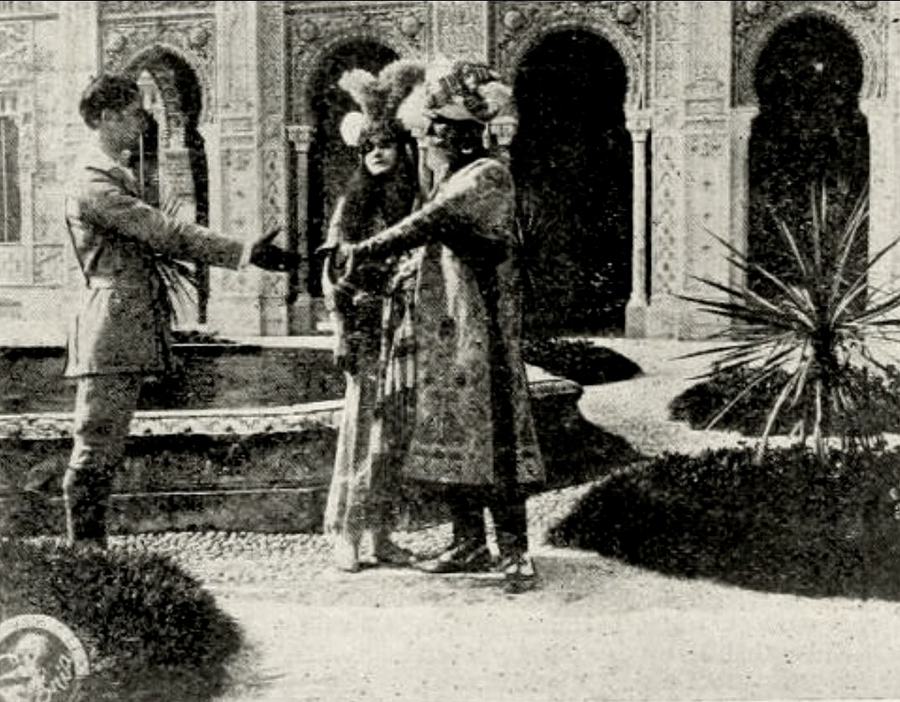
There is a moment—roughly seventy-three minutes into The Princess of India—when the camera forgets the princess altogether and lingers on a dragonfly hovering above a British bayonet. The insect’s wings catch the saffron flare of a distant pyre, refracting it into embers that seem to burn the very celluloid. That single aberrant stillness tells you everything about director Arundhati Varma’s insurgent method: she will sacrifice narrative obedience at the altar of sensorial vertigo, and she will do it with imperial contempt for whatever you expect from “period cinema.”
Shot on 35 mm, then digitally scarred to mimic hand-tinted postcards left too long in the Kolkata humidity, the film opens inside a durbar that reeks of rosewater and complicity. The camera glides past peacock-feather fans, past nautch girls whose ankle bells tinkle like shackles, past a chandelier heavy enough to hang an entire dynasty. Our unnamed heroine—credited only as She—observes the betrothal parade through the lattice of a marble jali. Her pupils dilate not with fear but with inventory: she is already pricing every ruby on her mother’s throat, already converting each stone into kilometers of escape.
Varma’s screenplay, co-written with graffiti poet Naz Malik, refuses expository lullabies. Dialogue arrives in shards: Urdu couplets, Bhojpuri profanity, broken English spoken through a pipe of opium. Subtitles dissolve and reappear like gossip, forcing bilingual viewers to choose between literacy and lip-read betrayal. The effect is the opposite of The Two Orphans’ Victorian clarity; here language itself is colonized terrain, and every syllable is contested ground.
Newcomer Rhea Chatterjee plays the princess with a ferocity that veteran actresses twice her age might auction their cheekbones for. She has the elongated gait of someone who practiced deportment on rooftop parapets rather than palace corridors. Watch how she rides: her spine never straightens into heroic silhouette; instead she folds forward, cheek against stallion mane, as if whispering conspiracy into every follicle. When she ultimately cuts her hair with a broken bangle, the gesture feels less like gender rebellion than like shedding a previous incarnation.
Opposite her, British actor Theo Barrett—best known for indie horrors—embodies Captain Elias Moresby as a man cartographing his own moral erosion. Barrett’s eyes carry the lavender fatigue of someone who has mainlined empire and found the high wanting. In the scene where he measures her wrist with a surveyor’s chain, lust and cadastral greed share the same breath; you can practically hear the brass hinge of his soul snap shut.
Supporting roles overflow with lived-in eccentricity: a eunuch perfumer who speaks only in ocean metaphors; a sepoy deserter who keeps a pet mongoose trained to steal cigarette tins; a devadasi mathematician calculating cannon trajectories on temple floors with rice flour. None feel tokenistic; Varma’s casting director scoured street theaters, queer collectives, and Mumbai’s chawls until authenticity bled into costume fiber.
Cinematographer László Kovács—yes, named after the Hungarian maestro, a deliberate provocation—shoots rebellion in chromatic apostasy. Saffron, once the sacred pigment of priestly robes, here stains British uniforms after a night of mutiny. Sea-blue neel dye, historically used to stripe colonial textiles, drips like arterial spray across the princess’s palanquin curtains. And the ubiquitous dark orange of calcined henna circles the captain’s lips after he is force-fed bhang laced with gunpowder, transforming his final confession into a perverse mehndi ritual.
The aspect ratio mutates: 1.85:1 for palace claustrophobia, 2.39:1 for open-revolt vistas, and—for exactly forty-two seconds—Academy ratio when the princess beholds her own reflection in a cracked hand-mirror, realizing that monarchy is merely a gilt-framed prison. Compare this shape-shifting to the static grandeur of Richelieu or the touristic postcard compositions of The Colosseum in Films; Varma treats geometry as another empire to overthrow.
Composer Vishnu Khote fuses glitch electronics with 18th-century dhrupad vocals. A lone rudra veena drones beneath sub-bass frequencies that mimic cannon heartbeats. During the elephant stampede through a bazaar, Khote filters tympani through granular synthesis until the pachyderm footfalls resemble digital failure—history collapsing into bit rot. Listen for the hidden reversed sample of God Save the Queen drowned in gamelan gongs; it is there, sneering.
The mix alternates between oppressive silence—when the princess hides inside a corpse-littered well—and vertiginous overdrive. At one point the soundtrack drops out entirely; we hear only the scratch of her fingernail carving a map into sandstone, a sound more intimate than any whispered subplot. When the score re-enters with a detuned shehnai, it feels like oxygen returning to a pressurized cabin after ideological decompression.
Bollywood has long sold the trope of the rebel royal—think Jodhaa Akbar’s perfume-drenched tolerance or Padmaavat’s self-immolating valor. Varma will have none of it. Her princess does not choose death to preserve chastity; she chooses unbeing to sabotage the very ledger wherein chastity is a taxable commodity. When she spits into a British officer’s ledger, the glob arcs like a meteor of refusal, smearing ink that once quantified dowries and opium yields.
The film lands in theatres weeks after the Indian government’s latest heritage-protection bill—an irony not lost on viewers who watch marble palaces dynamited by the very royals who once commissioned them. In the Q&A at Venice, Varma called heritage “a gilded leash,” a statement that earned both applause and death threats on desi Twitter. Yet the film refuses didacticism; its politics seep like indigo through cotton, impossible to bleach without destroying the whole fabric.
Where A Regiment of Two sentimentalizes camaraderie across enemy lines, Princess weaponizes solitude. Where Salvation Nell moralizes female suffering, Varma monetizes it only to burn the currency. Even Mysteries of the Grand Hotel—with its rotating-door class voyeurism—feels bourgeois when contrasted against the rawhide poverty of Varma’s rebels, whose dinner consists of jackfruit seeds and rumor.
Yet the film shares DNA with The Burglar and the Lady: both hinge on a gendered swap of hunter and prey, both stage sedition inside architectural relics. The difference is tonal: where Burglar winks, Princess incinerates the wink along with the eyelid.
Even at 142 minutes, the third act feels compressed. A midnight coronation using cannon barrels as throne pillars—potentially the film’s pieta—is montage-slashed into stroboscopic fragments. Some viewers will crave the languor that Varma lavished on earlier tableaux. Additionally, the elephant—clearly the film’s emotional tank—exits the narrative off-screen, a cut corner that inspires Reddit threads titled “Where is Bholu?”
And yes, the film’s fervent deconstruction can tip into academic vertigo. When the princess quotes Fanon in voice-over while trimming her pubic hair with a kukri, even post-colonial scholars shift uncomfortably. But excess is the price of ambition, and Varma prefers hemorrhage to anemia.
By the time the end credits roll over a black screen that flickers with orange heat-haze, you realize you have not watched a biopic; you have watched autopsy footage of monarchy, performed by the very body that once wore its velvet. The film does not bid you farewell so much as scatter your assumptions like funeral petals onto the Ganges. You exit the theatre tasting gunpowder on your tongue, convinced that history smelled of turmeric and terror, and that every fairytale was merely a ledger written in the invisible ink of blood.
In short, The Princess of India is not the feminist spectacle we asked for; it is the insurrection we did not know we were starving to see. It will age into a cult cyst inside the corpus of world cinema, a shrapnel shard too jagged to extract without surgery. Watch it on the largest screen possible, then walk home barefoot—lest the asphalt remind you that empires are never truly past; they are only ever waiting to be set alight again.
IMDb —
1926
Community
Log in to comment.