DbcultAccessing Vault...
6/10
Senior Film Conservator
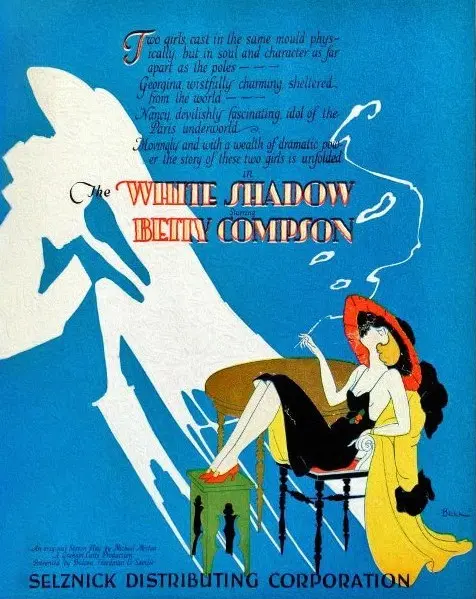
A definitive 6/10 rating for a film that redefined the boundaries of cult cinema. White Shadows remains a cornerstone of transgressive art.
In the annals of silent cinema, few works attempt the sheer psychological audacity found in White Shadows. While many cinephiles associate the 1920s with slapstick or expressionistic horror, this collaboration between writers Michael Morton and a young, burgeoning Alfred Hitchcock delves into the murky waters of identity, survivor's guilt, and the supernatural. It is a film that refuses to be categorized, oscillating between a gritty Parisian melodrama and a transcendental ghost story.
The film introduces us to a protagonist defined by her lack of social conditioning—a 'wild girl' whose untamed spirit serves as the narrative’s primary engine. Betty Compson delivers a performance of startling physicality, capturing the raw, animalistic desperation of a woman untethered from society. This characterization stands in stark contrast to the more polished archetypes of the era, such as those seen in A Daughter of the West, where the struggle is often one of external frontier survival rather than internal psychological collapse.
The inciting incident—the death of her twin—is handled with a somber gravity that avoids the saccharine pitfalls of many contemporary dramas. When the twin sister perishes to save her, the film transitions from a survivalist narrative into a haunting exploration of the 'double.' Hitchcock’s influence is palpable here; even in this early writing credit, we see the seeds of his obsession with the duality of the human psyche and the inescapable shadows of the past. The possession is not depicted through heavy-handed visual effects but through Compson’s nuanced shifts in posture, gaze, and temperament.
Paris in White Shadows is not the romanticized city of lights often depicted in films like Az utolsó bohém. Instead, it is a claustrophobic maze of shadows and secrets. The cinematography utilizes the urban landscape to mirror the protagonist's internal fragmentation. The narrow alleys and crumbling tenements of the Parisian underbelly provide a visual metaphor for the walls closing in on the girl’s sanity. This atmospheric density is reminiscent of the brooding tension found in Shattered, where the environment itself feels like a participant in the tragedy.
As the soul of the dead twin begins to assert dominance, the wild girl’s attempts to integrate into 'civilized' society become increasingly erratic. This social friction provides a fascinating critique of the era's class structures. Like the thematic underpinnings of The Sport of the Gods, the film examines how those on the margins are often crushed by the very systems that claim to offer them salvation. The 'civilization' offered to the wild girl is its own kind of prison, one that her possessed psyche is ill-equipped to handle.
Clive Brook provides a necessary counterbalance to Compson’s kinetic energy. His performance is one of restrained sophistication, representing the rational world that stands baffled by the protagonist's supernatural affliction. His presence adds a layer of tragic irony; he loves a woman who is literally disappearing before his eyes, replaced by a ghost that he cannot see and refuses to believe in. This dynamic elevates the film beyond a simple ghost story, turning it into a poignant meditation on the limits of human understanding.
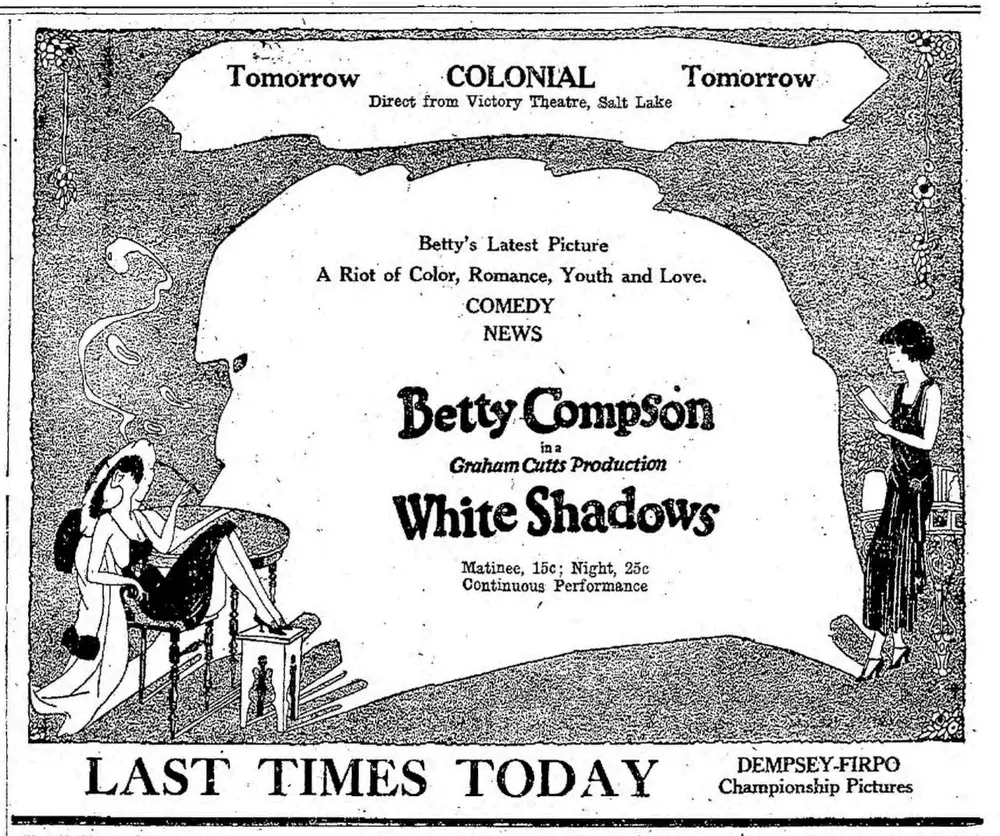
The chemistry—or lack thereof, by design—between Brook and Compson highlights the isolation of the possessed. While films like From Dusk to Dawn explore the transition of time and character in a more linear fashion, White Shadows dwells in the uncomfortable 'in-between.' It asks whether we are ever truly ourselves, or if we are merely the sum of the ghosts we carry. This existential dread is a hallmark of the writing, suggesting a level of sophistication that was rare for the mid-1920s.
Technically, the film is a marvel of its time. The editing rhythm, likely influenced by Hitchcock’s emerging sensibilities, creates a sense of mounting anxiety. The use of light and shadow—true to the film's title—is masterful. Dark orange hues of flickering candles give way to the cold, sea blue tones of the Parisian night, creating a visual palette that feels both antique and strangely modern. This use of color (in a metaphorical sense for a silent film's lighting) underscores the duality of the twin souls.
When compared to the more straightforward mystery of A Child of Mystery, White Shadows feels significantly more avant-garde. It doesn't provide easy answers. Is the girl truly possessed, or is she suffering from a profound dissociative identity disorder triggered by trauma? The script leaves just enough room for doubt, a technique Hitchcock would perfect decades later. This ambiguity makes the film a precursor to the modern psychological thriller.
The film’s climax is a crescendo of emotional and spiritual turmoil. As the boundaries between the two sisters finally collapse, the audience is left to contemplate the nature of sacrifice. Was the twin’s death a gift, or a curse? This thematic complexity is what allows White Shadows to endure while other films of the era, perhaps like the more whimsical Aladdin and the Wonderful Lamp, remain period pieces. White Shadows is a visceral experience that speaks to the universal fear of losing oneself to the past.
In the broader context of 1924 cinema, which saw releases like The Exiles and Hoarded Assets, White Shadows stands out for its refusal to engage in simple morality. It does not punish its protagonist for her wildness, nor does it reward her for her suffering. It simply observes the disintegration of a soul with a cold, almost clinical empathy. This lack of sentimentality is refreshing and contributes to the film's lasting impact.
Ultimately, White Shadows is an essential viewing for anyone interested in the evolution of psychological storytelling. It captures a moment in film history where the medium began to realize it could do more than just record action—it could record the invisible tremors of the human spirit. Through the combined talents of Compson, Brook, and a young Hitchcock, we are given a haunting glimpse into the shadows that reside within us all, proving that sometimes, the most dangerous ghosts are the ones we invite in ourselves.
IMDb 7.4
1934
Community
Log in to comment.