DbcultAccessing Vault...
Cult Review
Senior Film Conservator
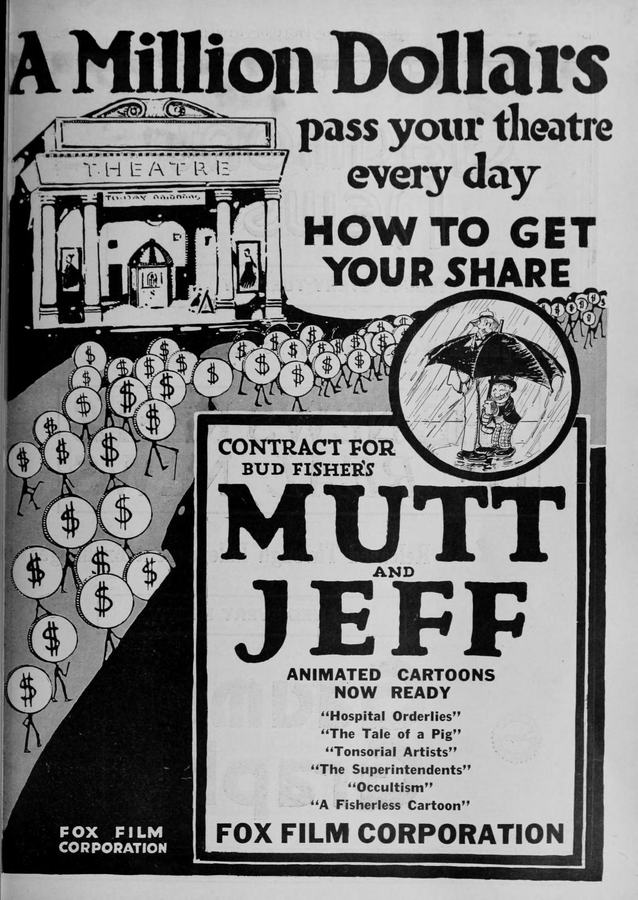
Ah, the annals of early cinema! A veritable treasure trove of forgotten narratives, nascent artistic experiments, and tantalizingly incomplete records. Among these cinematic specters, Bud Fisher’s 'Superintendents' emerges as a particularly compelling, if elusive, subject. To speak of a 'review' in the traditional sense feels almost anachronistic when confronting a film whose plot specifics have largely dissolved into the mists of time. Yet, the very existence of such a title, coupled with the formidable creative force of Bud Fisher – a name synonymous with pioneering American comic strips – compels us to embark on an interpretive odyssey, piecing together fragments of possibility to construct a critical understanding.
Fisher, of course, is a titan in the history of visual storytelling, primarily celebrated as the progenitor of 'Mutt and Jeff,' one of the earliest and most enduring daily comic strips. His transition, or perhaps foray, into the burgeoning world of motion pictures is fascinating, suggesting a restless creative spirit eager to explore new mediums. This context is paramount. One cannot approach 'Superintendents' – even hypothetically – without first acknowledging the cartoonist's eye, the satirist’s pen, and the innovator’s drive that defined Fisher’s career. What kind of cinematic experience would such a mind craft, particularly with a title so evocative, so pregnant with potential meaning?
The title itself, 'Superintendents,' immediately conjures images of bureaucracy, oversight, and the often-comical struggle for control in an increasingly complex urban landscape. In an era witnessing rapid industrialization, burgeoning cities, and the accompanying social stratification, the concept of 'superintendence' would have resonated deeply. Were we to project a narrative onto this skeletal framework, one might envision a satirical commentary on the myriad individuals tasked with managing everything from public works to private estates, from municipal regulations to the minutiae of daily life. Fisher’s comedic sensibility, honed through years of crafting daily gags and character-driven storylines, would undoubtedly infuse such a premise with a distinct brand of observational humor.
Consider the archetypes. Perhaps a bumbling city official, overwhelmed by paperwork, or a hyper-vigilant building superintendent, perpetually at odds with his tenants. The possibilities are boundless, each scenario ripe for the kind of visual gags and physical comedy that defined early silent film. One could draw parallels to the early works of figures like Charlie Chaplin or Buster Keaton, whose characters often found themselves navigating absurd bureaucratic systems or the chaotic infrastructure of modern life. While 'Superintendents' might not have achieved the same iconic status as The New Adventures of J. Rufus Wallingford in terms of intricate plot, it likely aimed for a more immediate, broadly accessible humor, rooted in relatable societal observations.
The transition from comic strip to live-action film, especially in the nascent days of cinema, was a fascinating artistic leap. Fisher, as both writer and cast member, would have brought a unique perspective. As a writer, his experience in sequential art would have trained him to think in terms of visual storytelling, pacing, and punchlines – skills directly transferable to the silent film medium. Imagine the economy of expression, the reliance on exaggerated gestures, and the clear visual cues that were hallmarks of his comic strips, now brought to life on the silver screen. His presence in the cast further tantalizes; was he merely a cameo, a symbolic nod to his authorship, or did he embody a central character, perhaps a hapless superintendent himself, channeling his own artistic persona into a physical performance?
This dual role suggests a deeply personal investment in the project, a desire to fully realize his creative vision across different platforms. It wasn't uncommon for popular figures of the era to dabble in various entertainment forms, but Fisher's specific background lends 'Superintendents' a particular intrigue. One might speculate that the film would possess a certain 'cartoonish' quality, not in a derogatory sense, but in its dynamic visual composition and perhaps its playful approach to reality. The exaggeration inherent in comic strips, where emotions are writ large and actions are often amplified for comedic effect, would find a natural home in silent film’s expressive lexicon.
To truly appreciate 'Superintendents,' we must situate it within the broader landscape of early 20th-century filmmaking. This was a period of rapid experimentation, where narrative conventions were still being established, and the language of cinema was evolving at a dizzying pace. Films like The Burden of Proof and Real Folks, while perhaps more grounded in dramatic realism or slice-of-life portrayals, demonstrate the era's burgeoning interest in reflecting contemporary society. 'Superintendents,' however, would likely lean into caricature and satire, using the lens of comedy to dissect societal structures rather than merely observe them.
The visual aesthetic would undoubtedly be characterized by the bold contrasts and clear staging typical of silent cinema, possibly enhanced by Fisher’s graphic sensibilities. Intertitles, the textual explanations that punctuated silent films, would have been crucial, and one can imagine Fisher’s witty captions translating seamlessly into these narrative devices. The pacing, too, would reflect the era: perhaps a series of vignettes, or a more tightly constructed chase sequence, culminating in a resolution that, while comedic, might also offer a subtle critique of the systems it depicts. This approach contrasts sharply with the more overt dramatic tension found in a film like The Outlaw and His Wife, suggesting a film more interested in societal foibles than grand romantic or criminal narratives.
Even in its spectral form, 'Superintendents' serves as a vital reminder of the breadth and ambition of early filmmakers. It highlights the cross-pollination of artistic disciplines during a period of intense creative ferment. For a figure like Bud Fisher, who had already mastered one form of mass media, to venture into another speaks volumes about the allure and perceived potential of cinema. It underscores the idea that stories, whether told through ink on newsprint or light on celluloid, are fundamentally about human experience – our triumphs, our follies, and our endless attempts to make sense of the world.
The absence of a definitive plot, rather than being a hindrance, transforms 'Superintendents' into a canvas for critical imagination. It invites us to consider the 'what ifs' of cinematic history, to reconstruct potential masterpieces from fragments of information. This process is not unlike an archaeologist piecing together a lost civilization from pottery shards; each detail, however minor, offers a clue to a larger, richer picture. What if it was a proto-sitcom, exploring the daily lives of building managers? What if it was a biting political satire, disguised as a light comedy? The questions themselves are part of its enduring appeal.
The credit for both writing and appearing in 'Superintendents' places Bud Fisher in a unique position, akin to multi-hyphenate talents who exert comprehensive control over their artistic output. This level of creative autonomy, especially in a nascent industry, is remarkable. It suggests a singular vision, uncompromised by external influences, allowing Fisher to translate his distinct voice directly to the screen. One might imagine that his performance, if substantial, would embody the same spirited, slightly mischievous energy that characterized his comic strip creations. Perhaps a touch of Mutt's long-suffering exasperation or Jeff's impish glee would manifest in his on-screen persona, offering a meta-commentary on the creator's relationship with his characters.
This dual role also prompts reflection on the nature of authorship in early cinema. Was Fisher merely lending his famous name to a project, or was he truly a hands-on filmmaker, meticulously crafting both the narrative and its execution? Given his background, the latter seems more probable. His experience in crafting serialized stories, each with its own mini-arc and recurring character traits, would have provided a robust foundation for cinematic storytelling, perhaps even influencing the episodic structure that was common in early films and serials. This is a stark contrast to the more conventional division of labor seen in later productions, highlighting the artisanal nature of early filmmaking where one individual often wore many hats.
When we consider 'Superintendents' alongside its contemporaries, a fascinating picture emerges of the era’s diverse cinematic offerings. While films like The Girl Who Doesn't Know might have delved into romantic misunderstandings or social dilemmas, 'Superintendents' likely carved out a niche in comedic social commentary. Its focus on the mundane yet universally relatable theme of 'supervision' would have offered audiences a mirror to their own lives, reflecting the everyday absurdities of regulations and authority figures.
The film could also be viewed as a precursor to later workplace comedies or satires on bureaucracy, demonstrating that even in cinema's infancy, artists were keen to explore the humor inherent in human systems. Unlike the grand historical narratives of films such as A vörös Sámson, 'Superintendents' likely found its strength in the intimate, the immediate, and the observational. Its probable charm would lie in its ability to take a seemingly dry subject and inject it with life, humor, and perhaps a touch of gentle subversion, a hallmark of Fisher's comic strip work.
Furthermore, the film's potential for visual inventiveness, given Fisher's background, could have set it apart. Imagine innovative camera angles or dynamic editing to convey the chaos or efficiency of a superintendent's day, techniques that were still in their experimental stages. This would place it in conversation with films that pushed the boundaries of visual storytelling, even if its narrative was simpler than, say, the intricate plots of The Devil-Stone or the action-packed sequences of Maciste poliziotto. The very act of 'superintending' provides a rich visual palette for gags: misplaced keys, overflowing pipes, disgruntled tenants, inspection mishaps – all fertile ground for a visually oriented comedian and writer.
Ultimately, 'Superintendents' stands as a poignant reminder of the fragility of cinematic history. While its exact narrative may remain obscured, its conceptual weight, combined with the formidable talent of Bud Fisher, suggests a film of considerable artistic merit and historical significance. It speaks to an era when the lines between different forms of popular entertainment were fluid, and creative minds were eager to explore new frontiers. The very fact that we are compelled to speculate, to reconstruct, to imagine its contents, is a testament to its enduring power as a cultural artifact.
For film historians and enthusiasts, 'Superintendents' represents a tantalizing missing piece in the grand mosaic of early American cinema. Its potential rediscovery would not only illuminate a forgotten chapter in Bud Fisher’s multifaceted career but also offer invaluable insights into the social and artistic currents of its time. Until then, we are left with the delightful task of dreaming, of painting our own vibrant pictures of what this intriguing film, crafted by a true pioneer of visual humor, might have been. It’s a film that, even in its absence, superintends our imagination, urging us to explore the rich, often untold stories of cinema's formative years. Perhaps one day, like a long-lost blueprint, 'Superintendents' will resurface, allowing us to finally witness the vision of Bud Fisher brought to life on the silver screen.

IMDb 5.2
1929
Community
Log in to comment.