DbcultAccessing Vault...
Cult Review
Senior Film Conservator
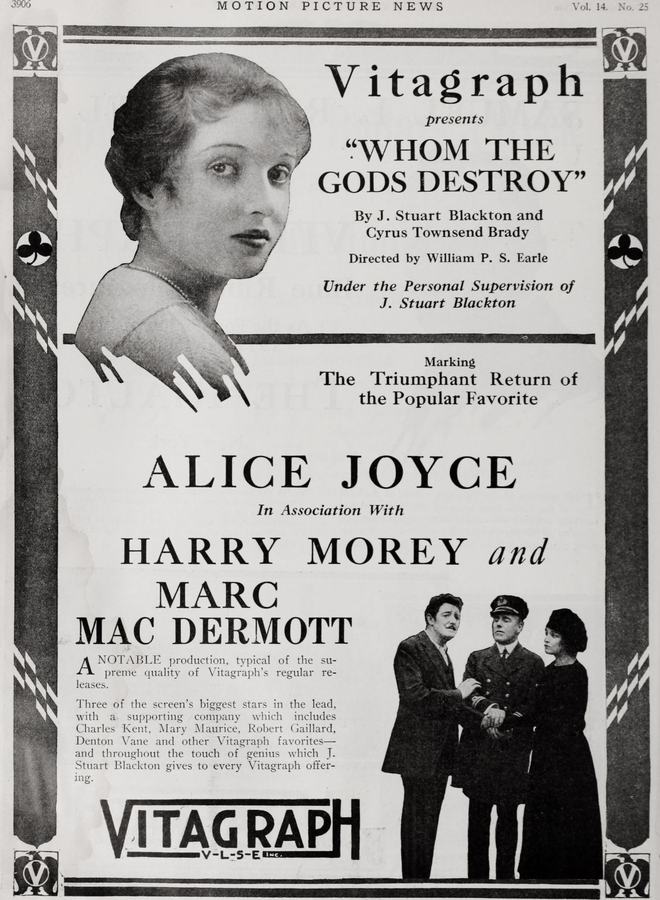
Stepping back into the annals of cinematic history, one encounters a fascinating and often overlooked gem: J. Stuart Blackton's 1916 epic, 'Whom the Gods Destroy'. This film, emerging directly from the crucible of the very events it depicts, offers an invaluable, if dramatically interpreted, glimpse into the Irish Easter Rebellion. It’s a work that, even a century later, resonates with a raw, almost journalistic immediacy, yet also possesses the grand, sweeping emotionality characteristic of early silent cinema. Blackton, often credited as a pioneer of animation, here proves his mettle as a director of powerful historical drama, crafting a narrative that is both deeply personal and broadly panoramic.
The film plunges us headfirst into the fervent atmosphere of Dublin in April 1916, a city on the precipice of revolution. The air is thick with nationalist sentiment, a simmering discontent that finally boils over into an audacious, yet ultimately doomed, uprising against British rule. What sets 'Whom the Gods Destroy' apart from mere historical reenactment is its profound commitment to exploring the human element within such cataclysmic events. It’s not just a chronicle of battles and political maneuvering; it's a deeply felt exploration of loyalty, love, sacrifice, and the often-brutal choices demanded by war. We are introduced to a cast of characters whose lives become irrevocably entangled in the rebellion's unfolding tragedy, their individual fates serving as microcosms of a nation's struggle.
Cyrus Townsend Brady's screenplay, crafted with a keen eye for dramatic tension, weaves a complex narrative web. While the precise details of the plot are often left to inference in the surviving fragments or contemporary reviews, the essence lies in the clash of ideals and the personal costs. Imagine a young Irish family, perhaps, with one sibling drawn irresistibly to the cause of Irish freedom, joining the Volunteers, while another, perhaps a sweetheart or a parent, remains steadfastly bound to the existing order, or simply desires peace above all else. This internal conflict, mirrored across countless households in Ireland at the time, forms the emotional core of the film. The cast, featuring stalwarts of the era like Bernard Siegel, Alice Joyce, and Marc McDermott, bring a silent eloquence to these roles, conveying profound emotion through gesture, expression, and the potent language of early film acting.
Alice Joyce, in particular, often shines in roles that demand both grace and resilience, and one can envision her character grappling with an impossible dilemma, her face a canvas of conflicting emotions as the city around her erupts. Marc McDermott, with his imposing screen presence, would likely embody a figure of authority or a staunch rebel leader, his convictions etched into every frame. Even the inclusion of an actor like Logan Paul, though anachronistic in our modern understanding, suggests a role that perhaps required a fresh, youthful charisma, a portrayal of the younger generation swept up in revolutionary fervor. The film’s strength lies in its ability to humanize the broad strokes of history, transforming abstract political movements into tangible, heartbreaking personal sagas.
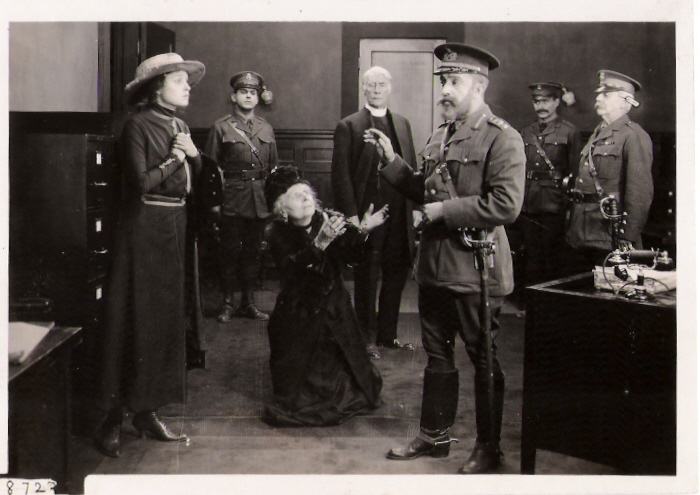
The depiction of the Easter Rising itself is handled with a blend of grand spectacle and stark realism. Blackton, known for his technical prowess, would have faced immense challenges in recreating the urban warfare and destruction that engulfed Dublin. One can almost see the frantic energy of the rebels seizing the General Post Office, the tension of the barricades, and the devastating impact of British artillery fire. The film would have utilized the nascent techniques of special effects and large-scale set pieces to convey the chaos and scale of the rebellion. Unlike the more allegorical or symbolically grand narratives of a film like D.W. Griffith's Intolerance, which tackled historical injustice on a sweeping, multi-epoch scale, 'Whom the Gods Destroy' keeps its focus tightly on a singular, recent historical event, lending it a certain immediacy that would have resonated powerfully with contemporary audiences.
The title itself, a truncated version of the classical adage, "Whom the gods would destroy, they first make mad," hints at the tragic undercurrent permeating the narrative. It suggests a sense of inevitable doom, a preordained fate for those who dare to challenge the established order, or perhaps, for those whose passions run so deep they obscure practical realities. This fatalistic worldview is often explored in historical dramas, from the Shakespearean tragedy of Julius Caesar, where political ambition and betrayal lead to widespread civil strife, to more intimate tales of doomed love and rebellion. The film doesn’t shy away from the grim consequences of the uprising, particularly the British response, which included executions and widespread arrests, further fueling Irish nationalism for decades to come.
Silent film acting, as exemplified by the cast here, was an art form unto itself. Without spoken dialogue, actors relied on exaggerated expressions, precise gestures, and body language to convey complex emotions and propel the narrative forward. Charles Kent, Mary Maurice, and Thomas R. Mills, all experienced performers, would have brought a gravitas and nuanced understanding to their roles, whether as steadfast elders, conflicted citizens, or impassioned rebels. The power of a close-up, revealing a single tear or a flicker of defiant hope in a character's eyes, would have been paramount in communicating the film's emotional depth. This reliance on visual storytelling elevates the craft, demanding a heightened sensitivity from both the actors and the audience.
The themes explored in 'Whom the Gods Destroy' are timeless. The struggle for national self-determination, the moral ambiguities of armed conflict, the devastating impact of war on civilian populations, and the enduring power of love and family in the face of adversity – these are narratives that continue to resonate across cultures and generations. One might draw parallels to the way other films of the era, such as The Golden Chance, explored societal pressures and moral choices, albeit in a different context. However, the unique historical immediacy of Blackton's film gives it a particular weight, capturing the zeitgeist of a nation in turmoil.
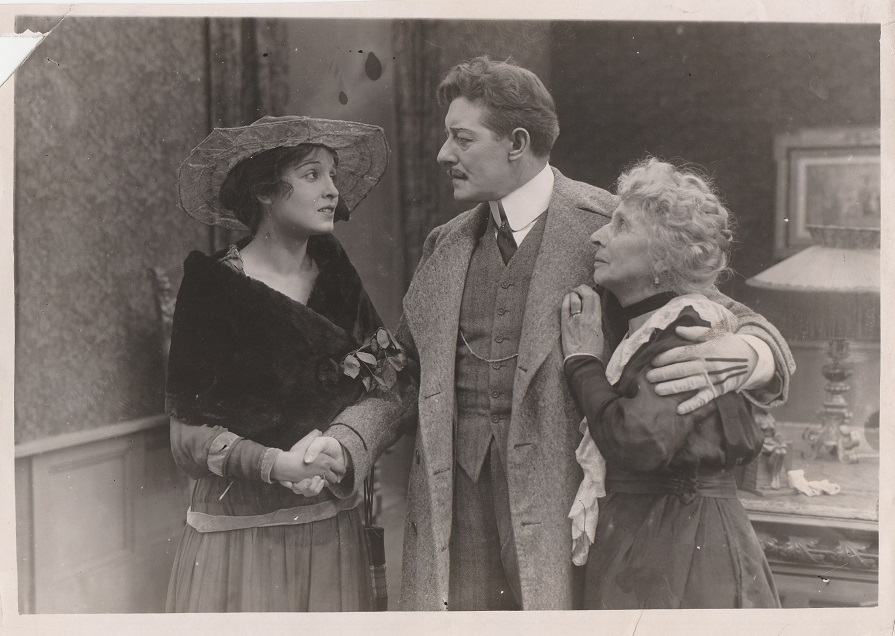
The film also serves as a valuable historical document, reflecting contemporary attitudes towards the rebellion. Produced so soon after the events, it would have been shaped by the prevailing public sentiment, both in America and among Irish diaspora communities. While it is a dramatization, its very existence speaks to the profound impact of the Easter Rising on the global consciousness. It stands in contrast to films that might explore more generalized romantic entanglements, like Secret Love, by grounding its emotional core within a specific, monumental historical struggle.
Technically, Blackton's direction would have showcased the innovative storytelling techniques of the early 20th century. The use of intertitles, while seemingly simplistic to modern viewers, was crucial for conveying dialogue, exposition, and emotional nuance. The pacing, carefully constructed to build tension and release it in dramatic crescendos, would have been a hallmark of his craft. Consider how directors crafted suspense and spectacle in other films of the period; Blackton was a master of such orchestration. His attention to detail in set design and costuming, even in the silent era, would have been essential in transporting audiences to the streets of wartime Dublin.
The legacy of 'Whom the Gods Destroy' is complex, much like the history it portrays. As an early cinematic treatment of a pivotal moment in Irish history, it offers a window into how such events were processed and presented to a mass audience. It predates many of the more nuanced and politically charged cinematic explorations of the 'Troubles' in Ireland, offering a foundational perspective. While its narrative might seem melodramatic by today's standards, its emotional honesty and commitment to portraying the human cost of conflict remain powerful. It's a reminder that even in the nascent days of cinema, filmmakers were grappling with profound questions of national identity, justice, and the enduring tragedy of war.
Examining the film through a modern lens, one appreciates its ambition and its daring. To tackle such a recent and politically sensitive subject required a certain courage. It's a film that speaks to the power of cinema not just as entertainment, but as a medium for historical commentary and emotional resonance. The performances, while adhering to the conventions of the time, undoubtedly conveyed the anguish, determination, and hope of a people fighting for their future. Harry T. Morey, another seasoned actor of the era, would have added another layer of depth, perhaps as an antagonist or a conflicted figure caught between loyalties. The combined talent of such a strong ensemble cast under Blackton's direction would have ensured a compelling and memorable cinematic experience.
In conclusion, 'Whom the Gods Destroy' stands as a significant artifact of both film history and Irish history. It’s a testament to the power of early cinema to tackle complex, contemporary events with dramatic flair and emotional depth. For anyone interested in the origins of historical drama on screen, or indeed, in the cinematic portrayal of the Irish struggle for independence, this film offers a compelling and essential viewing experience. It reminds us that even in silence, stories can roar with the thunder of revolution and the quiet heartbreak of personal loss, leaving an indelible mark on the soul.
IMDb 5.3
1929
Community
Log in to comment.