DbcultAccessing Vault...
Cult Review
Senior Film Conservator
Short answer: yes, if you can appreciate the raw, unpolished energy of 1920s slapstick. It is a frantic, often nonsensical piece of cinema that captures the anxiety of the early 20th-century urban boom.
This film is for historians of comedy and those who find joy in the mechanical precision of silent-era physical gags. It is NOT for viewers who require a logical plot or character development that extends beyond 'man runs away from angry father.'
Direct Answer: Who's My Wife? remains a fascinating artifact of Norman Taurog’s early career. While it lacks the emotional depth of a Chaplin feature, its sheer speed and commitment to the 'comedy of errors' trope make it a worthwhile 20-minute investment for any cinephile.
1) This film works because the choreography of the elevator sequence is a masterclass in spatial awareness and comedic timing.
2) This film fails because the central misunderstanding is so thin that it requires the characters to behave with a level of stupidity that occasionally breaks the fourth wall of believability.
3) You should watch it if you want to see how the 'jealous boyfriend' trope was perfected long before the advent of the modern sitcom.
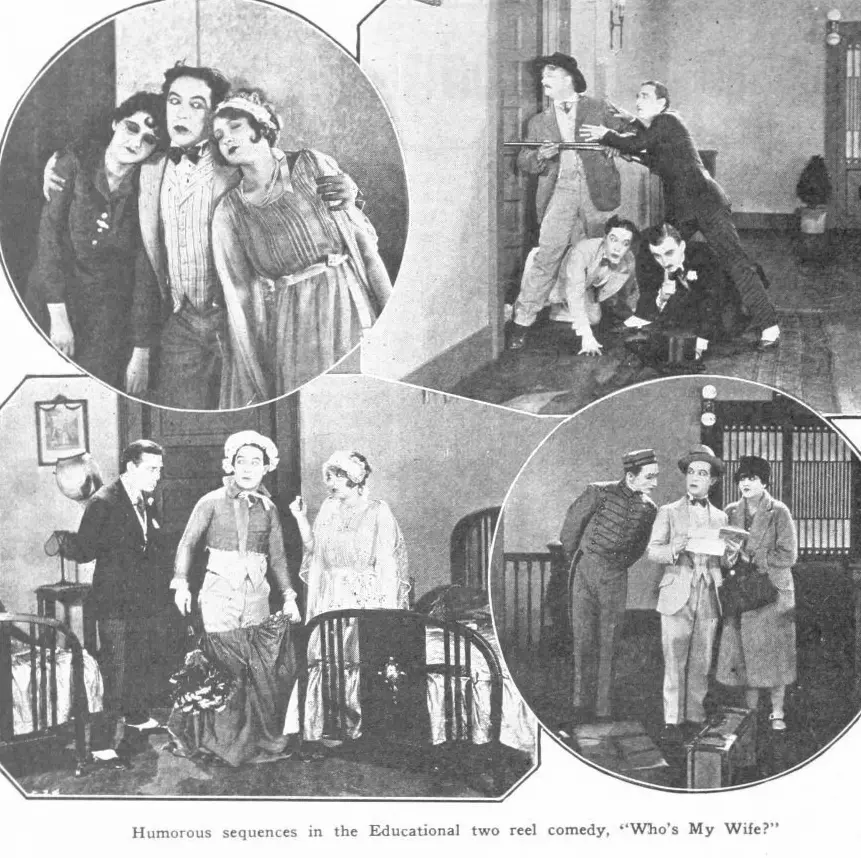
Directed by Norman Taurog, who would later go on to win an Oscar for Skippy, Who's My Wife? is a distilled shot of 1926 adrenaline. The film opens with the classic trope of elopement—a theme we see explored with more melodrama in films like The Rise of Susan—but Taurog immediately pivots into high-gear farce. The city isn't just a backdrop here; it’s an antagonist. The elevator, a relatively modern marvel at the time, serves as the primary engine of the plot's disintegration.
Lige Conley, playing the harried groom, possesses a rubbery physicality that rivals the greats. When he loses Zelma in the shuffle of the office building, his panic is palpable. There is a specific moment where he tries to track the elevator floor indicator that feels genuinely stressful. It’s a relatable anxiety—losing someone in a crowd—dialed up to eleven for comedic effect. Unlike the more grounded approach seen in Man by the Roadside, this film treats reality as a suggestion rather than a rule.
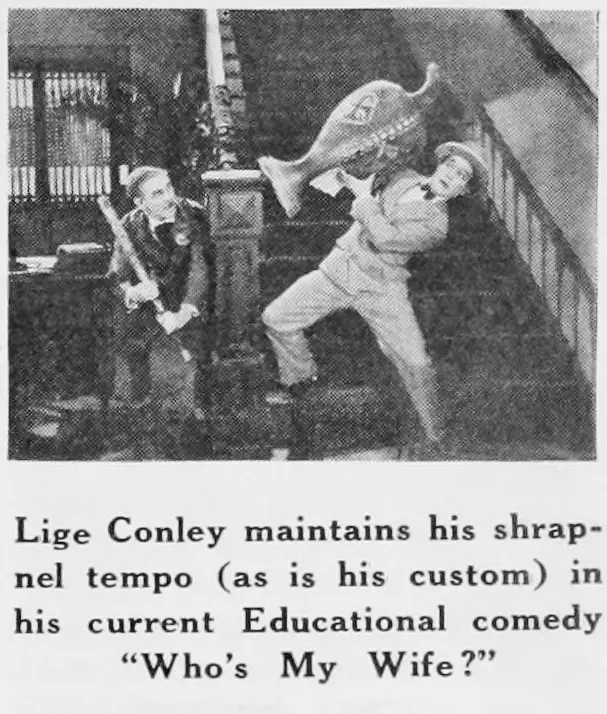
The heart of the film lies in the accidental encounter between Lige and Estelle (played with a charmingly confused grace by Estelle Bradley). The 'falling into the lap' gag is a staple of the era, but Taurog executes it with a violent suddenness that makes it feel fresh. When Eddie Boland enters as the jealous Eddie, the film shifts from a chase movie into a proto-sitcom. Boland’s performance is defined by a slow-burn rage that contrasts perfectly with Conley’s high-frequency vibrating energy.
The logic is thin. Why doesn't Lige just explain himself? But in the world of 1926 slapstick, explanation is the enemy of action. The film demands a suspension of disbelief that modern audiences might find taxing. If you can get past the fact that Lige would rather lie to a violent father-in-law than admit he lost his wife for five minutes, the payoff is immense. It’s a different kind of tension than the historical weight found in The Forbidden City, focusing instead on the immediate, visceral thrill of the 'near miss.'
Otto Fries, as the pursuing father, is a force of nature. His presence in the film provides the necessary stakes. Without the threat of Otto’s fists, the elevator high-jinks would feel trivial. Fries uses his physical stature to dominate the frame, creating a visual imbalance whenever he shares a scene with the smaller Conley. This dynamic was a precursor to the many 'big man vs. little man' tropes that would dominate the genre for decades, similar to the pugilistic energy in The Knockout.
The climax, where Otto begins pummeling Eddie under the mistaken impression that he is the eloping groom, is a brutal piece of comedy. It’s fast, it’s messy, and it’s surprisingly violent. There is no nuance here. It’s just raw, kinetic energy. While some might prefer the more sophisticated humor of Nip o' Scotch, there is something undeniably cathartic about the sheer absurdity of Otto’s misplaced rage.
For a short film from the mid-20s, the pacing is relentless. Taurog doesn't waste a single frame. The transition from the rural elopement to the city office building is handled with a swiftness that suggests a director who understands that his audience is already two steps ahead. The use of close-ups during the elevator scenes helps to heighten the claustrophobia and confusion, a technique that wasn't always a given in the wide-shot-heavy world of early silent shorts.
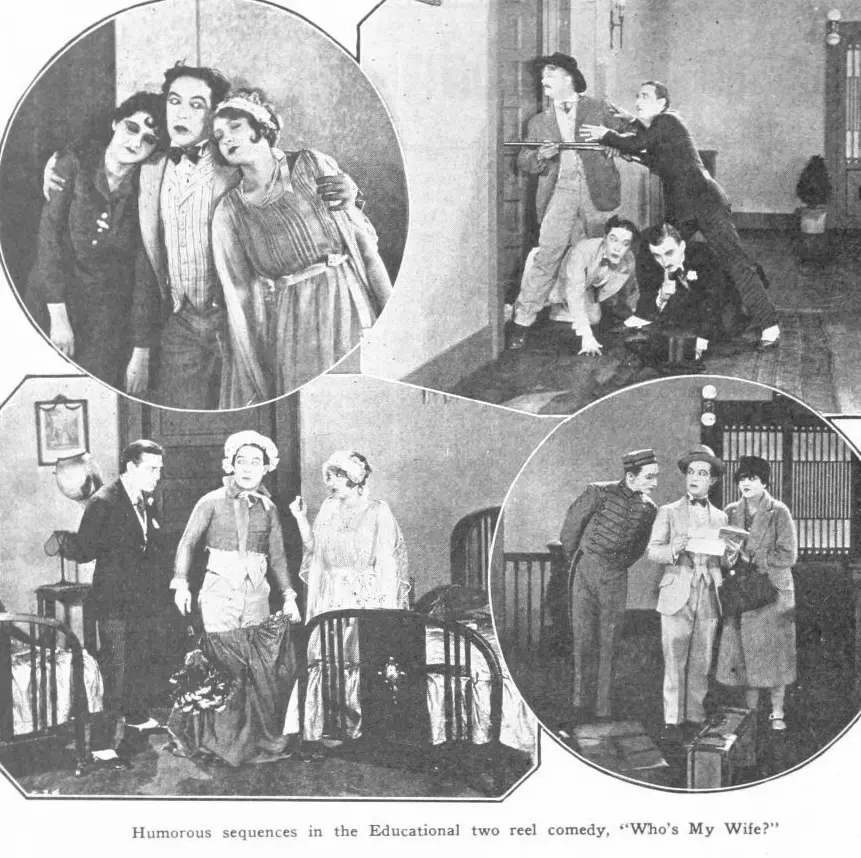
The cinematography doesn't strive for the beauty of The Desert Flower, but it excels at clarity. In a film where four or five characters are constantly swapping positions and identities, the camera's ability to keep the viewer oriented is crucial. You always know where everyone is, which makes the characters' ignorance of each other's locations even funnier. It’s a technical achievement that often goes unnoticed in these 'minor' shorts.
Pros:
The chemistry between Lige Conley and Otto Fries is electric. The film moves at a breakneck speed that prevents boredom. It serves as a great example of Norman Taurog’s early comedic instincts before he moved into more sentimental territory.
Cons:
The treatment of the female characters, specifically Zelma O'Neal, is somewhat sidelined in favor of the male-centric brawling. The plot relies on a level of convenience that can feel lazy if you're not in the right headspace for a farce.
Here is a hot take: Who's My Wife? is actually a secret horror film about the loss of identity in the modern age. Lige doesn't just lose his wife; he loses the ability to define who he is to the people around him. He is forced to adopt a new persona (Estelle’s husband) just to survive the arrival of the patriarch. It’s a frantic, sweaty nightmare dressed up as a comedy. If you watch it through that lens, the film becomes significantly more disturbing—and more interesting.
Is it a masterpiece? No. Is it essential viewing? For some. Who's My Wife? is a punchy, 20-minute distraction that showcases the technical proficiency of the 1920s studio system. It lacks the heart of a film like The Miracle Makers, but it makes up for it with sheer, unadulterated chaos. It works. But it’s flawed. It’s a relic of a time when movies were allowed to be just a series of escalating disasters without needing to provide a moral lesson.
If you've already seen the major works of Keaton and Lloyd, diving into the filmography of Lige Conley is the natural next step. It offers a grittier, perhaps more desperate version of the 'city boy' archetype. While it might not have the sweeping romance of His Temporary Wife, it has enough punches and elevator dings to keep you entertained. In the end, Who's My Wife? is a reminder that some things never change: fathers are scary, elevators are confusing, and falling into the wrong person's lap is a timeless recipe for disaster.
IMDb —
1921
Community
Log in to comment.