DbcultAccessing Vault...
5.6/10
Senior Film Conservator
A definitive 5.6/10 rating for a film that redefined the boundaries of cult cinema. The Mysterious Pearl remains a cornerstone of transgressive art.
In the burgeoning landscape of 1917 cinema, few works managed to capture the precarious balance between pulp serial thrills and psychological depth quite like The Mysterious Pearl. Directed by and starring the industrious Ben F. Wilson, this film operates as a seminal bridge between the simplistic morality plays of the early 1910s and the more complex character studies that would define the late silent era. At its core, the film is a meditation on the concept of the 'double life,' a theme that resonated deeply with an audience navigating the societal shifts of the early 20th century. Unlike the overt villainy explored in Das schwarze Gesicht, the protagonist here is a victim of her own lineage, an inherited predilection for pearls that functions as a proto-Freudian compulsion.
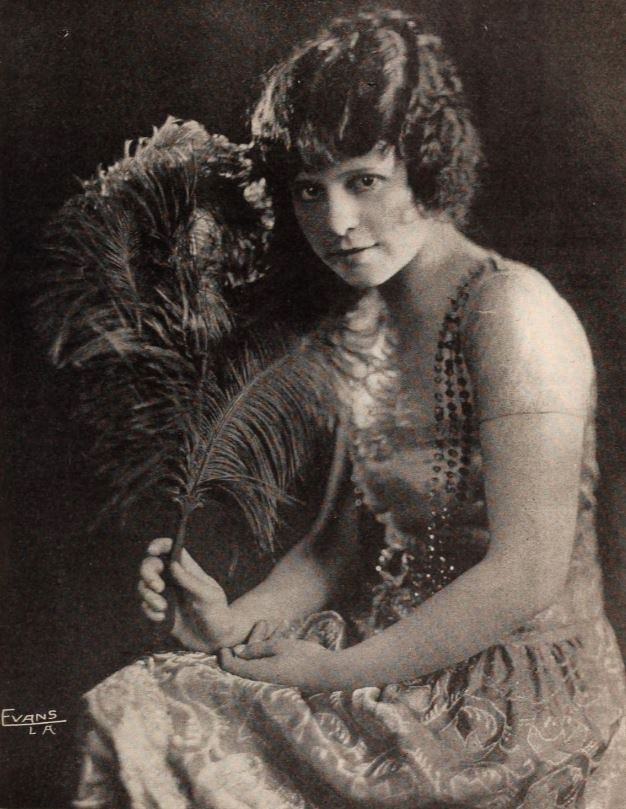
Neva Gerber, an actress of remarkable expressive range, delivers a performance that anchors the film’s more melodramatic flourishes. Her portrayal of a woman caught between her refined social standing and her compulsive nocturnal activities is handled with a nuance that avoids the histrionics common to the era. Gerber’s face becomes a canvas of internal conflict, reflecting a soul burdened by a secret she neither understands nor can control. This depiction of involuntary criminality offers a fascinating counterpoint to the more deliberate deceptions seen in The Veiled Marriage, where identity is a tool of agency rather than a symptom of psychological fracture.
Ben F. Wilson, playing the detective, serves as both the narrative’s moral compass and the catalyst for the protagonist’s eventual metamorphosis. Wilson’s screen presence is one of stolid authority, yet he imbues the character with a burgeoning empathy that complicates the traditional hunter-prey dynamic. The detective’s journey from a cold enforcer of the law to a compassionate redeemer mirrors the broader cinematic shift toward humanizing the apparatus of justice. While films like Jim the Penman focus on the intricate mechanics of the crime itself, The Mysterious Pearl is far more preoccupied with the possibility of moral reclamation. The detective does not merely capture the 'thief'; he seeks to understand the root of her malady, transforming the act of arrest into an act of salvation.
The screenplay, penned by J. Grubb Alexander and Harvey Gates, is a marvel of structural efficiency. Writing for a mystery melodrama requires a delicate hand to maintain suspense without alienating the audience through excessive convolution. Alexander and Gates lean into the episodic nature of the serial format, yet they ensure that each narrative beat reinforces the central theme of duality. The 'pearl' functions as a brilliant MacGuffin—a physical manifestation of the protagonist's desire and her downfall. This use of a singular, recurring object to drive character development is a technique that would later be perfected in film noir, but its roots are visible here in the opalescent shimmer of the mysterious gems.
Visually, The Mysterious Pearl utilizes the chiaroscuro lighting techniques that were beginning to find favor among directors influenced by European aesthetics. The contrast between the brightly lit ballrooms of the protagonist’s social life and the shadowy, atmospheric environments where her double life unfolds creates a visual shorthand for her fractured psyche. This use of space and shadow to articulate internal states is reminiscent of the work seen in The Market of Vain Desire, though Wilson applies it here to the specific requirements of the mystery genre. The camera work, though largely static by modern standards, employs framing that emphasizes the isolation of the characters, particularly during the high-stakes confrontations between the detective and the girl.
The supporting cast, featuring stalwarts like Joseph W. Girard and Ashton Dearholt, provides a robust framework for the central drama. Girard, in particular, brings a gravity to his role that elevates the stakes of the mystery. The ensemble works in harmony to create a world that feels inhabited and consequential, a necessity for a film that asks its audience to invest in such a heightened premise. When compared to the grand historical scale of The Battle of Shiloh, The Mysterious Pearl feels intimate and claustrophobic, a psychological thriller contained within the trappings of a social drama.
One of the most compelling aspects of the film is its treatment of the 'reform' narrative. In the early 20th century, cinema was often expected to serve a didactic purpose, providing moral lessons to the masses. However, The Mysterious Pearl subverts the typical 'punishment for the sinner' ending by offering a path of love and integration. The detective’s ultimate victory is not the incarceration of the woman, but the winning of her heart and the curing of her obsession. This romantic resolution, while perhaps sentimental to modern sensibilities, was a radical assertion of the power of empathy over the rigidity of the law. It echoes the themes of social redemption found in The Sleeping Lion and The Guilt of Silence, suggesting a shared cinematic interest in the capacity for human change.
The film’s exploration of heredity—the idea that the love for pearls was 'inherited'—is a fascinating glimpse into the pseudo-scientific beliefs of the era. It provides a biological excuse for the protagonist's actions, which in turn allows the audience to maintain their sympathy for her. This narrative device is a clever way to navigate the Hayes-era morality that would soon dominate the industry, ensuring that the heroine remains 'pure' despite her illicit activities. It is a far cry from the more straightforward comedic antics found in The Antics of Ann or the rugged outdoor adventures of Hitting the Trail. Instead, The Mysterious Pearl invites us into the darkened corners of the human mind, where desire and duty are in constant, shimmering conflict.
To fully appreciate the craftsmanship of The Mysterious Pearl, one must consider it alongside its contemporaries. While The Ransom deals with the extrinsic pressures of crime and consequence, Wilson’s film is more concerned with the intrinsic motivation. The mystery is not just 'who did it' or 'how will they be caught,' but 'why do they do it?' This shift toward psychological interiority is what allows the film to transcend its genre origins. Even when compared to the theatrical grandiosity of Hamlet (1911), the understated tension of this mystery melodrama feels remarkably modern. It lacks the operatic scale of Marc'Antonio e Cleopatra, but it compensates with a taut, focused narrative that prizes character development over spectacle.
The film also stands as a testament to the collaborative power of the era’s stock companies. Wilson and Gerber were frequent collaborators, and their onscreen chemistry is palpable. This shorthand allows them to convey complex emotional beats with minimal intertitles, relying instead on a shared vocabulary of gesture and gaze. This synergy is something often missing in international productions of the time, such as A Vida do Barão do Rio Branco or the Italian Il mulino, which often prioritized historical or pastoral themes over the intimate character dynamics found in American mystery serials. In The Mysterious Pearl, every scene is a brick in the wall of the protagonist's eventual transformation, leading to a conclusion that is as satisfying emotionally as it is narratively.
The production values of The Mysterious Pearl are surprisingly high for a 1917 serial. The set design, particularly the interiors of the affluent homes, provides a sense of verisimilitude that grounds the more fantastical elements of the plot. The costumes, too, play a vital role in the storytelling. The protagonist’s wardrobe shifts subtly as she moves between her two worlds, using texture and silhouette to signal her changing state of mind. This attention to detail is what separates a standard 'mystery melodrama' from a work of lasting artistic value. It is this same commitment to visual storytelling that we see in Each to His Kind, where the environment serves as an extension of the character’s internal reality.
Ultimately, The Mysterious Pearl is a film that deserves a place in the pantheon of significant silent cinema. It is a work that understands the power of the image to convey the unspoken, the power of the mystery to reveal the truth, and the power of love to heal the fractured soul. As we look back through the lens of a century of filmmaking, the opalescent glow of this silent gem remains undimmed, a reminder of a time when cinema was first discovering its ability to map the labyrinth of the human heart. It is not merely a story of a girl and a detective; it is a story of the masks we wear, the compulsions we inherit, and the redemption we find when someone finally sees through the mystery to the person beneath.
In the final analysis, the collaboration between Wilson, Gerber, and the writers Alexander and Gates resulted in a film that is both a product of its time and ahead of its time. It captures the anxieties of the early 20th century—fear of the subconscious, the changing role of women, the tension between social classes—and weaves them into a compelling, suspenseful narrative. Whether you are a scholar of silent film or a casual viewer looking for a classic mystery, The Mysterious Pearl offers a rich, rewarding experience that continues to resonate long after the final frame has faded to black.
IMDb —
1922
Community
Log in to comment.