DbcultAccessing Vault...
Cult Review
Senior Film Conservator
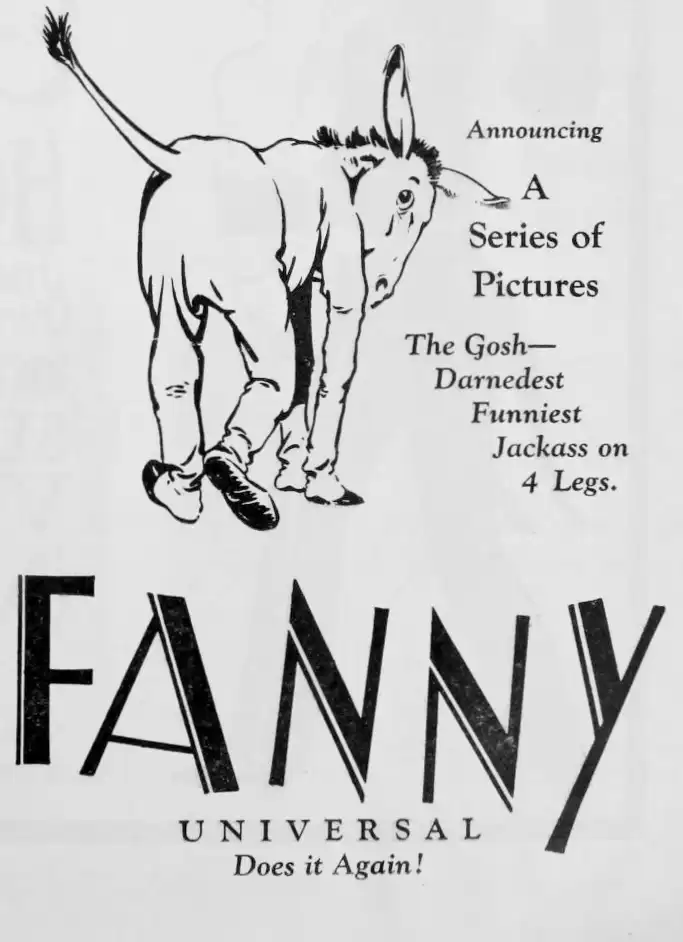
If you are looking for the sophisticated narrative structures of the late silent era, you won't find them in Why Mules Leave Home. However, if you have ten minutes to spare and an interest in the origins of physical comedy, this 1913 short is absolutely worth your time. It is primarily for those who appreciate the 'rough and tumble' era of cinema—before the polish of the 1920s set in. Fans of Slim Summerville will enjoy seeing him in his lanky, youthful prime, long before he became a character actor staple in the sound era. Those who find animal-based humor tedious or who are bothered by the broad, pantomime villainy of early silents should probably skip it.
The film rests entirely on the shoulders of Slim Summerville and his four-legged co-star, Fanny the Mule. Summerville, with his elongated frame and expressive, slightly mournful face, was always a natural for this kind of physical storytelling. In this short, he moves with a certain jerky grace that feels less choreographed than the work of later stars like Keaton. There is a specific moment during the auction scene where he checks his empty pockets; it’s a small, human gesture that stands out against the more exaggerated 'big' acting of the supporting cast.
Then there is Fanny. In early cinema, animals were often treated as mere props, but Fanny has a genuine screen presence. Whether she was trained or just naturally stubborn, her refusal to move during the Sheriff’s beating scenes adds a layer of genuine pathos that the script probably didn't intentionally demand. The contrast between Slim’s frantic energy and the mule’s total lack of interest in the surrounding chaos provides the film's most consistent laughs.
The plot takes a sharp, weird turn in the middle that feels like it belongs in a completely different movie. After Slim 'liberates' Fanny (essentially stealing her back from the Sheriff), he decides the best way to make a living is to become an organ grinder. Usually, this involves a monkey, but Slim decides a full-grown mule is a suitable replacement.
Visually, this is the highlight of the film. The sight of the lanky Slim cranking a music box while a mule stands perfectly still beside him in a dusty street is an image that lingers. It’s an absurd concept played with total sincerity. The lighting in these outdoor scenes is harsh—typical for the period—but it captures the grit of the locations. You can almost feel the dust kicked up by Fanny’s hooves. This sequence feels much more spontaneous than the staged indoor scenes found in contemporary shorts like Walter Tells the Tale.
The pacing is brisk, as most one-reelers are, but it hits a few snags during the auction. The bidding war between Slim and the Sheriff is dragged out through repetitive intertitles that don't add much to the tension. We know Slim is going to lose; we don't need three rounds of cards to tell us that.
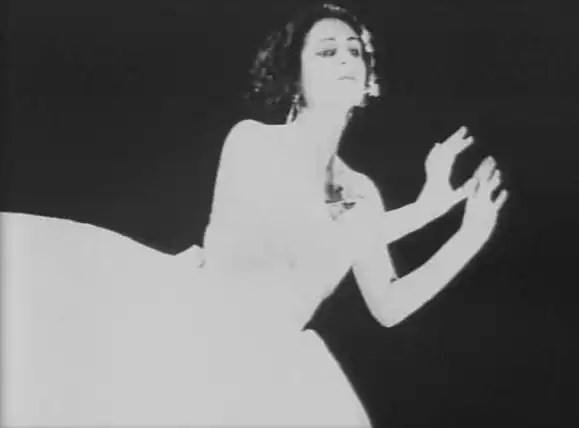
However, the film recovers in the finale. The logic of the climax is delightfully broken. The Sheriff pursues Slim to the girl’s house, and Fanny—a large, adult mule—manages to 'hide' under a dining table. To be clear, the table is barely large enough to cover her back, yet the Sheriff enters the room and somehow fails to notice four mule legs and a tail sticking out from under the tablecloth. It is the kind of 'cartoon logic' that only works in the silent era, and it’s genuinely funny because of how seriously the actors treat the Sheriff’s confusion. It lacks the technical trickery of a film like Protéa, relying instead on the audience's willingness to accept the impossible for the sake of a gag.
The cinematography is static, with the camera remaining at eye-level for almost the entire duration. There are no close-ups to heighten the emotional stakes of the girl’s plight under the Sheriff’s thumb. Instead, we rely on the actors' broad gestures. The Sheriff is a classic 'black hat' villain, all sneers and whip-cracking. His performance is one-dimensional, but in a ten-minute short about a mule, nuance is a secondary concern.
One detail only a careful viewer might notice is the state of the costumes. Slim’s clothes look genuinely lived-in and slightly too small for his frame, which adds to his 'lovable loser' persona. In contrast, the Sheriff’s outfit is almost too pristine, making him look like a man playing dress-up, which inadvertently makes his eventual humiliation more satisfying.
Why Mules Leave Home isn't a lost masterpiece, but it is an effective comedy that understands the appeal of a man and his animal. It avoids the overly sentimental traps of films like Les deux gamines, opting instead for a weird, slightly surreal brand of humor. It’s a testament to how much can be communicated through simple physical juxtaposition. If you want to see a mule outsmart a lawman and a young Slim Summerville find his footing as a comedic lead, this is a charming way to spend a few minutes of your day. It’s light, it’s silly, and it features a mule under a table—what more do you really need from 1913?
IMDb 4
1926
Community
Log in to comment.