DbcultAccessing Vault...
7.2/10
Senior Film Conservator
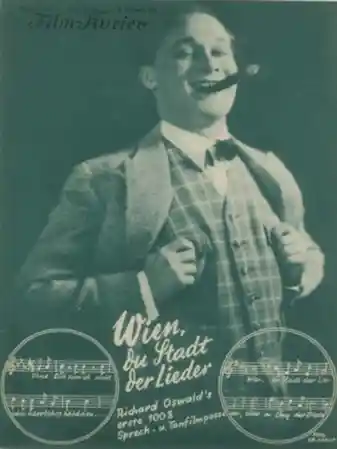
A definitive 7.2/10 rating for a film that redefined the boundaries of cult cinema. Wien, du Stadt der Lieder remains a cornerstone of transgressive art.
If you have about 80 minutes and don't mind the hiss and pop of a 1930s soundtrack, you should probably give Wien, du Stadt der Lieder a look. It is a weird little bridge between the silent era and the talkies that feels more like a party than a polished movie.
It’s perfect for anyone who likes seeing comedians from the old Berlin cabaret scene just doing their thing. If you hate old-fashioned farce where everyone yells because they think the microphone is a mile away, you will definitely want to skip this one.
Richard Oswald directed this in only 15 days, and honestly, you can kind of tell. Not in a bad way, really, but it has that frantic energy of people trying to figure out how sound works while the camera is rolling.
The plot is one of those classic 'everything goes wrong' setups. Steffi wants Pepi, but her dad, Ignaz, wants her to marry a butcher named Burgstaller.
Then this guy Cäsar Grün (played by Max Ehrlich) accidentally prints the wrong lottery numbers in the paper. Total chaos ensues.
Ignaz and the butcher think they are millionaires and start buying drinks for everyone at the Bock Café. They even give away their businesses because they think they don't need them anymore.
There is a scene where they are just throwing money around that feels so genuinely happy it’s almost sad. You know the rug is going to be pulled out from under them, but they are having so much fun in the moment.
The movie is filled with these cabaret legends like Paul Morgan and Siegfried Arno. If you've seen other films from this era, like When Love Is Blind, you know the vibe is usually a bit more stiff than this.
Here, the actors feel like they are constantly about to break character and laugh. Max Ehrlich has this way of looking at the camera that feels very modern, like he's in on the joke with us. 🎭
The music is... well, it's very 1930. Lots of accordion and people singing about Vienna being the city of songs, which is literally the title.
Sometimes the singing goes on a bit long. I found myself looking at the background of the instrument shop more than listening to the lyrics. 🎹
The shop is full of these weird old lutes and violins. It looks like a real place someone actually worked in, not just a set at the Ufa-Ateliers.
I noticed one shot where a character is holding a newspaper and you can see it’s slightly trembling. Probably because they were filming so fast and the actor was nervous about the new sound equipment.
It reminds me a bit of the frantic energy in Private Affairs, where everyone is just talking over each other. It's messy, but it feels human.
The whole 'lottery mistake' thing is resolved pretty quickly once the truth comes out. People get their shops back and Steffi gets her musician boyfriend, Pepi.
It’s not a deep movie. It doesn’t try to be. It’s just a bunch of funny guys from 1930 trying to make the audience forget their troubles for an hour.
There is something really charming about the ending. Pepi and Steffi sitting in the shop with their wedding announcement. It feels very cozy and small after all the yelling in the cafe.
I think I liked this more than The Forbidden Room just because it doesn't take itself seriously at all. It’s just a silly, loud, musical romp through a version of Vienna that probably only existed in movie studios.
The sound quality is definitely scratchy. You might have to strain to hear some of the jokes if your German isn't great, or even if it is. But the physical comedy carries it through.
Is it a masterpiece? No. But it’s a real movie made by real people who were clearly having a blast with a new toy called 'sound'.
Anyway, if you like seeing history happen on screen, this is a good one to check off your list. Just don't expect it to change your life. 🍻
IMDb 5.2
1931
Community
Log in to comment.