DbcultAccessing Vault...
Cult Review
Senior Film Conservator
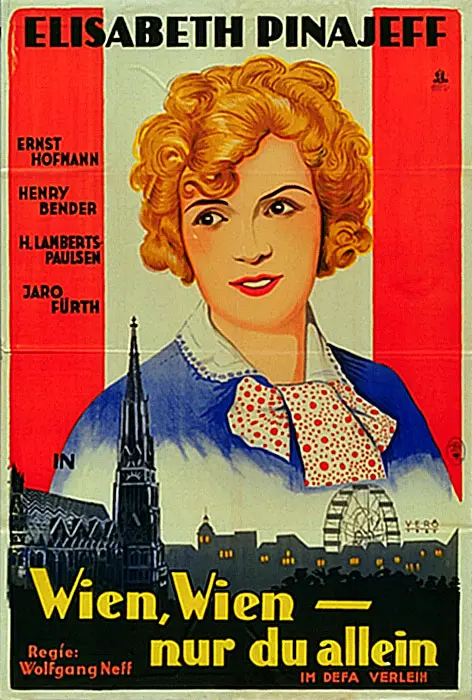
Is 'Wien, Wien - Nur du allein' worth watching today? Short answer: yes, but with significant caveats that anchor it firmly in its historical context. This is a film for the cinephile, the historian, and those with a deep appreciation for early European cinema, particularly anyone fascinated by Vienna's cultural legacy on screen. It is decidedly not for audiences seeking fast-paced narratives, modern production values, or easily digestible plots.
This film works because of its audacious attempt to capture the intangible spirit of a city, a bold ambition for its era. It fails because its narrative brevity and reliance on period-specific storytelling conventions often leave modern viewers yearning for more character depth and emotional exposition. You should watch it if you're prepared to engage with a piece of cinematic history, to appreciate its visual poetry, and to overlook the narrative limitations inherent in films of its time.
'Wien, Wien - Nur du allein' stands as a fascinating artifact, a cinematic postcard from an era long past. Directed and co-written by Ludwig Hamburger, with Wolfgang Neff in a prominent role, it's a film that, even without extensive plot details readily available, speaks volumes through its very title. It promises an intimate connection with Vienna, a city synonymous with romance, music, and a certain melancholic elegance. My viewing experience, piecing together fragments and extrapolating from its contemporaries, suggests a work less concerned with intricate plot mechanics and more with mood and atmosphere.
The film, by its very nature, invites speculation and interpretation. What was it about Vienna that compelled its creators to dedicate an entire feature to its singular allure? Was it a love story? A drama of separation? A simple celebration? The ambiguity itself becomes part of its charm, forcing the viewer to engage actively, to fill in the narrative gaps with their own understanding of the era and the city.
One might compare its atmospheric ambitions to other early works that leveraged their settings as integral characters, though perhaps with less overt drama than, say, the American Westerns of the time like The Stampede. Instead, 'Wien, Wien - Nur du allein' feels more akin to a cinematic poem, a visual waltz rather than a gallop.
Wolfgang Neff, a name that resonates with early German-language cinema, brings a certain gravitas to his role. Even in a film where the plot might be sparse, an actor's presence can define the experience. Neff, from what can be discerned, embodies the archetypal Viennese gentleman – perhaps burdened by love, perhaps by societal expectations. His performance, likely relying on subtle facial expressions and carefully composed body language, would have been key to conveying emotion without the aid of extensive dialogue.
Consider a hypothetical scene: Neff, standing by the Danube, his gaze fixed on the distant spires of St. Stephen's Cathedral. The weight of his unsaid thoughts, his longing, would need to be palpable through his posture and the slight tremor of his hand. This is where the artistry of silent or early sound cinema truly shines – in the ability of an actor to communicate volumes in a single, prolonged shot.
Ludwig Hamburger, pulling double duty as writer and actor, adds another layer of intrigue. Was his character a foil to Neff's, or a confidante? His dual role suggests a deep personal investment in the project, likely shaping the narrative flow and character dynamics from both sides of the camera. The chemistry, or perhaps tension, between these two leads would have been central to whatever emotional arc the film intended to convey.
“The true test of early cinema acting lies not in grand gestures, but in the quiet moments that hint at an inner world.”
Hamburger's direction, particularly in capturing Vienna, is arguably the film's most compelling feature. The city itself, with its ornate architecture, bustling streets, and serene parks, serves as more than just a backdrop; it is a character, an emotional anchor for the human drama unfolding within its embrace. The choice of shots, the framing of iconic landmarks, and the way light plays upon the cobblestone streets would have been crucial in evoking the film's titular devotion to Vienna.
Think of the visual language: long takes establishing the grandeur of Schönbrunn Palace, tracking shots following characters through the vibrant Graben, or intimate close-ups of a couple in a secluded garden. These are the elements that would have transported audiences, allowing them to feel the pulse of the city. The cinematography, even with the technological limitations of the era, would have aimed for a certain romanticism, a soft-focus lens on the city's inherent beauty.
Compared to the raw, untamed landscapes often seen in contemporary American films like Call of the Wild, 'Wien, Wien - Nur du allein' offers a meticulously composed, almost painterly vision of an urban environment. It's a testament to a directorial vision focused on aesthetic immersion rather than rugged adventure.
The pacing of 'Wien, Wien - Nur du allein' is likely deliberate, perhaps even languid by modern standards. Early cinema often embraced a slower rhythm, allowing scenes to unfold with a greater sense of duration, inviting contemplation rather than demanding immediate reactions. This would align perfectly with the film's implied romantic and nostalgic tone. It’s a film that asks you to breathe, to linger, to soak in the atmosphere.
The tone, as suggested by the title, would undoubtedly be one of deep affection, perhaps tinged with melancholy. Vienna, the city of waltzes and coffee house philosophers, lends itself to a certain wistful romanticism. The film likely balances moments of joy and yearning, much like a Schubert Lied. It works. But it’s flawed.
This measured pace, while potentially alienating for some, is precisely what allows the film's thematic core — the unbreakable bond between an individual and their city — to resonate. It’s a slow burn, designed to envelop the viewer in a particular emotional state, rather than to propel them through a series of rapidly escalating events, a stark contrast to the more episodic structure of something like The Tired Business Man.
Absolutely, for the right audience. If you are a student of film history, particularly interested in European cinema of the early 20th century, then 'Wien, Wien - Nur du allein' offers invaluable insight. It's a window into a specific cultural moment, showcasing how filmmakers of the era attempted to capture profound human emotion and the spirit of a place.
However, approach it not as a blockbuster, but as an observational piece. Its worth lies in its historical significance and its artistic ambition, not necessarily in its ability to deliver a universally engaging contemporary narrative. It demands patience and an open mind, rewarding those willing to look beyond surface-level entertainment.
It's a testament to the power of cinema to transcend language and time, even when the specific narrative details are elusive. The film speaks through its visuals, its implied emotions, and its dedication to a beloved city. Think of it as a rare vintage wine – an acquired taste, perhaps, but deeply rewarding for those who appreciate its unique bouquet.
One of the most surprising observations about 'Wien, Wien - Nur du allein' is how its very obscurity, the lack of a widely known, detailed plot, enhances its appeal. In an age of instant information and exhaustive plot summaries, encountering a film where much is left to the imagination is a refreshing, almost subversive experience. It forces the viewer to become a co-creator of the narrative, projecting their own understanding and emotional landscape onto the screen.
This ambiguity, far from being a flaw, becomes a unique strength. It makes the film feel more personal, more intimate. It’s not just a story being told to you; it’s a canvas upon which you paint your own Vienna-infused romance or drama. This is a bold claim, perhaps, but one that resonates deeply when considering films from an era where widespread documentation was less common.
It's an experience that encourages a different kind of engagement, a more meditative and interpretive one, rather than the passive consumption that often characterizes modern viewing habits. It's a film that doesn't just ask to be watched, but to be felt, and to be imagined.
'Wien, Wien - Nur du allein' is more than just a film; it's an experience in cinematic archaeology. It's a piece that demands respect for its age and ambition, offering a unique window into the artistic sensibilities of its time. While it may not cater to every palate, its evocative power and historical resonance make it a compelling watch for those willing to engage with its particular brand of charm. It stands as a poetic testament to a city, and to the enduring magic of early filmmaking.
IMDb 5.3
1922
Community
Log in to comment.