DbcultAccessing Vault...
5.5/10
Senior Film Conservator
A definitive 5.5/10 rating for a film that redefined the boundaries of cult cinema. Wife Lost remains a cornerstone of transgressive art.
Right off the bat, let's be clear: Wife Lost is not for everyone. If you’re a devout silent film enthusiast, particularly one with a soft spot for early Japanese cinema, you might find some curiosities here. It’s certainly a historical artifact. But if you're coming in cold, looking for brisk pacing or a modern narrative punch, you'll likely struggle. This is a film that demands patience, probably more patience than it often rewards.
The premise is simple enough: husband Kenji (Shigeru Ogura) starts seeing a dancer, Sumiko (Junko Matsui), behind his wife Akiko’s (Fumiko Okamura) back. Then Akiko’s uncle (Shichiro Sugano) gets suspicious and hires a detective. It’s a classic setup, melodrama 101, but the execution is… uneven. To put it mildly.
There are long stretches where the film just sits there. Kenji often just stares, or walks, or sits, and the camera just watches him. It’s not contemplative in a profound way; it just feels like time passing. You can almost feel the movie trying to convince you that these moments of inaction are deeply significant, but often they just feel like filler. One scene has Kenji sitting in a cafe, looking at nothing in particular, for what feels like a full minute. The intertitles don't always help; sometimes they just state the obvious, like 'He was troubled,' over a shot of a troubled man doing nothing.
The visual style can be quite striking at times. There are some really beautiful compositions, especially when the film ventures out of the domestic settings. The shots of Sumiko dancing are particularly captivating. Her movements are fluid, and her costumes, even in black and white, hint at a vibrant life. One specific kimono, a dark pattern with what looks like abstract waves, really caught my eye. It felt like a deliberate contrast to Akiko’s more subdued, traditional attire.
Then there's the private detective. He's this bumbling, almost slapstick character. His attempts to tail Kenji are played for laughs, which creates a really bizarre tonal shift. We’re deep into a marital crisis, the wife is clearly suffering, and then suddenly we’re watching this guy trip over himself or hide behind a lamppost in a way that’s just too broad. It pulls you right out of any emotional investment you might have built up. It's like the film can't decide if it wants to be a serious drama or a light comedy about infidelity.
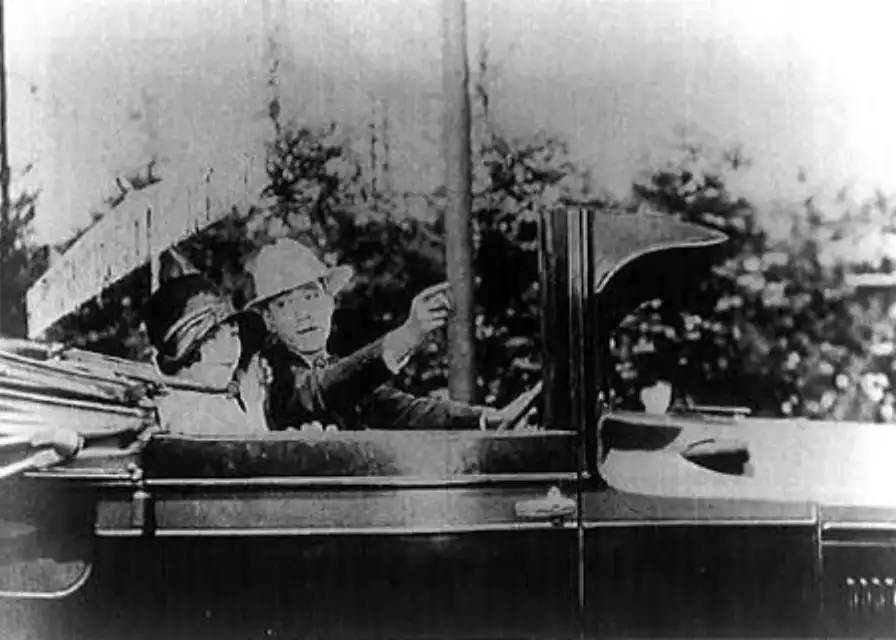
The performances are a mixed bag. Shigeru Ogura as Kenji is… stoic. Perhaps too stoic. It's hard to get a read on his internal conflict beyond what the intertitles tell us. You wish for a bit more nuance in his expressions. Junko Matsui as Sumiko, the dancer, has a magnetic screen presence, even if her character isn't given much depth beyond being the 'other woman.' Her eyes, even in the grainy footage, convey a lot.
Fumiko Okamura as Akiko, the wife, is perhaps the most sympathetic. Her quiet suffering is conveyed through subtle gestures – a slight tilt of the head, a hand pressed to her chest. There's a moment when she’s shown sewing, and her needlework becomes frantic, almost aggressive. It’s a tiny detail, but it speaks volumes about her inner turmoil without a single intertitle. This is where the film occasionally shines, in these small, human observations.
Chishū Ryū, a familiar face from Ozu's later works, appears briefly as a friend of Kenji. He doesn’t have much to do here, but his presence is a comforting anchor, even if it’s just for a few scenes. You can see the potential in his understated delivery, even in this early role.
The pacing issues are really the biggest hurdle. Some scenes feel interminable, while others, particularly the more dramatic confrontations, are cut a little too quickly, almost as if the filmmakers weren't sure how to sustain the emotional tension. There's a particular sequence where Akiko finds a telling letter; her reaction is swift, almost immediate, and then we're quickly onto the next beat. It almost undercuts the gravity of the discovery.
The ending, without giving anything away, feels a bit abrupt and not entirely earned. It leaves you with more questions than resolutions, not in a thought-provoking way, but more in a 'wait, that's it?' kind of way. It doesn’t quite stick the landing.
Ultimately, Wife Lost is a curious watch if you’re trying to trace the lineage of Japanese melodrama or silent film techniques. You'll catch glimpses of directorial choices and acting styles that would evolve significantly in later decades. But be prepared for a film that feels its age, not always gracefully, and often struggles to maintain a consistent tone or engaging rhythm. It’s an interesting historical document, but not necessarily a compelling cinematic experience for casual viewers. If you're looking for something more engaging from the era, you might find more satisfaction in films like Shadows of Paris or even something earlier like A Fool There Was, which has a different kind of dramatic punch.
IMDb —
1915
Community
Log in to comment.