DbcultAccessing Vault...
5.3/10
Senior Film Conservator
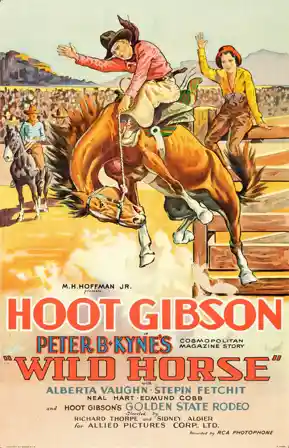
A definitive 5.3/10 rating for a film that redefined the boundaries of cult cinema. Wild Horse remains a cornerstone of transgressive art.
If you have a soft spot for those old, dusty westerns where the horses do half the acting and the heroes wear hats the size of satellite dishes, Wild Horse is worth a look today. It’s definitely for the crowd that enjoys the slow-burn, crackly charm of early 1930s cinema. If you need fast cuts or high-fidelity sound, you’ll probably find this more annoying than entertaining.
I sat down with this one not expecting much more than a standard chase story. It’s got Hoot Gibson as Jim Wright, and he has this very specific, low-key way of moving that makes him feel like a real person instead of a movie star. He doesn't try too hard, which is a relief when you compare him to some of the more theatrical actors of that era.
The whole thing kicks off because of this horse called 'The Devil Horse.' Ben Hall offers a thousand bucks to whoever can catch it, which is a lot of money when you consider a cup of coffee probably cost a nickel back then.
Jim and his buddy Skeeter (played by Skeeter Bill Robbins) go out to claim the prize. There’s something really satisfying about the way these early westerns film wide-open spaces. It doesn't look like a set; it just looks like a bunch of guys in the middle of nowhere getting dirt in their boots.
The horse itself is actually pretty impressive. It’s got this mean look in its eyes during the close-ups. You can almost feel the movie trying to convince you that this animal is a legitimate villain in its own right.
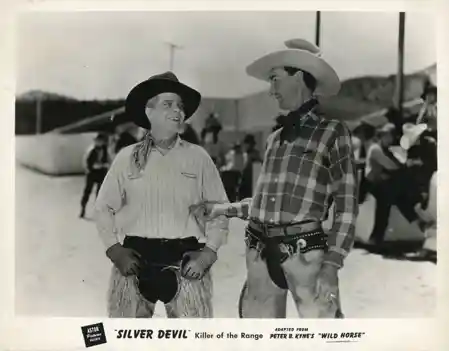
Then we get Gil Davis, played by Edward Peil Sr. He is just a total jerk from the second he appears on screen. He kills Skeeter while Jim is away, and the way the scene is shot feels surprisingly cold for 1931. There’s no big dramatic music cue right away; it’s just a mean act done by a mean man.
Naturally, the Sheriff shows up and arrests Jim for the murder. The Sheriff in this movie is about as useful as a screen door on a submarine. He just sees Jim near the body and decides, "Yep, that’s our guy."
I found myself getting frustrated with how long it takes for anyone to question the obvious. But then again, that’s just how these plots worked back then. It’s got that same slightly frustrating logic you see in The Silent Call, where you just want to yell at the screen.
One thing that really stuck out to me was the presence of Stepin Fetchit. Look, it’s a 1931 movie, so you expect some dated stuff, but man, those scenes are rough to sit through now. It totally kills the momentum of the murder mystery every time the movie pauses for his specific brand of 'comedy.'
The pacing gets a bit weird in the middle. We spend a lot of time watching people ride horses back and forth across the same patch of desert. I swear I recognized the same rock formation about four times in ten minutes.
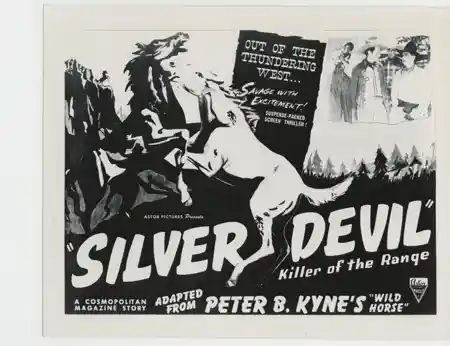
There is this one reaction shot of Hoot Gibson in the jail cell that lingers for way too long. He’s just staring at the wall, and after about ten seconds, it stops being dramatic and starts making you wonder if the editor fell asleep at the desk.
But the movie gets noticeably better once the outlaw enters the picture. He’s the only one who actually saw the murder happen. The tension comes from wondering if this guy, who is already a criminal, is actually going to do the right thing or just let Jim hang.
The stunt work with the horse is the real reason to watch this. There’s a scene where the horse is being 'broken' and it looks genuinely dangerous. You can tell they weren't using any of the safety tricks they use now—it’s just a guy, a rope, and a very angry animal.
It reminds me a bit of the raw energy in The Book Agent, even though that’s a completely different kind of story. There’s just this unpolished, 'we’re figuring this out as we go' feeling to the production.
The audio is a bit of a mess, honestly. Sometimes a character will be talking and it sounds like they’re shouting from inside a tin can. Other times, the background noise is so loud you have to lean in to hear what Hoot is saying. It adds to the authenticity, I guess, but it’s definitely not a 'visually stunning cinematic experience' in the modern sense.
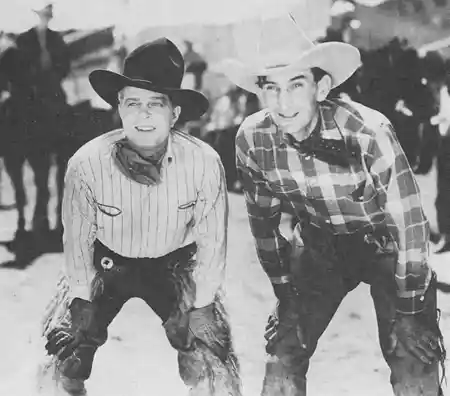
I liked the ending, even if it was predictable. There’s a certain comfort in knowing that the bad guy is going to get what’s coming to him in a dusty shootout. It’s not trying to be a deep meditation on anything; it’s just a story about a guy and his horse.
One weird detail: the hats. I can't get over how big they are. Every time two characters get close together to whisper, I’m worried their brims are going to collide and knock someone out.
It’s a much more grounded film than something like Made in Heaven, which feels like it belongs in a different universe entirely. Wild Horse feels like it was made by people who actually knew what a ranch looked like.
Is it a masterpiece? No. Is it better than most of the bargain-bin westerns from that decade? Probably. Hoot Gibson carries it through the boring parts, and the Devil Horse is a better antagonist than most humans in movies today.
If you’re looking for something polished, go watch something else. If you want to see a bit of history and some genuinely impressive horse work, give it a shot. Just be prepared to hit the volume button a few times.
The scene where Jim first catches the horse goes on about 30 seconds too long, but you can feel the sweat and the dust. That’s more than you get from most modern CGI-fests. Anyway, it’s worth a watch if you’re into the old stuff.
IMDb 5.6
1931
Community
Log in to comment.