DbcultAccessing Vault...
Cult Review
Senior Film Conservator

In the annals of early cinema, where narratives often mirrored the raw, untamed spirit of their times, a film like Wild Sumac emerges not just as a historical artifact but as a surprisingly potent distillation of human drama. Released in 1917, this silent feature from the pens of Elaine S. Carrington and Jack Cunningham, and brought to life by a dedicated cast, plunges viewers into a rugged Canadian frontier where justice is often swift, morality is frequently fluid, and destiny can turn on a whisper. It’s a compelling tapestry woven with threads of flight, fate, and the eventual, hard-won triumph of truth, echoing the primal struggles that defined a burgeoning nation.
The narrative’s genesis is steeped in abrupt violence: Jacques Fontaine, portrayed with brooding intensity by Percy Challenger, finds his life irrevocably altered by a tavern brawl. A moment of impulsive defense, a man shot, and suddenly Fontaine is a fugitive, forever shadowed by the North West Mounted Police. This opening gambit establishes a central motif that permeates the film: the inescapable weight of the past. For fifteen years, Fontaine roams, a ghost in the vast, unforgiving Canadian wilderness, his identity a carefully guarded secret, his soul burdened by a presumed homicide. His journey is not merely geographical but psychological, a prolonged penance that defines his every cautious step. This wandering, solitary existence, marked by an ever-present threat of discovery, provides a rich psychological landscape for Challenger to explore, conveying depths of weariness and quiet desperation through subtle gestures and powerful expressions – a hallmark of effective silent film acting.
His peregrinations eventually lead him to St. Croix, Alberta, a burgeoning settlement teetering on the cusp of civilization. Here, the film introduces a fascinating microcosm of frontier society. The railroad, spearheaded by Armand du Fere, symbolizes progress, connecting disparate outposts and ushering in a new era. Yet, beneath this veneer of advancement, the wilder elements persist, embodied by the character of Lupine. George Chesebro’s portrayal of Lupine is a masterclass in villainy, crafting a figure who is not merely an antagonist but a force of moral decay. Described by the plot as a “repulsive half-breed trapper,” Lupine traffics in whiskey and rigged card games, preying on the vulnerabilities of those drawn to the frontier’s lawless allure. His establishment is a den of vice, a stark contrast to the burgeoning industry represented by the railroad. It's within this shadowy realm that Fontaine encounters Lupine’s alleged daughter, Wild Sumac, played by the luminous Margery Wilson. Sumac is presented as an almost angelic figure, her innocence a striking counterpoint to her guardian's depravity, a beacon of purity in a world otherwise stained by avarice and vice.
The dynamic between these characters forms the emotional core of Wild Sumac. Fontaine, the burdened fugitive, finds himself drawn to Sumac, her untainted spirit offering a glimmer of hope and perhaps, a path to his own redemption. Their budding connection is fragile, vulnerable to the harsh realities of their environment and the machinations of those around them. The arrival of Pierre du Fere, Armand du Fere’s son (Ray Jackson), introduces a critical turning point. Pierre, representing the more privileged, yet equally susceptible, face of encroaching civilization, falls prey to Lupine’s insidious games. His descent into the world of whiskey and cards culminates in a fateful accusation of cheating, leading to Lupine’s cold-blooded murder of the young man. This act of violence is not just a plot device; it's a stark commentary on the fragility of order and the ease with which life could be extinguished in the lawless territories.
What follows is a shocking act of betrayal that propels the narrative into its dramatic climax. Lupine, with a chilling lack of conscience, frames Sumac for Pierre’s murder, an act that underscores his utter depravity and callous disregard for human life, even that of someone he claims as his own. Sumac’s subsequent arrest by Sergeant Lewis (Ed Brady), the embodiment of frontier law and order, ignites Fontaine’s dormant heroism. His transformation from a self-preserving fugitive to a protector of the innocent is a powerful arc, demonstrating that even a man haunted by his past can rise to meet the demands of justice. This pivotal moment might draw comparisons to films like The Price of Tyranny or The Buzzard's Shadow, where individuals are forced to confront moral dilemmas and choose between self-preservation and a higher calling, often with grave consequences.
The confrontation between Jacques and Lupine is the film’s undeniable emotional and physical centerpiece. It is a visceral struggle, a battle not just of strength but of wills, where Fontaine, driven by his burgeoning love for Sumac and an innate sense of justice, wrings a confession from the villain. This scene, likely staged with the exaggerated physicality characteristic of silent film, would have been electrifying for contemporary audiences. But the confession yields more than just an admission of murder; it unveils a stunning revelation: Sumac is not Lupine’s daughter at all, but the niece of Armand du Fere, the very man building the railroad. This twist recontextualizes everything, elevating Sumac from a simple, innocent girl to a figure with a significant lineage, tying her directly to the forces of progress and civilization that are shaping the frontier.
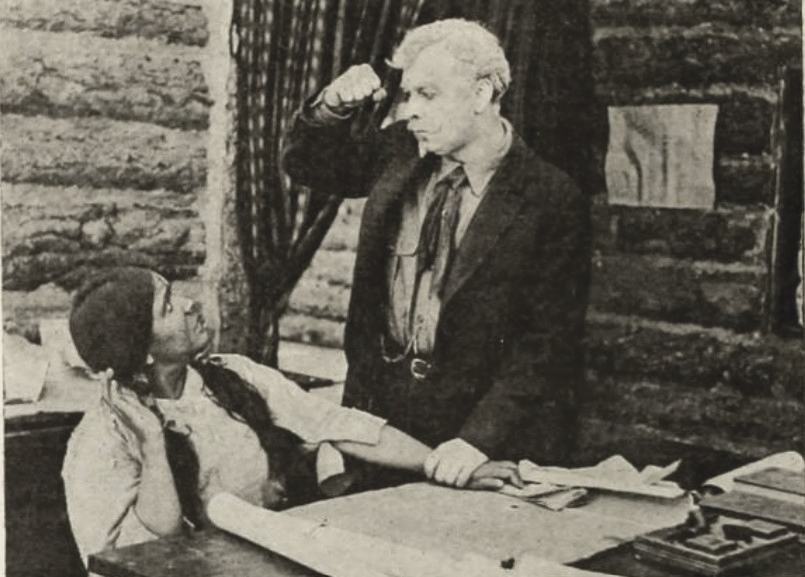
In the flurry of this dramatic unmasking, Fontaine inadvertently betrays his own identity, revealing his long-hidden past as a fugitive from justice. This moment of accidental self-incrimination heightens the tension, suggesting that even in victory, the past still holds its power. However, the narrative, true to the conventions of its era, offers a benevolent reprieve. Sergeant Lewis, ever the impartial arbiter of law, delivers the news that Fontaine's presumed victim from fifteen years prior did not, in fact, die. This revelation is a masterful stroke of narrative economy, absolving Jacques of the gravest charge and paving the way for a truly happy ending. It's a classic trope of redemption, where a character's long-held burden is lifted, allowing for a fresh start. This kind of redemptive arc, where past wrongs are forgiven or clarified, is a recurring theme in early cinema, seen in romantic dramas like The Road to Love or even in the more whimsical A Message from Mars, where characters undergo profound transformations or receive unexpected second chances.
The screenplay by Elaine S. Carrington and Jack Cunningham demonstrates a keen understanding of dramatic pacing and character development, even within the constraints of silent film. They craft a plot replete with suspense, betrayal, and unexpected turns, keeping the audience engaged. The direction, while not overtly flashy, effectively uses the rugged Canadian landscape to enhance the sense of isolation and challenge faced by the characters. The vastness of the setting, often captured through expansive wide shots, underscores the smallness of human endeavors against the backdrop of nature, a thematic element also powerfully explored in films like Helene of the North, which shares a similar geographical and cultural canvas.
The performances, particularly by Margery Wilson as Wild Sumac and Percy Challenger as Jacques Fontaine, are central to the film's success. Wilson imbues Sumac with a compelling blend of vulnerability and inner strength, her expressive eyes conveying a multitude of emotions without uttering a single word. Challenger, as Fontaine, projects a quiet dignity and a world-weary resolve that makes his eventual heroism all the more resonant. George Chesebro's Lupine is suitably menacing, a villain whose actions drive much of the plot's dark energy. The effectiveness of these silent performances lies in their ability to communicate complex emotional states through gesture, posture, and facial nuance, a skill that was paramount in an era before synchronized sound. Their interplay creates a believable emotional core that anchors the more melodramatic elements of the plot.
Beyond its immediate narrative, Wild Sumac offers intriguing insights into the social anxieties and cultural perceptions of its time. The portrayal of Lupine, though rooted in regrettable, stereotypical conventions of the era, serves a narrative purpose in representing the 'untamed' or 'corrupting' elements of the frontier that civilization sought to overcome. The railroad, on the other hand, is a clear symbol of progress, order, and connection. The film's resolution, where the 'wild' element (Lupine) is defeated, and the 'civilized' lineage (Sumac's true heritage) is restored, alongside the redemption of the 'reformed' individual (Fontaine), speaks to a prevailing societal desire for order to triumph over chaos. This thematic struggle between good and evil, order and anarchy, is a common thread in many silent dramas, including those that deal with crime and justice, such as The Menace of the Mute, where societal norms are challenged and ultimately upheld.
The film’s happy conclusion, with Jacques acquitted and returning to Sumac, his love, provides a satisfying sense of closure. It’s a testament to the enduring power of love and justice to overcome adversity, a message that resonated strongly with audiences then, and continues to hold a certain appeal today. Wild Sumac, while perhaps not as widely known as some of its contemporaries, nevertheless stands as a testament to the storytelling prowess of early filmmakers. It masterfully blends elements of romance, mystery, and frontier drama into a cohesive and engaging experience. For those interested in the evolution of cinematic narrative, the portrayal of early Canadian history, or simply a compelling tale of human resilience, this film is a valuable discovery.
Ultimately, Wild Sumac serves as a poignant reminder of the rich storytelling traditions of the silent era. It’s a film that, despite its age, still manages to captivate with its dramatic twists, compelling characters, and timeless themes of justice, identity, and the redemptive power of love. The meticulous crafting of its narrative, the evocative performances, and its depiction of a specific historical moment make it more than just a relic; it’s a vibrant piece of cinematic heritage that deserves to be revisited and appreciated. In its dramatic sweep and emotional depth, it delivers a powerful, resonant experience, proving that true cinematic artistry transcends the spoken word. The journey of Jacques and Sumac, from their disparate origins to their eventual union, reminds us that even in the most untamed landscapes, the human heart seeks connection and truth. Its narrative complexities and character revelations keep the audience engaged, demonstrating the sophisticated plotting that was possible even in the nascent days of film. This film, with its blend of melodrama and genuine human emotion, leaves a lasting impression, solidifying its place as a significant, if often overlooked, work of early cinema. It's a story of survival, revelation, and the ultimate triumph of the human spirit, all set against the breathtaking, yet unforgiving, backdrop of the Canadian frontier, where destiny often waits in the most unexpected places.
IMDb —
1921
Community
Log in to comment.