DbcultAccessing Vault...
Cult Review
Senior Film Conservator
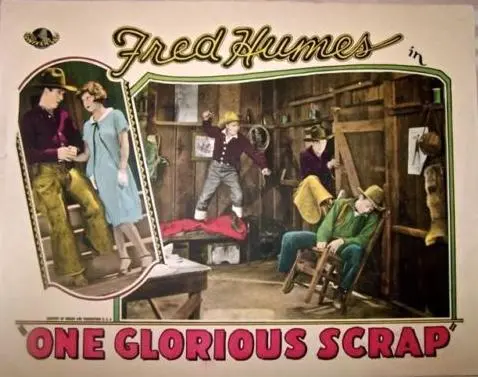
Is One Glorious Scrap a forgotten Western worth unearthing in the modern age? The short answer is yes, but only for a very specific audience, and with significant caveats regarding its historical context and technical limitations. This film is a fascinating relic for aficionados of early cinema and Western genre historians, offering invaluable glimpses into a bygone era of filmmaking. However, it will likely test the patience of casual viewers accustomed to contemporary narrative pacing, polished production values, and complex character arcs.
Let’s get straight to it:
This film works because it offers a rare, unvarnished look at a particular moment in Western filmmaking, capturing the raw energy and narrative simplicity that defined the genre’s early days. Its central premise, while fantastical, taps into universal themes of desperation and hope.
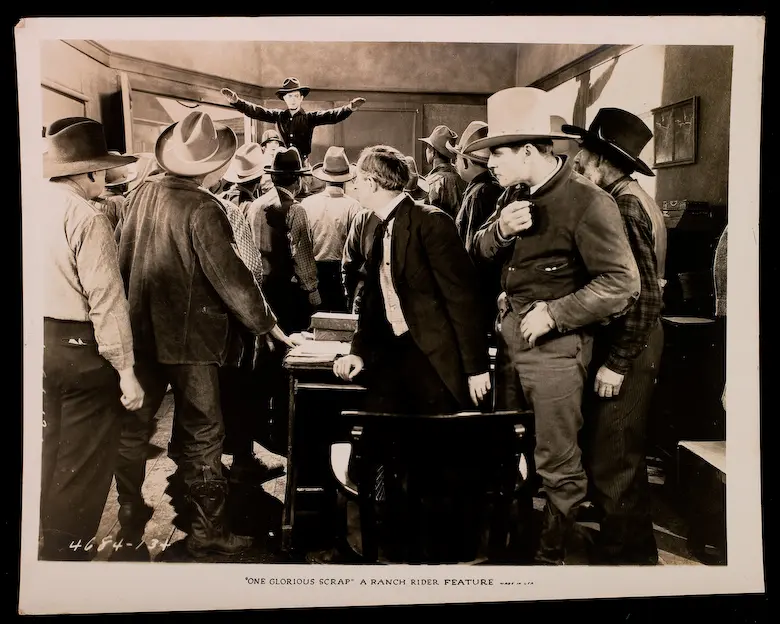
This film fails because its technical execution is primitive by modern standards, with rudimentary editing, often static cinematography, and character development that barely scratches the surface. The pacing can feel glacial, and the narrative threads, while intriguing, are never fully explored.
You should watch it if you have a genuine interest in silent or early sound-era Westerns, are studying film history, or appreciate the foundational elements upon which the genre was built. It’s a historical document as much as it is a piece of entertainment.
The core narrative of One Glorious Scrap, despite its age, retains a primal resonance. A community, ravaged by drought, places its last hope in an unlikely savior: a rainmaker. This isn't just a plot; it's an archetypal struggle, echoing myths and folk tales across cultures. The desperation of Larry Day and the Bar None riders feels palpable, even through the lens of early cinema. Their quest isn't for gold or revenge, but for survival itself – a far more compelling stakes than many of its contemporaries.
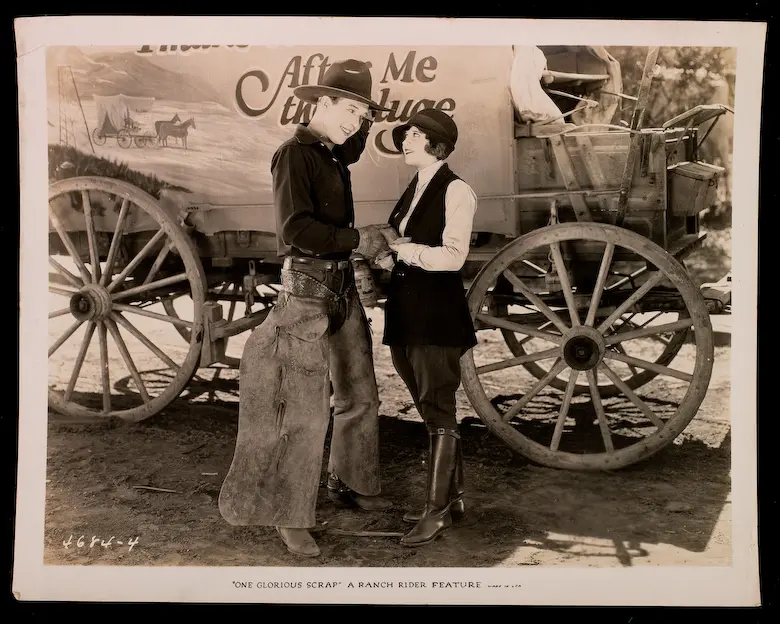
What the film manages to convey, perhaps unintentionally, is the sheer fragility of life on the frontier. The land itself becomes a character, a relentless antagonist. The parched earth, the wilting crops, the suffering livestock – these are not merely background details but the driving force behind every character's action. It’s a stark reminder of humanity’s dependence on nature, a theme that feels eerily relevant even today.
However, the promise of this compelling premise is only partially fulfilled. The film introduces Professor Parkinson, the alleged rainmaker, but never truly delves into the psychology of belief or the moral ambiguity of such a figure. Is he a charlatan, a deluded scientist, or genuinely gifted? The film largely sidesteps these deeper questions, opting instead for a more straightforward adventure narrative. This is perhaps its biggest missed opportunity; a more nuanced exploration of faith versus skepticism could have elevated it significantly.
Directed by George B. French, One Glorious Scrap showcases the rudimentary, yet often earnest, filmmaking techniques of its era. The cinematography, while lacking the dynamic flair we expect today, effectively captures the vast, arid landscapes. There’s a certain raw beauty in the wide shots of riders traversing open plains, a visual honesty that compensates for the lack of complex camera movements. One particular shot, framing the Bar None riders against a stark, cloudless sky, perfectly encapsulates their isolation and the immense challenge they face.
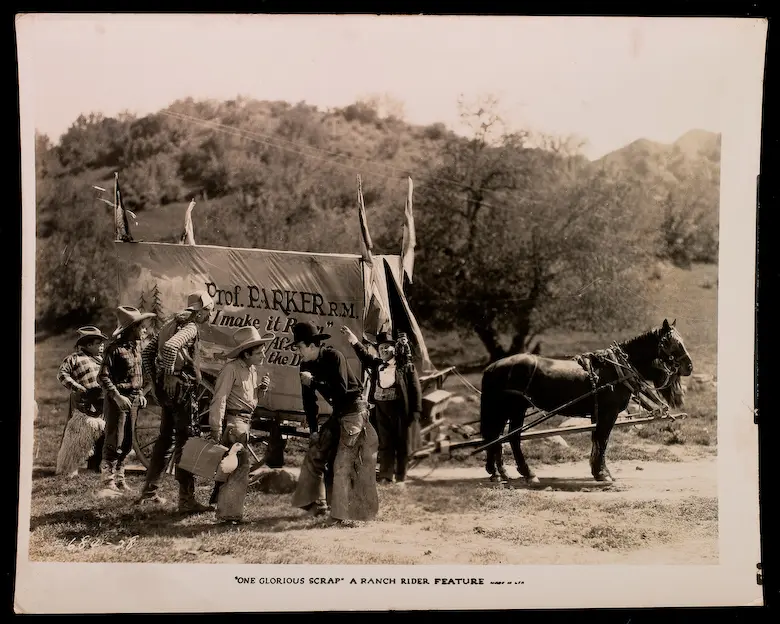
Pacing is where the film truly shows its age. Modern audiences accustomed to rapid-fire editing and constant narrative propulsion will find One Glorious Scrap a slow burn. Scenes linger, often without significant dialogue or action, allowing the atmosphere to settle. While this can contribute to a sense of realism regarding the arduous nature of frontier life, it frequently borders on tedious. The film demands patience, a virtue not always readily available to contemporary viewers.
The direction’s strength lies in its ability to stage convincing horseback sequences and portray the physical demands of the setting. The 'scrap' of the title, when it arrives, feels earned, if not entirely spectacular. French understands the visual language of the Western, even if his vocabulary is limited. Comparing it to something like Maid of the West or The Right of Way from a similar period, one sees a consistent, if unsophisticated, approach to genre storytelling.
The acting in One Glorious Scrap is, by and large, a product of its time. Gilbert Holmes as Larry Day embodies the stoic, rugged Western hero archetype. His performance is characterized by understated gestures and a quiet determination, which, while authentic to the genre, can sometimes feel emotionally distant. He conveys resolve but rarely vulnerability, making his character admirable but not always deeply empathetic. Frankly, his portrayal, while suitable for the era, often borders on the wooden, robbing the character of the necessary internal conflict that could have elevated the film beyond a simple quest narrative.
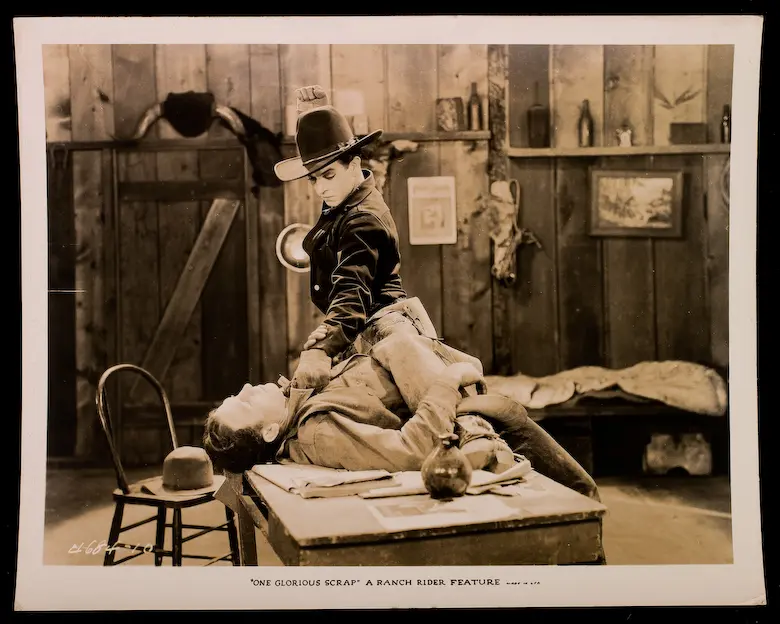
Dorothy Gulliver, as the female lead (presumably a rancher's daughter or a love interest, though the plot summary doesn't specify), provides a much-needed spark of humanity. Her expressions, though broad by today's standards, convey a range of emotions from fear to hope, often acting as the audience’s emotional anchor. The supporting cast, including George B. French and Fred Humes, deliver solid, if unremarkable, performances, filling out the world with believable, if thinly sketched, ranch hands and antagonists.
One unconventional observation: it’s peculiar how a film so utterly focused on the absence of water manages to feel so utterly dry in its exposition, a meta-commentary perhaps on the very drought it depicts. The actors, for all their efforts, are often constrained by the narrative's simplicity, leaving little room for complex character arcs or profound emotional resonance. It’s a testament to their professionalism that they manage to imbue their roles with any semblance of personality, especially given the rapid production schedules common in early Hollywood.
Given that One Glorious Scrap predates the full advent of synchronized sound, its 'soundscape' (or lack thereof) profoundly impacts its tone and reception today. The absence of dialogue, replaced by intertitles, forces a different kind of engagement. Viewers must project their own understanding and emotional responses onto the visual narrative. This can be both a strength and a weakness. It allows for a more meditative experience, focusing purely on visual storytelling and the dramatic weight of expressions and actions.
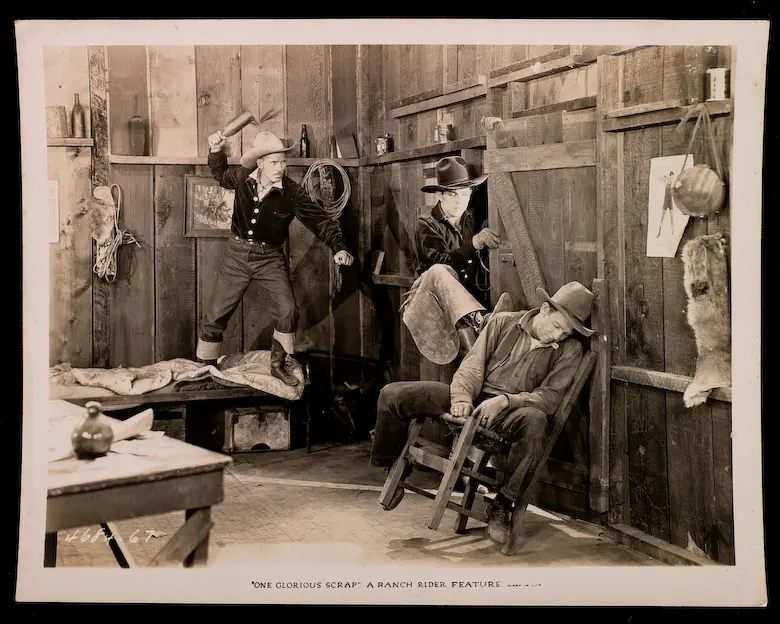
However, it also strips away much of the immediacy and realism that sound brings. The dramatic tension built by a looming storm, for instance, would be exponentially greater with the rumble of thunder and the patter of rain. Without these auditory cues, the film relies heavily on its visual cues and the accompanying musical score (which, in its original exhibition, would have been live or pre-recorded, adding a crucial layer). The tone, therefore, feels earnest and straightforward, largely devoid of the subtle shifts and complexities that spoken word and foley effects allow. It works. But it’s flawed.
The film’s tone is consistently serious, reflecting the gravity of the drought. There are few moments of levity, which, while appropriate for the subject matter, can make the viewing experience quite relentless. This unwavering seriousness, combined with the lack of expressive dialogue, creates a somewhat monochromatic emotional palette. It’s a film that demands you meet it on its own terms, understanding its historical context as an essential part of the viewing contract.
Yes, One Glorious Scrap is worth watching, but primarily for film historians and dedicated fans of early Westerns. It offers a valuable glimpse into the foundational elements of the genre. Casual viewers might struggle with its slow pace and dated technical aspects. It's a significant historical artifact, showcasing early narrative techniques and themes. However, it requires a willingness to appreciate cinema for its historical value rather than purely for modern entertainment.
One Glorious Scrap is not a film for everyone, nor does it aspire to be. It is a historical artifact, a foundational piece in the sprawling tapestry of the Western genre. For those with a genuine appreciation for the origins of cinema, for scholars and dedicated fans who delight in seeing how the building blocks of storytelling were laid, it offers considerable value. It’s a testament to the enduring power of simple, high-stakes narratives, even when delivered with the nascent tools of early filmmaking.
However, for the casual viewer seeking a thrilling or emotionally resonant experience akin to modern blockbusters or even later, more polished Westerns, One Glorious Scrap will likely prove a challenging, if not frustrating, watch. Its technical limitations, deliberate pacing, and archetypal characters demand a specific kind of engagement – one rooted in historical context and a willingness to overlook what it lacks in favor of what it represents.
Ultimately, this film is more than just a forgotten movie; it’s a time capsule. It reminds us where the genre came from, how basic elements of conflict and hope could captivate audiences, and how far filmmaking has evolved. It’s a film to be studied and appreciated for its place in history, rather than merely consumed for entertainment. Approach it with the right mindset, and you might just find a glorious, albeit dusty, scrap of cinematic history worth preserving.
IMDb 6
1928
Community
Log in to comment.