DbcultAccessing Vault...
Cult Review
Senior Film Conservator
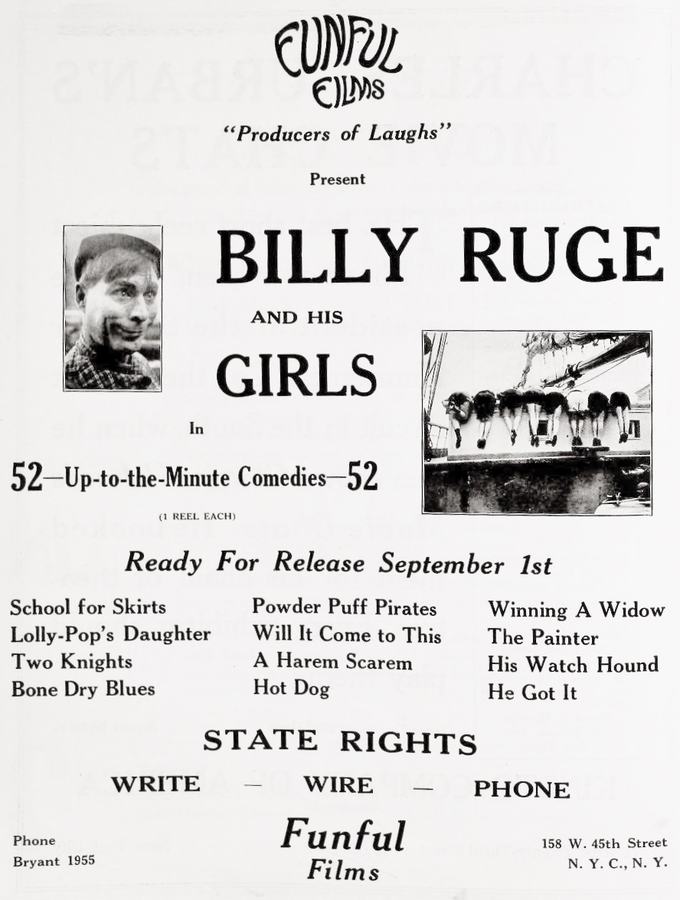
Tom Bret’s screenplay arrives like a telegram from the subconscious of American myth, its ink smelling of cordite and peach blossom, its sentences folded so tightly they seem to whisper even when read silently. Winning a Widow refuses the cheerful gallop of contemporaries such as Boots and Saddles; instead it limps, deliberately, on the crutch of moral ambiguity, daring viewers to root for a hero who cheats at cards and possibly at redemption.
Billy Ruge, saddled with a role that demands he act mostly with the hinge of his jaw and the tremor of a half-extinguished cigarette, somehow channels every ghost who ever died broke on the frontier. His cheekbones are cliff faces; his gaze, a telegram you regret opening. Watch the way he removes his hat—slow, as though afraid a single abrupt gesture might detonate the horizon—and tell me silent cinema cannot murmur volumes.
Cinematographer Frank Zucker—uncelebrated, almost apocryphal—bathes the homestead in umber shadows that swallow detail the way memory swallows names. Lamplight quivers across cracked floorboards, turning varnish the color of sorghum syrup, while exterior day-scenes sear the frame with a white-hot noon that feels punitive. The contrast is not merely visual but moral: every interior refuge proves porous, every exterior promise scorches. Compare this to the sunstruck sentimentality of The Old Swimmin' Hole and you realize how willingly audiences accept comfort over truth.
Played by the luminous but half-forgotten Marcella Vale (no relation to the character’s surname—an accident that now feels like predestination), Aurelia carries her bereavement like a bird with a broken wing: frantic to soar, condemned to flutter. Notice the micro-gesture when she hears hoofbeats: her left hand flutters to the hollow of her throat, not to still a scream but to check whether one has already escaped. The film never verbalizes her trauma; it trusts the tremor of a lace curtain, the way she folds her husband’s empty nightshirt into smaller and smaller squares until it becomes a cloth origami of absence.
Bret’s script offers her no courtship of the conventional sort. Instead, courtship is transposed into barter: a repaired hinge here, a silently mended fence there, the way Ruge’s unnamed drifter stacks split cedar against her woodshed with the obsessive precision of a man building his own mausoleum. Each act of labor is both restitution and intrusion, a claim staked without the crude currency of words.
Classical Westerns often hinge on bullion; Winning a Widow weaponizes the idea of bullion. The rumored nuggets function like Schrödinger’s fortune—simultaneously life-altering and nonexistent—until observation collapses possibility into worthless stone. That revelation lands with the sick thud of existential slapstick, closer to the sardonic fatalism of Those Who Pay than to the tidy restitutions of The Three Godfathers.
Yet the film is not nihilist; it is too suffused with the ache of human potential. When the widow offers her deed in exchange for the drifter’s life, the document is signed in blood—an ostensibly melodromatic flourish that here feels sacramental, as though covenant in this universe demands corporeal collateral. The blood is not gratuitous; it is ink that refuses to lie.
Gunplay arrives late, but its deferral intensifies impact. Bret spaces violence the way a poet spaces caesuras: each delay magnifies dread. When bullets finally fly, they do so amidst a dust storm that turns every figure into a trembling wraith. Muzzle flashes bloom like malignant flowers, their brief illumination revealing faces already resigned to exit. The preacher’s hollowed-out Bible—weapon and scripture both—suggests that faith, in this geography, cannot survive unless it carries concealed ballast.
Note the child’s vantage in the loft: the camera adopts his eyeline so that gun barrels loom like black monoliths, each report a rupture in the fabric of safety. The sequence anticipates the traumatic subjectivity later exploited by Draft 258, yet achieves it without sound, relying solely on montage and afterimage.
Unlike swaggering shootists of Elmo the Fearless, the drifter’s competence is understated, almost reluctant. He shuffles cards not to impress but to pacify his own pulse; he guns down antagonists not in heroic triumph but in a fevered lullaby of self-defense. His final ride into incertitude—back wounded, blood seeping through shirt like maplines of a country no one visits—reverses the familiar Western closure. There is no sunset, no orchestral swell, only the rasp of saddle leather and the widow’s door that remains ajar, letting prairie wind write ellipses across the floor.
Though dialogue is absent, the picture vibrates with aural suggestion. Intertitles appear sparingly, often half-erased, as though language itself were wind-scoured. Instead, we read the squeak of a rocking chair, the rhythmic clank of a pump handle, the hush of wheat heads brushing against boot leather. Contemporary exhibitors reportedly accompanied screenings with lone fiddles detuned to mimic insect drone—a choice that would anticipate the minimalist soundscapes of Il volto di Medusa.
Released during the post-WWI recession, the film channels nationwide unease: mortgages foreclosing, gold standards wobbling, widows everywhere discovering deeds worthless. The boarding house itself operates on barter—eggs for rent, labor for supper—mirroring an economy in which liquidity has dried into dust. Viewing it today, amid gig precarity and crypto vertigo, one senses a century-old echo: the promise of sudden wealth still glimmers, still betrays.
Where Champagne Caprice froths with urbane frivolity and Where the Trail Divides offers moral binaries, Winning a Widow occupies a liminal register closer to the existential dusk of The Scoffer or the penitential silences of Guldspindeln. It lacks the flamboyant religiosity of Sangre y arena yet attains a spirituality born of scarcity: when material salvation evaporates, what remains is the trembling wager of human connection.
For decades the sole print languished in a Helena archive, nitrate curls warping until a 4K rescue in 2022 salvaged scenes long thought lost. The new transfer reveals peripheral details previously muddied: a calico cat threading through gravestones, a boy’s marble rolling beneath the saloon door, the word “FORGIVE” etched in attic dust—each a breadcrumb for cine-archaeologists. Tinting reinstates the original palette: amber lamplight, viridescent storm skies, the sea-blue envelope the widow never mails. Streaming platforms now serve it beside crowd-pleasers like The Fortunate Youth, yet Winning a Widow demands more; it demands you sit in the dark, volume low, heartbeat loud.
This is not a film you enjoy; it is a film you survive, emerging sun-blinded and strangely cleansed, as if grief itself were a sauna. It proves that silence can be louder than any orchestral score, that a widow’s shrug can contain multitudes, that a bullet is merely punctuation in a sentence spoken by the prairie wind. Seek it not for escapism but for confrontation: with your own hunger, your own mirage of rescue, your own tally of stones mistaken for gold.
IMDb —
1920
Community
Log in to comment.