DbcultAccessing Vault...
Cult Review
Senior Film Conservator
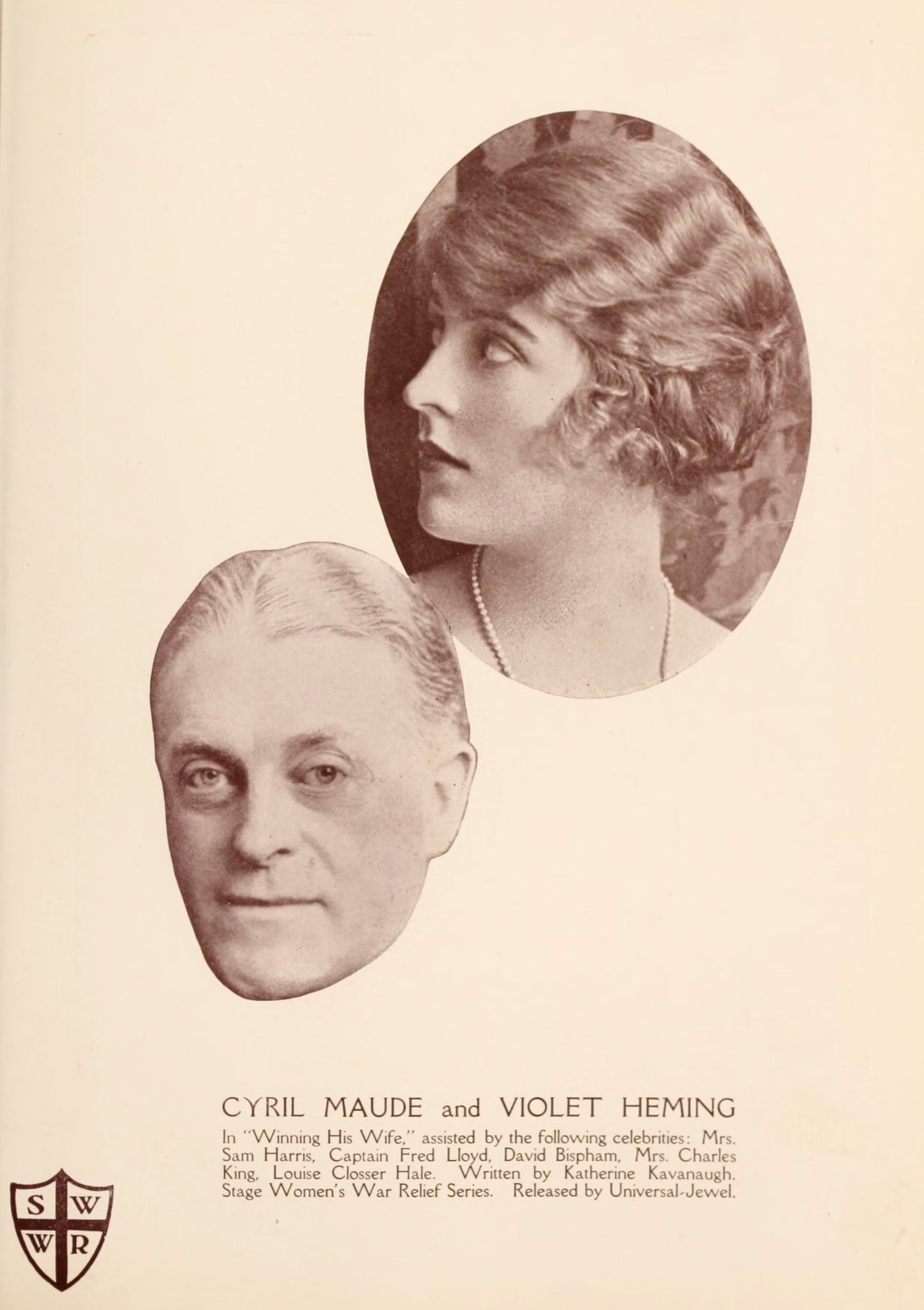
There are certain cinematic works that, despite the passage of decades, continue to resonate with an unsettling clarity, their narratives mirroring the timeless complexities of the human condition. Winning His Wife, a masterpiece from the pens of Calder Johnstone and Katharine Kavanaugh, stands as a towering example. It's not merely a period drama, but a searing examination of love, neglect, and the arduous path to redemption set against the opulent yet suffocating backdrop of early 20th-century high society. This film doesn't just tell a story; it unravels the very fabric of a marriage, exposing the delicate threads that hold it together and the corrosive forces that threaten to tear it apart.
At its core, Winning His Wife introduces us to Arthur Vance, portrayed with a masterful blend of steely resolve and underlying vulnerability by David Bishamp. Arthur is the quintessential titan of industry, a man whose every waking moment is dedicated to expanding his financial empire. His world is one of ledgers, mergers, and the relentless pursuit of power, a pursuit that has, over time, rendered him emotionally distant, almost an anachronism in his own home. His wife, Eleanor, brought to life with exquisite sensitivity by Violet Heming, is his antithesis. A woman of profound artistic sensibilities, Eleanor finds herself increasingly stifled by the opulent but emotionally barren existence her marriage affords. Her spirit, vibrant and yearning for creative expression, slowly withers under the weight of Arthur's neglect and society's rigid expectations. The film brilliantly captures this dichotomy, presenting their lives as parallel lines that, despite inhabiting the same grand mansion, rarely truly intersect.
Eleanor's burgeoning friendship with Julian Thorne, a principled and struggling artist played by Frederick Lloyd, becomes the catalyst for the narrative's central conflict. Julian sees beyond Eleanor's socialite facade, recognizing and nurturing the artistic soul that Arthur has long overlooked. Their connection, initially innocent, inevitably ignites the dangerous spark of societal gossip, a fire mercilessly fanned by the calculating machinations of Vivienne, a social climber embodied with chilling precision by Lila Rhodes. Vivienne, ever alert to opportunities for personal gain, views the Vances' marital discord as a stepping stone to her own ambitions, her whispers and manipulations weaving a tangled web that threatens to ensnare all involved. The film's brilliance lies in how it portrays this escalating tension, not through overt melodrama, but through nuanced glances, hushed conversations, and the crushing weight of unspoken desires. One cannot help but draw parallels to the societal pressures and moral dilemmas explored in The Social Leper, where reputation and public perception often held more sway than personal happiness.
David Bishamp's portrayal of Arthur Vance is, without exaggeration, a masterclass in character evolution. Initially, he presents Arthur as almost monolithic, an unyielding force of industry, his emotions buried deep beneath layers of ambition and societal decorum. Yet, as the whispers grow louder and the threat of losing Eleanor becomes a tangible reality, Bishamp subtly peels back these layers, revealing a man utterly unprepared for the emotional cost of his neglect. His journey is not one of a sudden epiphany, but a grueling, often clumsy, process of self-discovery. We witness his initial disbelief morph into a desperate, almost childlike, scramble to understand what he has lost and, more crucially, what he must become to reclaim it. It’s a performance that speaks volumes about the societal expectations placed upon men of that era – to provide, to conquer, but rarely to feel or to connect on an intimate level. The arduous nature of his transformation reminds one of the deep introspection required when facing profound marital crisis, a theme skillfully navigated in Why Divorce?
Violet Heming, as Eleanor, delivers a performance of breathtaking delicacy and strength. Her Eleanor is not a fragile damsel, but a woman of profound inner resilience, her artistic passion a vital lifeline in a world that seeks to define her solely by her husband's status. Heming conveys Eleanor's stifled yearning through subtle gestures, the way her eyes linger on a painting, the quiet intensity with which she engages with Julian Thorne. Her internal conflict is palpable: the love she once held for Arthur battling against the emotional void he has created, and the genuine intellectual and emotional connection she finds with Julian. Eleanor's struggle for identity and artistic freedom within the confines of her marriage is a poignant commentary on the limited roles available to women of her social standing. Her journey, far from being a simple choice between two men, is a quest for self-actualization, for a life where her soul is not merely tolerated but celebrated. Her character embodies a certain 'butterfly girl' quality, initially vibrant and free-spirited, now constrained, much like the implied themes in The Butterfly Girl, before finding her true wings.
The supporting cast is equally instrumental in creating the film's rich, immersive world. Lila Rhodes' Vivienne is a captivating antagonist, her ambition thinly veiled beneath a veneer of social grace. She is the embodiment of societal hypocrisy, a character who understands the rules of the game and plays them with ruthless efficiency. Frederick Lloyd's Julian Thorne, on the other hand, is a refreshing counterpoint – a man of integrity and quiet passion, offering Eleanor a glimpse into a world where artistic merit trumps material wealth. Cyril Maude, whether as a stern patriarch or a wise family friend, lends gravitas and a sense of old-world wisdom to the proceedings, his observations often cutting through the societal pretense. Louise Closser Hale, as Eleanor's sympathetic confidante, provides a much-needed emotional anchor, a voice of understanding in Eleanor's isolating struggle. And Alice Nolan, in her role as a younger, impressionable character, offers a generational perspective, perhaps hinting at the evolving social landscape. Each performance, no matter how brief, contributes significantly to the film's intricate emotional and social tapestry.
Even without explicit details of its original release, the film's narrative structure and the depth of its characterizations suggest a visual storytelling prowess that transcends dialogue. The direction must have relied heavily on evocative cinematography – the stark contrasts between the Vances' opulent but cold mansion and the bohemian warmth of Julian's studio; the careful framing of characters to emphasize their isolation or burgeoning connection; the use of light and shadow to convey emotional states. Imagine the close-ups on Eleanor's face, her eyes betraying a world of unspoken longing, or the subtle shifts in Arthur's posture as he begins to shed his emotional armor. For a film potentially hailing from an era where visual cues were paramount, the ability to convey such profound emotional shifts and societal critiques through imagery alone speaks volumes about the director's skill. This silent language of cinema, when expertly wielded, can often be more potent than any spoken word, allowing the audience to project their own understanding onto the characters' internal worlds. The visual narrative surely echoes the delicate balance of reputation and desire seen in films like For a Woman's Honor.
Winning His Wife is far more than a conventional romance; it is a multi-layered exploration of universal themes that remain acutely relevant today. It dissects the very nature of marriage – is it a social contract, a financial arrangement, or a profound emotional bond? The film argues for the latter, highlighting the devastating consequences when the emotional core is neglected. Arthur's journey is a powerful testament to redemption and the arduous process of self-discovery, demonstrating that true change comes not from grand gestures, but from genuine introspection and a willingness to dismantle one's own ego. The clash between art and commerce, epitomized by Eleanor's artistic aspirations versus Arthur's industrial pursuits, provides a timeless commentary on societal values. It asks whether true fulfillment can be found in material wealth alone, or if the human spirit yearns for something more profound. Furthermore, the film unflinchingly exposes the hypocrisy and suffocating expectations of high society, where appearances often trump genuine feeling, and scandal is a currency. One might consider the 'price of innocence' – what is lost when one conforms to societal norms at the expense of one's true self, a question also pondered in The Price of Innocence.
The enduring impact of Winning His Wife is undoubtedly rooted in the masterful script by Calder Johnstone and Katharine Kavanaugh. Their writing is characterized by its sharp psychological insight, crafting characters that feel remarkably real and complex. The narrative arc for Arthur, from oblivious industrialist to a man desperate for emotional connection, is meticulously plotted, avoiding easy resolutions or simplistic characterizations. Similarly, Eleanor's internal struggles are rendered with a depth that allows her agency and resilience to shine through. The dialogue, even if implied through intertitles in a silent era film, must have been incisive, conveying class distinctions, emotional subtext, and the social pressures of the time with remarkable precision. The pacing would have been carefully managed, allowing moments of quiet reflection to juxtapose with escalating tension, building towards a climax that feels earned and emotionally resonant. Their ability to weave together a compelling romantic drama with incisive social commentary is a testament to their skill, elevating the film beyond mere entertainment to a work of significant artistic merit. It speaks to the universal yearning for a profound connection, much like the search for an ideal partner depicted in Angel of His Dreams, albeit with far more internal struggle.
Decades after its original release, Winning His Wife continues to captivate and provoke thought. Its exploration of marital strains, the corrosive effects of emotional neglect, and the arduous journey toward genuine understanding remains profoundly relevant in any era. The film serves as a powerful reminder that true wealth lies not in material possessions or societal status, but in the richness of human connection and the courage to confront one's own shortcomings. It challenges us to look beyond superficial appearances and to cherish the emotional bonds that truly define our lives. The performances by Bishamp and Heming, in particular, etch themselves into the viewer's consciousness, leaving an indelible impression of characters who, despite their period setting, grapple with emotions and dilemmas that transcend time. It is a film that rewards repeated viewings, each time revealing new layers of meaning and nuance, solidifying its place as a timeless classic in the annals of cinema. The film's profound examination of societal expectations and personal happiness ensures its legacy, much like the enduring appeal of a grand narrative found in A Royal Romance, though perhaps with a less fairytale ending and more hard-won realism.
IMDb —
1922
Community
Log in to comment.