DbcultAccessing Vault...
Cult Review
Senior Film Conservator
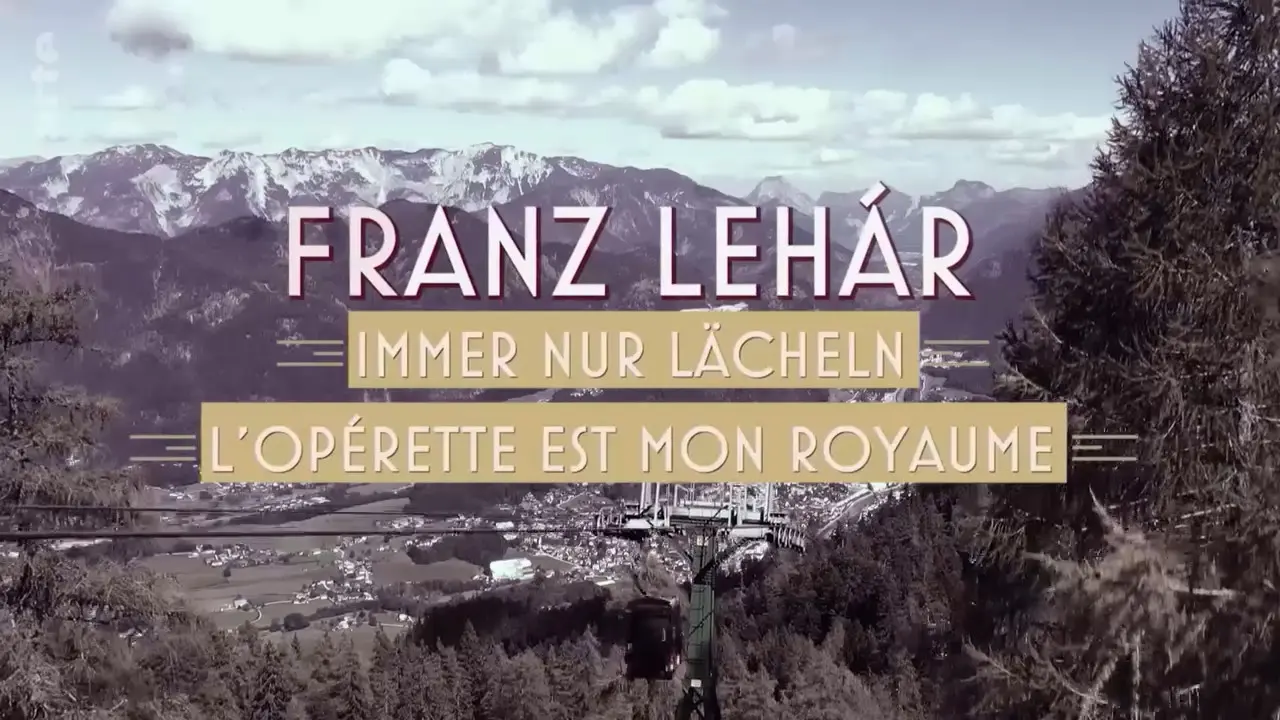
Is Franz Lehar, der Operettenkönig worth a modern viewing? Short answer: only if you view cinema as a museum rather than a theater.
This film is strictly for historians of the stage and collectors of early 20th-century cultural artifacts; it is absolutely not for those seeking a fast-paced narrative or emotional resonance.
This film works because: It captures the physical presence and conducting style of a musical legend, preserving a version of Franz Lehár that the written page never could.
This film fails because: It lacks any semblance of dramatic tension, functioning more as a hagiographic slideshow than a cohesive cinematic experience.
You should watch it if: You are researching the intersection of Viennese operetta and early film, or if you find more joy in a historical footnote than a modern blockbuster.
Franz Lehar, der Operettenkönig is a strange beast. In 1924, cinema was still figuring out how to handle 'living legends.' Unlike the rugged action found in Rob Roy, which relied on movement and myth, this film relies on the mere fact of Lehár’s existence. It is a vanity project in the purest sense. But that vanity is what makes it fascinating. We see Lehár at his desk. We see him with a baton. We see him looking into the camera with a gaze that says, 'I know I have conquered the ears of Europe, and now I shall conquer your eyes.'
The film doesn't bother with the grit of real life. It ignores the struggles of composition or the politics of the theater. Instead, it presents a sanitized, almost holy version of the artist. It’s a fossil. A beautiful, dusty fossil. It reminds me of the rigid social structures explored in A Fool and His Money, where status is everything and the person underneath is secondary to their title.
For the average viewer, the answer is no. If you are looking for entertainment, you will be disappointed. However, if you are a student of musicology, this is essential viewing. It allows you to see the tempo of the man himself. It is a primary source document that breathes. It is a slow, methodical waltz that never quite reaches its crescendo.
Alfred Deutsch-German was not trying to reinvent the wheel here. His direction is static. He treats the camera like a respectful houseguest who is afraid to move the furniture. There are no daring angles or experiments in montage. Compared to the atmospheric tension of The Darkening Trail, this film feels like it was shot in a vacuum. Every frame is composed to highlight Lehár’s dignity, which unfortunately drains the film of any life.
One specific scene involves Lehár looking over a score. The lighting is flat. The movement is minimal. It’s meant to be profound, but it feels like a staged photograph that went on for too long. Deutsch-German’s failure is his reverence. He was too in love with his subject to make a good movie. He made a monument instead. It’s as stiff as a board, yet strangely magnetic if you care about the history of the baton.
Lehár is not an actor. He is a presence. In this film, he plays 'Franz Lehár,' and he does so with a heavy hand. There is a specific moment where he pauses to reflect, looking off into the distance as if hearing a melody from the heavens. It’s pure melodrama. It lacks the naturalism or even the comedic charm of something like The Yankee Consul. Lehár is a ham, but he's a regal one.
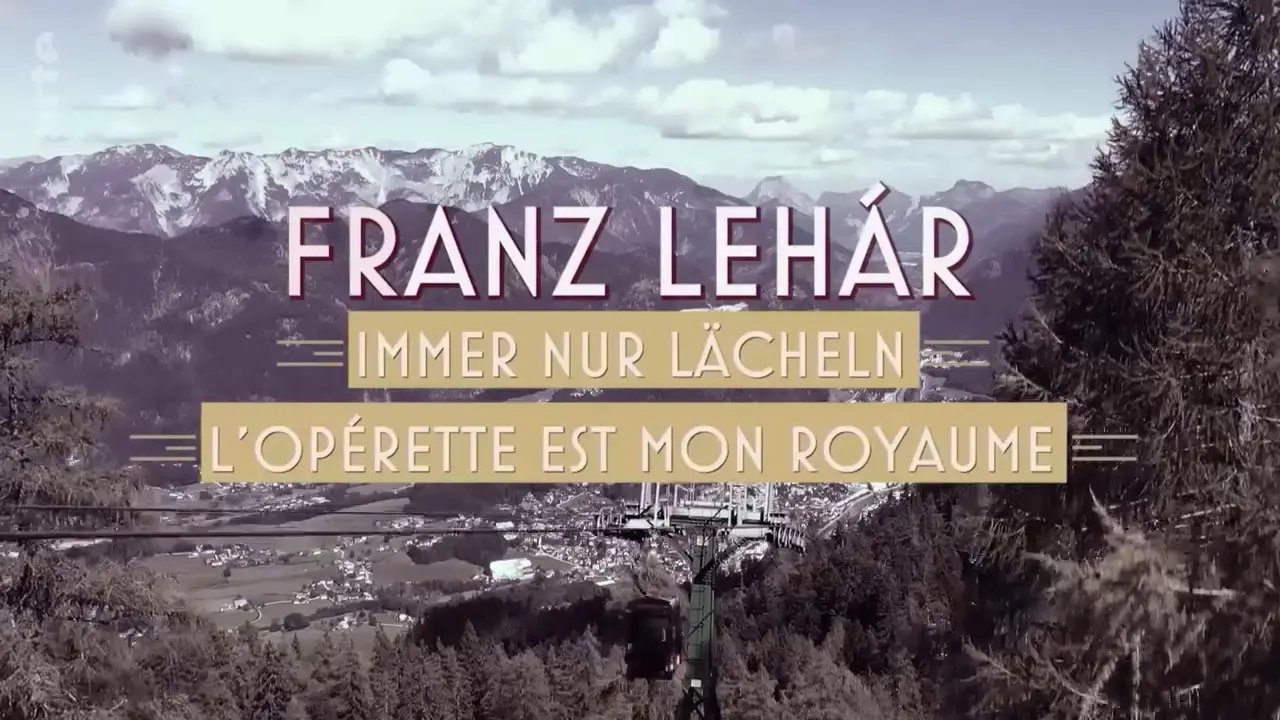
His performance is a reminder that in 1924, being a 'star' meant something different. It meant maintaining a facade. There is no vulnerability here. If you want to see a film that actually tackles the complexities of marriage and personal life, you’d be better off with The Woman He Married. Lehár is married to his music, and the film won't let you forget it for a single second.
The pacing is glacial. There is no other way to put it. In an era where films like El caporal were experimenting with movement, this film remains stubbornly still. It feels longer than its runtime. Every sequence is drawn out to ensure the audience appreciates the 'majesty' of the setting. It’s a slog. But it’s a slog with good music—assuming you’re playing a record in the background, as this was a silent production.
There is a total lack of the narrative urgency found in The Spite Bride. In that film, actions have consequences. In Lehár’s biopic, actions are just poses. You wait for something to happen, but the only thing that happens is another shot of a fountain or a garden. It’s a film that demands you bring your own interest to the table; it won't provide any for you.
Visually, the film is a product of its time in the worst way. The interiors are cluttered and the exteriors are washed out. There is none of the urban grit seen in The Lure of New York. Instead, we get the opulent, decaying beauty of Vienna. It’s a film about a man who lived in palaces of sound, but visually, it’s a series of dull rooms.
The cinematography doesn't tell a story. It doesn't even set a mood. It simply records. It’s the visual equivalent of a stenographer’s notes. There is a missed opportunity here to use the camera to mimic the flow of an operetta. Imagine if the camera moved with the rhythm of 'The Merry Widow Waltz.' It doesn't. It sits there, staring. It’s a missed opportunity of epic proportions.
When you compare this to other films of the mid-20s, its flaws become even more apparent. Look at Honor Among Men or Stolen Honor. Those films understand that cinema needs conflict. Lehár’s film assumes that his fame is enough to sustain interest. It’s an arrogant assumption. Even The Square Deceiver, a much more minor work, understands that you need a hook to keep the audience in their seats.
The film’s obsession with high culture makes it feel disconnected from the reality of the 1920s. While films like The Bike Bug were tapping into the energy of modern life, Franz Lehar, der Operettenkönig was looking backward. It’s a nostalgic piece made for a world that was already disappearing. It’s as out of place as Ballahooing on the Anarika, though significantly less whimsical.
Pros:
- Invaluable historical footage of a legendary composer.
- Captures the high-society atmosphere of post-WWI Austria.
- A rare example of a 'celebrity documentary' from the silent era.
Cons:
- Glacial pacing that will alienate all but the most dedicated viewers.
- Stilted, non-existent acting from the lead.
- Static cinematography that fails to engage with the medium's potential.
Franz Lehar, der Operettenkönig is a failure as a piece of cinema, but a triumph as a historical record. It refuses to engage with the audience, choosing instead to lecture them on the greatness of its subject. It’s stilted, arrogant, and slow. Yet, you cannot look away from the historical weight it carries. It’s a glimpse into a world where the composer was king, and the camera was merely a servant. Watch it for the history, but don't expect to be moved. It’s a waltz that never quite finds its rhythm.
Ultimately, this film is a curiosity. It belongs in a library, not a multiplex. If you want a story, watch Den tredie magt. If you want a face-to-face meeting with a ghost of the musical past, sit through this. Just bring a strong cup of coffee. You’ll need it.
IMDb —
1918
Community
Log in to comment.