DbcultAccessing Vault...
5.2/10
Senior Film Conservator
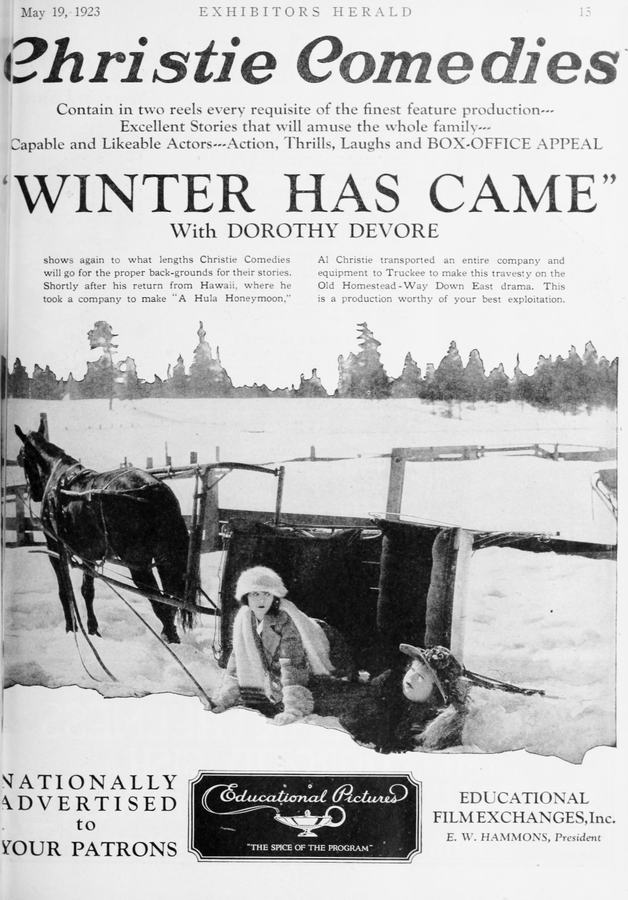
A definitive 5.2/10 rating for a film that redefined the boundaries of cult cinema. Winter Has Came remains a cornerstone of transgressive art.
In the pantheon of 1920s American cinema, Winter Has Came emerges as both a relic and a relic’s rebellion—a film that mockingly dissects the very tropes it resurrects. Directed with a wink and a twirl by Walter Graham, this 1927 silent film operates as a theatrical soap opera in cinema’s clothing, trading the grit of social realism for the carnivalesque absurdity of its plot. Its narrative—a daughter’s triumphant return to thwart a heartless landlord—reads like a script lifted from a dime-store novel and given a vaudeville polish. Yet, in its over-the-top performances and slapstick set pieces, the film finds a peculiar charm, one that speaks to the era’s love affair with melodrama as both spectacle and social critique.
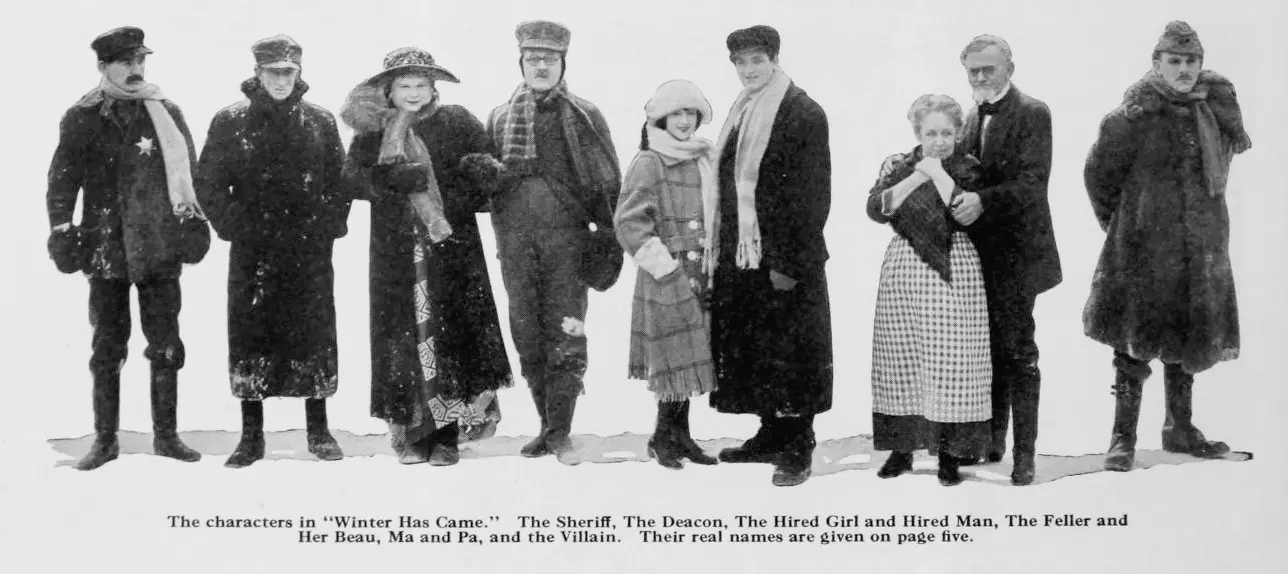
At its core, Winter Has Came is a story of duality: urban sophistication versus rural simplicity, satire versus sincerity. The protagonist, portrayed with a mix of hauteur and vulnerability by Dorothy Devore, is a young woman who has fled her hometown—a desolate, snow-choked village—only to return with a mysterious fortune and a resolve to right the wrongs of her family’s past. Her antagonists, led by the mustachioed tyrant Bob North as the landlord, are caricatures of greed, their threats delivered with the grandiosity of Shakespearean villains. The town itself, a character in its own right, is a stage set of crumbling porches and crooked outhouses, where every building seems to lean forward in anticipation of the next farcical twist.
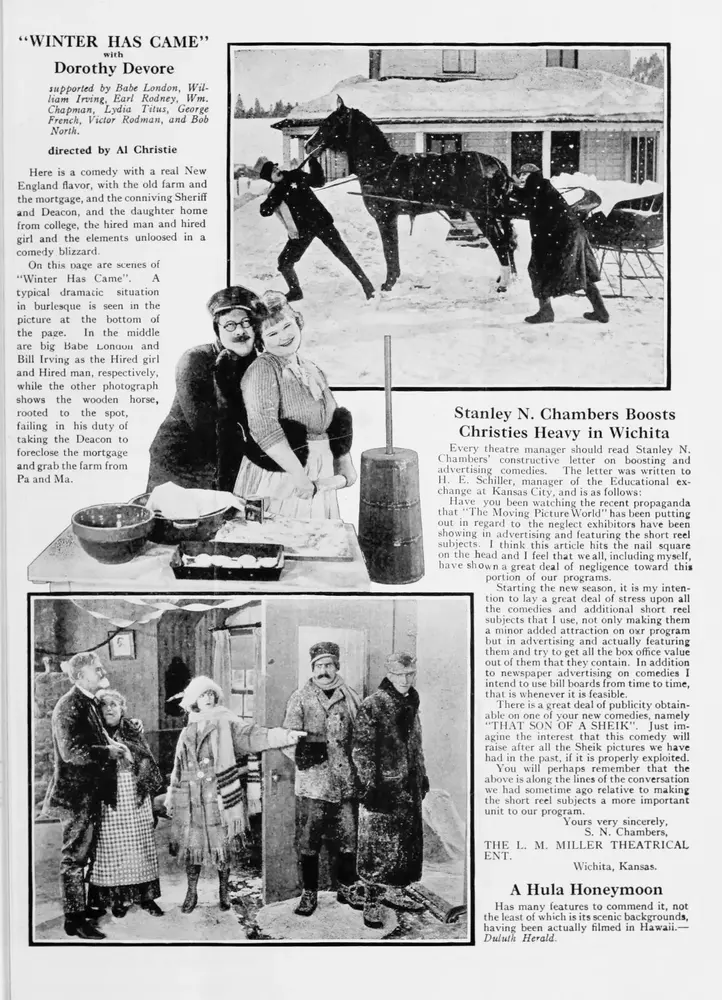
What sets Winter Has Came apart from its contemporaries is its refusal to take its own moralizing seriously. While the narrative hinges on the daughter’s inheritance—a windfall from an uncle who, it turns out, was a forgotten abolitionist—the film’s tone is less about the gravity of justice and more about the farcical logistics of its execution. The landlord’s attempts to evict the family, for instance, are thwarted not by legal maneuvering but by a literal blizzard that traps everyone in the homestead, forcing the villain into a series of increasingly farce-inducing confrontations with a goat that repeatedly butts him in the shins. These moments, while cringe-inducing in their literalism, are precisely what give the film its unique rhythm: a blend of slapstick, social commentary, and a dash of proto-hippie idealism.
The cast, led by Dorothy Devore and Bob North, commits entirely to the film’s tonal whiplash. Devore’s portrayal of the daughter is a masterclass in silent film acting, her face a canvas of exaggerated expressions that oscillate between tragic resolve and sly amusement. North, meanwhile, channels the energy of a mannequin caught in a hurricane, his physicality both menacing and comically inept. Supporting turns from William N. Chapman as a love-struck farmer and Lydia Yeamans Titus as a feisty grandmother add layers of burlesque charm, their interactions often devolving into synchronized dance numbers that feel plucked from a Broadway revue.
Winter Has Came shares DNA with films like Tingeltangel (1936), which similarly weaponizes chaos to expose societal hypocrisies, and A Gentleman from Mississippi (1940), where a misfit hero’s quixotic battles against corruption are rendered in equal parts earnestness and absurdity. Yet it diverges from the stark realism of The Agonies of Agnes (1935), which focuses on the psychological toll of oppression rather than its theatrical resolution. In this way, Winter Has Came occupies a niche in pre-Code Hollywood: a film that is both a product of its time and a self-aware parody of its own genre conventions.
The film’s climax—a showdown in which the daughter’s inheritance is revealed via a telegram mistakenly delivered to a dog—is as nonsensical as it is satisfying. This is not a story about the moral fortitude of its characters but about the ritualistic release of its audience. The landlord’s defeat is not a nuanced victory but a cathartic explosion of plot contrivances: a rigged horse race, a hidden will, and a final snowball fight that leaves the villain buried in a snowdrift with only his head visible. Such moments feel less like narrative resolution than a celebration of the film’s own audacity to subvert gravity.
Despite its anachronisms, Winter Has Came retains a certain nostalgic allure. For modern audiences, its unapologetic melodrama serves as a reminder of cinema’s early days, when stories were crafted to delight and distract rather than dissect. Its burlesque spirit, while at times clunky, offers a window into a cultural moment where humor and moralizing were not mutually exclusive. The film’s legacy is not in its sophistication but in its unbridled commitment to the idea that saving a family from foreclosure can—and should—be a spectacle.
In the grand tapestry of 20th-century cinema, Winter Has Came is a thread that glimmers with eccentricity. It is a film that wears its absurdity like a badge of honor, offering a burlesque of redemption that is as much about the journey as the destination. While its plot may lack the subtlety of a Chekhovian tragedy, its heart—however comically oversized—beats with a genuine affection for the underdog. For those seeking a film that balances satire with sentimentality, Winter Has Came remains a curious, if occasionally ridiculous, artifact of a bygone era’s theatrical sensibilities.
IMDb —
1916
Community
Log in to comment.