DbcultAccessing Vault...
5.6/10
Senior Film Conservator
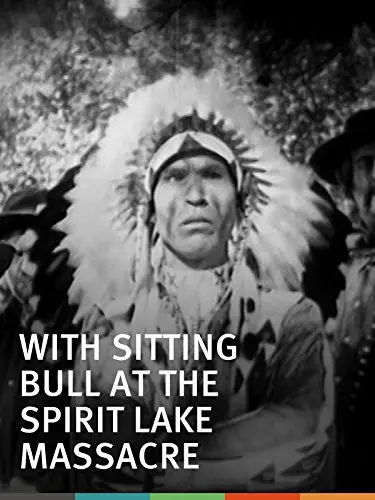
A definitive 5.6/10 rating for a film that redefined the boundaries of cult cinema. With Sitting Bull at the Spirit Lake Massacre remains a cornerstone of transgressive art.
Is With Sitting Bull at the Spirit Lake Massacre worth your time in the modern era? Short answer: yes, but strictly as a historical artifact for those obsessed with the evolution of the Western genre.
This film is for silent cinema completists and students of Indigenous representation in early Hollywood. It is definitively not for those who require fast-paced action or a nuanced, historically accurate account of the actual 1857 events.
1) This film works because it provides a rare, centered performance by Chief Yowlachie, who brings a level of gravitas that was often denied to Native American actors in the 1920s.
2) This film fails because its narrative structure is stilted by the limitations of Sunset Productions' budget and the inherent melodrama of the era, which often simplifies complex tribal politics into broad gestures.
3) You should watch it if you want to see the screen debut of Bob Steele or if you are interested in how the 'lost film' phenomenon shapes our understanding of cinematic history.
For over eighty years, With Sitting Bull at the Spirit Lake Massacre was a title found only in dusty copyright ledgers. Its recent surfacing is a minor miracle for film preservationists. Produced in 1925 but held back until 1927, it sits at the tail end of the silent era.
The film lacks the fluid camera work seen in contemporary high-budget epics like White Eagle, yet it possesses a rugged, unpolished charm. It feels like a dispatch from a forgotten corner of the industry.
The direction by Leon De La Mothe is functional. It doesn't strive for the poetic. Instead, it relies on the physical presence of its leads to carry the weight of the conflict.
The standout element is undoubtedly Chief Yowlachie. Performing here under the name Chief Yowlache, he avoids the 'wooden' stereotype often forced upon Indigenous actors of the time. There is a specific scene where he surveys the Spirit Lake settlement from a distance.
His eyes convey a mixture of sorrow and calculated resolve. It is a quiet moment that stands out in a film otherwise filled with broad theatricality. He portrays Sitting Bull not as a caricature, but as a man burdened by the weight of his ancestors' expectations.
This performance is far more grounded than what we see in other films of the period, such as the more sensationalized The Web of the Law. Yowlachie’s Sitting Bull feels human. It’s a performance that deserves modern study.
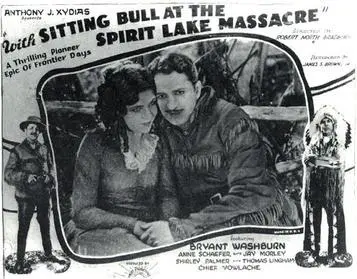
Bryant Washburn, a staple of the silent screen, provides the necessary 'star power' for the white settlement subplots. His performance is reliable, if somewhat predictable. He represents the 'civilized' face of expansion, a contrast to the ruggedness of the Sioux characters.
However, the real curiosity for genre fans is the appearance of a young Bob Steele. Billed as Bob Bradbury Jr., this is a glimpse of a future B-Western king in his formative years. He lacks the grit he would later develop, appearing almost soft-featured here.
Watching Steele here is like finding a rough sketch of a famous painting. You can see the athleticism and the screen comfort, but the persona isn't fully formed yet. It’s a fascinating contrast to his later, more cynical roles.
The film’s pacing is its greatest hurdle. Like many Sunset Productions titles, it feels stretched. The 1927 release date suggests it may have been tinkered with or held due to distribution struggles, and that lack of momentum shows in the middle act.
There are long stretches of exposition through intertitles that could have been handled through visual storytelling. Unlike the tight suspense found in An Alien Enemy, this film breathes too much. It meanders through the tall grass of Iowa (likely California) without a clear sense of urgency.
The tone shifts awkwardly between a spiritual epic and a standard frontier melodrama. The 'Great Spirit' sequences are handled with a sincerity that borders on the mystical, yet they are punctuated by standard settler-conflict tropes that feel recycled from earlier shorts.
If you are looking for a casual Friday night movie, the answer is a firm no. The silent format combined with the slow-burn narrative will likely alienate modern audiences. However, if you are a historian of the Western, it is an essential watch.
It captures a specific moment in time when Hollywood was moving away from the 'noble savage' trope but hadn't quite figured out how to portray Indigenous leaders with full complexity. It is a bridge between the primitive silents and the more sophisticated talkies of the 1930s.
The film is a visual record of a lost era of filmmaking. The costumes, the horses, and the landscape (even if simulated) offer a texture that modern CGI-heavy Westerns cannot replicate. It’s real. It’s tangible. But it’s flawed.
Pros:
- Authentic casting of an Indigenous lead.
- Rare footage of Bob Steele’s early career.
- Captures the gritty aesthetic of 1920s independent Westerns.
- A fascinating look at the spiritual themes used in silent scripts.
Cons:
- The 'massacre' elements are sanitized for 1920s censors.
- Significant historical inaccuracies regarding Sitting Bull's actual geography.
- Some characters are underdeveloped, existing only to fill the frame.
Writer Ben Allah crafts a story that is surprisingly focused on the internal motivation of the Sioux. While the white settlers are the 'heroes' in a traditional sense, the script gives Sitting Bull the most compelling arc. He isn't just an antagonist; he is a man responding to a spiritual mandate.
This focus on the 'Great Spirit' as a narrative catalyst is an unconventional choice for a mid-20s programmer. It adds a layer of solemnity that elevates the film above standard 'cowboys and Indians' fare like Burnt Wings. However, the execution is hampered by the era's technical limitations.
The dialogue in the intertitles is often stiff. It lacks the punchy, rhythmic quality of the best silent writing. It’s functional, but it doesn’t sing. One wishes the visual composition did more of the heavy lifting.
The cinematography by an uncredited hand is typical of Sunset Productions—mostly static, relying on deep focus and natural lighting. The exterior shots of the Iowa-inspired landscape are the film's visual highlight. The scale of the settlement against the vastness of the plains creates a genuine sense of isolation.
There is a specific shot of the Sioux party descending a ridge that is genuinely striking. It captures the silhouettes against a pale sky, creating an image that feels more like a painting than a movie. It’s a moment of accidental beauty in an otherwise utilitarian production.
Compared to more experimental films of the time, such as La gola, this is a very conservative piece of filmmaking. It doesn't take risks with editing or angles. It tells its story straight, for better or worse.
With Sitting Bull at the Spirit Lake Massacre is a fascinating, if occasionally tedious, ghost of cinema’s past. It is a film that exists in the shadow of its own rediscovery. The story of how it survived eighty years of obscurity is almost more compelling than the plot itself.
However, for those willing to look past the scratches on the print and the slow-moving plot, there is a core of genuine emotion. Chief Yowlachie’s performance is a beacon of sincerity in a genre that was often anything but. It is a vital piece of the Western puzzle.
"A rugged, imperfect relic that reminds us how much of our cinematic history remains buried in the dirt of the past."
Ultimately, it is a film that demands patience. It is a slow walk through a landscape we’ve seen a thousand times before, but seen through a lens that has been clouded by time. It works. But it's flawed. And that is exactly why it matters.
Community
Log in to comment.