DbcultAccessing Vault...
5.9/10
Senior Film Conservator

A definitive 5.9/10 rating for a film that redefined the boundaries of cult cinema. Marvelous Maciste remains a cornerstone of transgressive art.
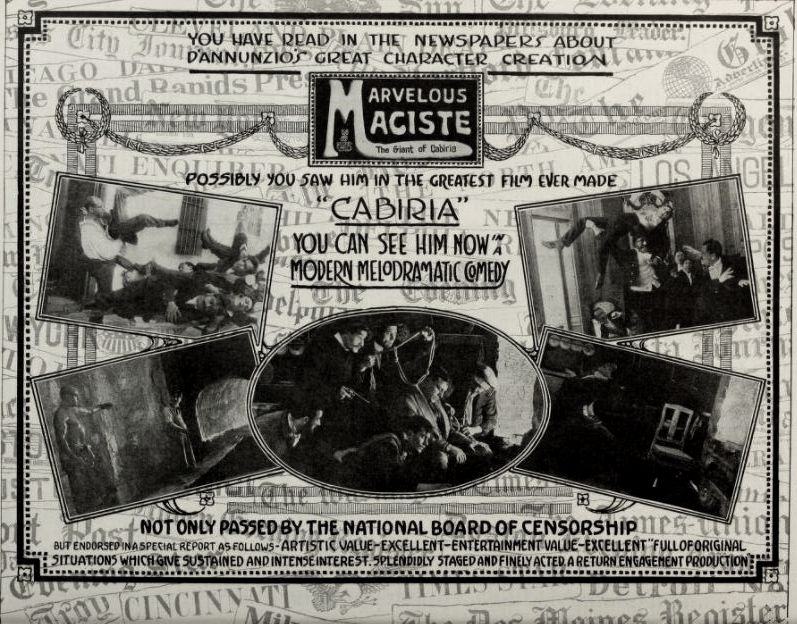
The first surprise of Marvelous Maciste is that it refuses to be a mere sequel to Cabiria; instead it detonates the idea of sequel entirely. Giovanni Pastrone and Agnes Fletcher Bain confect a meta-fable where the audience’s yearning for the heroic becomes the plot engine. Josephine, played by Clementina Gay with the brittle luminance of a Pre-Raphaelite figurine, is no passive damsel—she is a viewer, a reader of musculature, a semiotician of strength. She interprets Maciste and then commissions him, turning spectatorship into contract labor.
Didaco Chellini’s sepia-toned cinematography revel in chiaroscuro: charcoal shadows swallow the arches of Turin while sulphur flares paint the quarries the color of molten gold. The camera glides on improvised dollies—wooden wheelbarrows padded with circus felt—so that marble blocks seem to drift like icebergs. This kinetic geology foreshadows the way Maciste himself will be uprooted, carted, and re-installed in a new moral landscape.
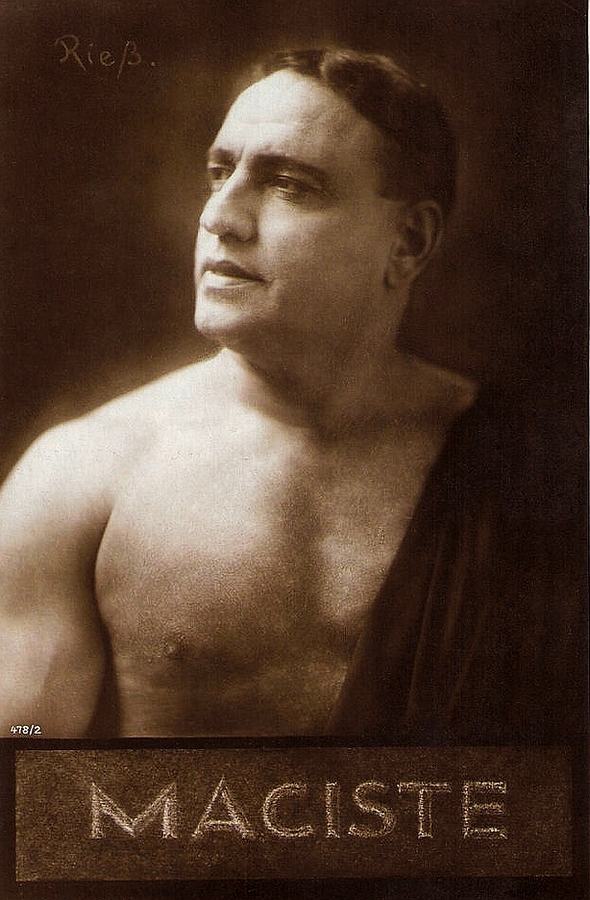
Unlike the bodybuilders who later aped his pose, Bartolomeo Pagano’s Maciste is not a monolith of meat but a palimpsest: each tendon carries erased histories of Italian unification, of quarry slaves, of the very marble dust we see suspended in the projector’s beam. When he flexes, the image is less about dominance than about release—the fantasy that laboring sinew can ransom innocence.
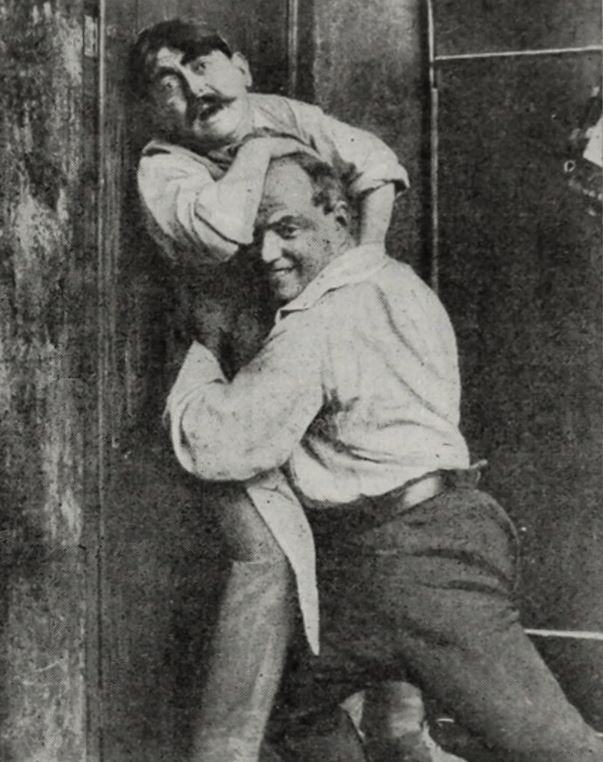
Compare this to Thais, where the body is a site of decadence, or A Modern Mephisto, where physicality is a bargaining chip with the infernal. In Marvelous Maciste the body is public domain, a living statue that can step off its plinth and rewrite civic wrongs.
Josephine’s uncle, a velvet-gloved ogre performed with relish by Leone Papa, assumes women’s wishes are negotiable collateral. His plot to abduct her is staged like a grotesque ballet: gondolas, chloroform, bribes to railway porters—all swirling to a waltz tempo. Yet Josephine hijacks the narrative by watching. In the smoky womb of the cinema she experiences what Laura Mulvey will later theorize but never anticipate: the reverse shot. She looks, therefore he—Maciste—exists.
She does not want to be saved; she wants to outsource vengeance to a demigod and then renegotiate the terms of rescue.
That pivot from object to client is as subversive as anything in Anna Karenina or Tess of the D’Urbervilles, yet it arrives a decade earlier, wrapped in a popcorn aria.
No recorded voice ever graces Marvelous Maciste, yet the film vibrates with acoustics: the thwack of cudgel on pectoral, the shirr of Josephine’s silk hem against cobblestones, the tinnitus of guilt inside the uncle’s bowler. Intertitles, penned in a curl of fin-de-siècle calligraphy, appear sparingly—like telegrams from a conscience too busy to write longer. The result is an aural hallucination; every modern viewer unconsciously dubs in the gravel of Pagano’s baritone, the tremor of Gay’s soprano.
Released the same year as Lucille Love: The Girl of Mystery and across the Atlantic from Ungdomssynd, Marvelous Maciste participates in a planetary alignment of serial thrills. Yet while Lucille weaponizes gadgets and Scandinavian cinema moralizes sin, this Italian juggernaut opts for visceral fable. Its DNA splinters later into Across the Pacific adventure yarns and even, arguable, into the lantern-jawed certainty of Golden Age superheroes.
One bravura sequence stages a bare-knuckle duel inside a marble quarry at dusk. Cinematographer Chellini backlights the combat with a furnace so that every airborne chip of stone becomes a meteor. Space itself mutates: what is extraction site becomes courtroom, what is marketplace of labor becomes cathedral of justice. The workers—extras recruited from actual Ligurian stonecutters—watch in a semicircle, their eyes white crescents against carbon dust. When Maciste hoists a slab to shield Josephine, the gesture is both practical and eucharistic: he offers the geological body of Italy as communion wafer.
Conventional readings pit brawny male savior against fragile heiress, yet the screenplay seeds quiet fault-lines. Josephine carries a notebook in which she tallies the wages owed to her uncle’s laborers; she knows the precise sum of his perfidy. Maciste, illiterate but numerate in weights and measures, must ultimately sign that ledger with an X of blood after crushing the villain’s hand. Thus literacy and corporeality merge; the film suggests that oppressed bodies can only be repatriated through composite alphabets of sinew and ink.
Early prints were tinted amber for interiors, cobalt for night, rose for close-ups of Josephine. These chromatic decisions, often dismissed as novelty, function as moral annotation. The amber passages glow with domestic menace—gas lamps, tea tables, promissory notes. Cobalt sequences—the pursuit across rooftops, the quarry duel—carry a refrigerating dread. Rose, reserved for Josephine’s profile, bathes her in a queasy dawn: innocence as yet un-convicted.
Teresa Marangoni’s turn as a soubrette prima Donna supplies comic relief, yet her aria about a runaway tortoise who becomes Pope is more incantation than gag. Children in the diegesis laugh, but the lyrics slyly mirror Josephine’s own arc: slow creature outpaced by predators, elevated to moral authority. Thus humor operates as prophecy, a Greek chorus in greasepaint.
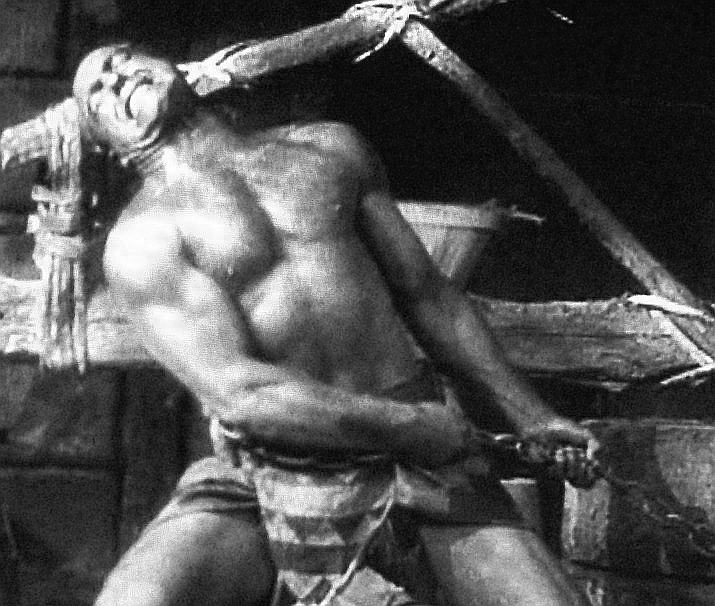
Modern cinephiles weaned on CGI titans can trace a straight, sinewy line from Pagano’s Maciste to today’s caped pantheon. The difference lies in materiality: every boulder hoisted in 1916 has actual weight, its inertia visible in the tremor of ankle tendons. The film reminds us that before green screens, gravity was the last honest special effect.
A 4K restoration by Cineteca di Bologna surfaced in 2022, scanned from a French print discovered in an abandoned Riviera casino. The tints were recreated using vintage Pathé records; the intertitles translated by Bain’s descendants to preserve the Anglo-Italian cadence. Streams are available on niche platforms, but nothing rivals a 35 mm viewing with live piano—preferably in a quarry for maximum hauntology.
Marvelous Maciste endures because it stages the primal fantasy that ethics can be extruded through the human form; that a woman’s strategic desire can reroute epic; that the act of watching is never neutral. Ninety minutes of silent marble, and still it out-hercules most digital colossi. Go, watch, and feel the tectonic shift inside your ribcage—there lies the true Italian quarry.

IMDb —
1923
Community
Log in to comment.