DbcultAccessing Vault...
Cult Review
Senior Film Conservator
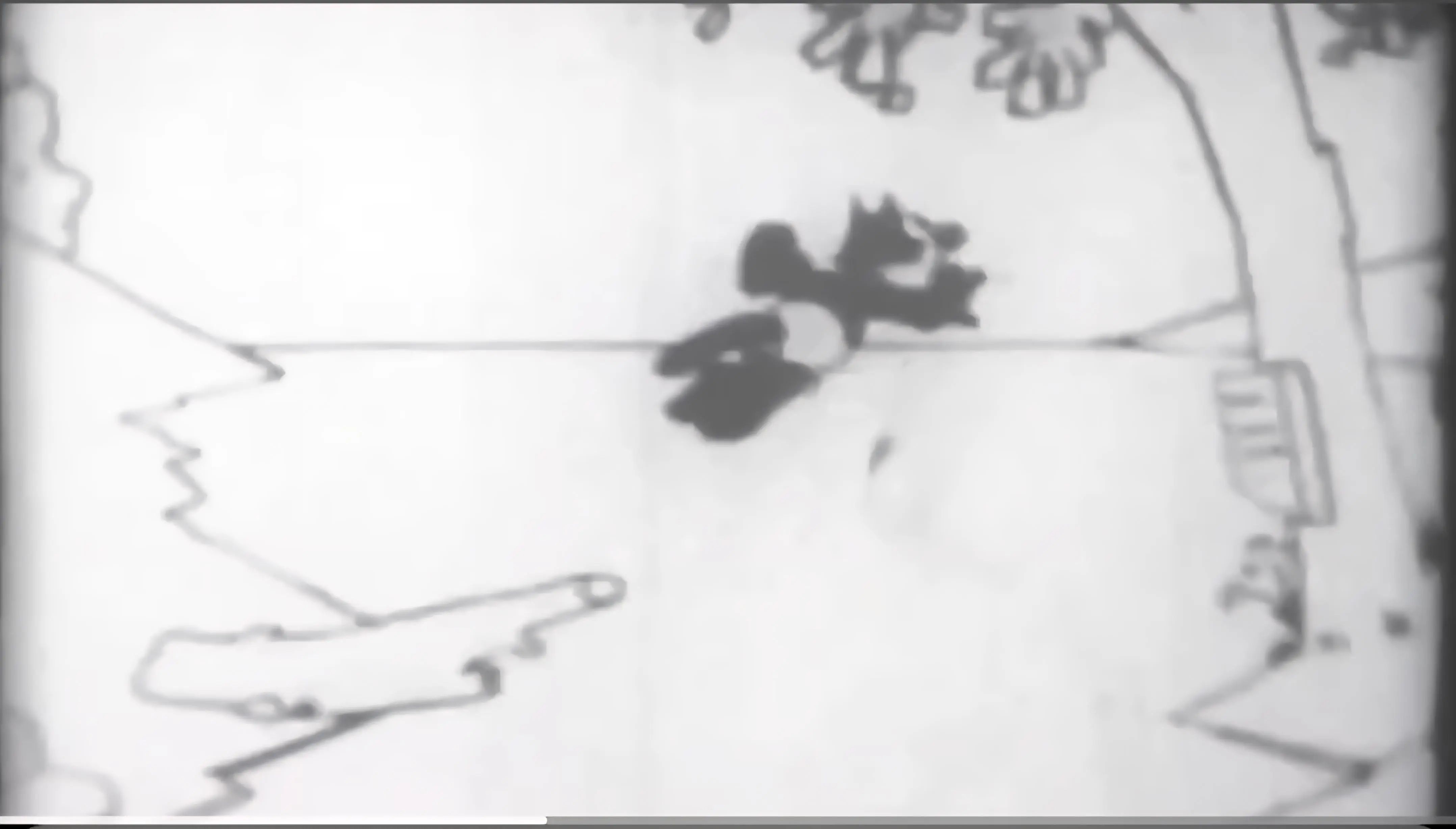
To engage with Friend in Need is to step into a world where the laws of physics are merely suggestions and the boundaries of the self are as fluid as the ink used to render them. Otto Messmer, the unsung architect of the Felix mythos, presents a vignette that, on the surface, appears to be a simple gag-driven short. However, beneath the flickering grain of the celluloid lies a complex tapestry of social anxiety and existential resourcefulness. Felix is not merely a cat; he is the avatar of the everyman, navigating a world that demands conformity—in this case, the donning of swimming trunks—before granting access to the collective joys of the 'swimming hole.'
The brilliance of this specific short lies in its pacing. Unlike the more structured narratives seen in contemporary live-action dramas like The Right to Happiness, Messmer’s work thrives on a staccato rhythm of problem and solution. Felix’s predicament is immediate and visceral. The swimming hole represents a democratic space of leisure, yet it is gated by a sartorial requirement that Felix, in his natural state, cannot fulfill. This tension between the biological self and the societal expectation is a recurring theme in early animation, reflecting a burgeoning modernism that felt both liberating and restrictive.
When the fish enters the frame, the film shifts from a comedy of manners into a realm of high surrealism. The fish is not a silent observer but an active participant with its own 'lunch ideas.' This interaction is fascinating because it subverts the typical predator-prey dynamic. In the world of Friend in Need, the fish becomes a merchant of necessity. The logic here is dreamlike, reminiscent of the atmospheric tension found in The Bottom of the Well, where the environment itself seems to collude against or for the protagonist in unpredictable ways.
The visual gags are executed with a precision that belies the primitive technology of the era. Messmer’s ability to convey complex emotions through the curvature of Felix’s ears or the frantic pace of his walk is unparalleled. We see a character who is perpetually 'becoming.' He is a creature of pure agency, much like the desperate figures in Tainted Money, though Felix’s stakes are framed within the whimsical rather than the tragic. The 'friend' in the title is, of course, a double-edged sword. Is the fish a friend, or is it a facilitator of a bizarre transactional reality?
While Friend in Need is a short-form animation, its thematic weight rivals many of the feature-length explorations of identity from the same period. Consider the duality present in The Devil's Double. While that film deals with literal doubles, Felix’s struggle to 'clothe' himself is a metaphorical doubling—an attempt to project a persona that the world deems acceptable. Even in lighthearted fare like Pop Tuttle's Movie Queen, we see characters grappling with their public image. Felix’s quest for swimming trunks is, at its heart, a quest for a ticket into the spectacle of the public eye.
The animation style itself—stark black and white with minimal backgrounds—forces the viewer to focus entirely on the movement. This kinetic energy is what separates Messmer from his peers. There is a certain 'vibration' to the frames that evokes a sense of urgency. It lacks the polish of later Disney works but possesses a raw, avant-garde spirit that feels more aligned with the European art house sensibilities seen in Strandhugg på Kavringen. There is no waste in these frames; every line serves the gag, and every gag serves the character.
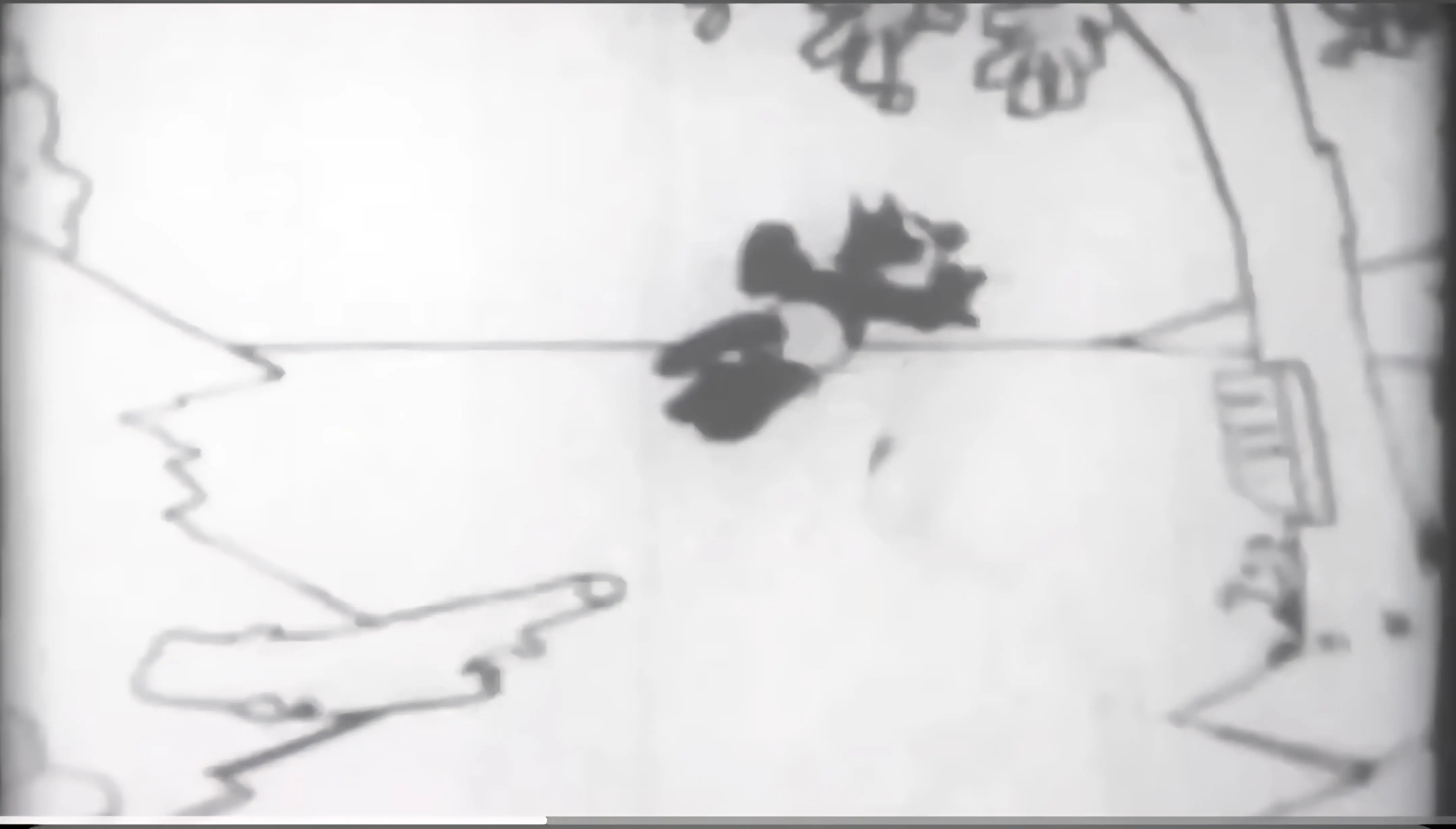
One cannot discuss this film without acknowledging the technical mastery of Otto Messmer. Without a formal writer credited, the visual storytelling is paramount. The way the fish’s 'lunch ideas' are manifested visually—perhaps through thought bubbles or physical manifestations—prefigures the visual shorthand that would define the medium for decades. The swimming hole itself is rendered with a minimalist charm that reminds one of the stark settings in The Last Moment, where the environment is stripped down to its psychological essentials.
The use of space in Friend in Need is particularly noteworthy. Felix moves through the frame with a lateral confidence, yet the introduction of the water adds a vertical dimension to the problem. The water is both a goal and a barrier. This duality is a sophisticated narrative device often found in more 'serious' works like The Seekers, where the journey toward a destination is fraught with symbolic hurdles. Felix’s hurdles may be comedic, but they resonate with the same fundamental human desire for inclusion.
In the broader context of 1920s cinema, Friend in Need stands as a testament to the power of the short form. It doesn't need the sprawling runtime of The West~Bound Limited to convey a complete emotional arc. Within minutes, we experience Felix’s longing, his frustration, his ingenuity, and his eventual triumph (or perhaps, his compromise). The film operates with the efficiency of a well-oiled machine, much like the procedural tension found in The Tenth Case.
Furthermore, the absence of a writer suggests a purely collaborative or improvisational approach to the animation, where the animator’s hand is the ultimate narrator. This 'auteur' approach is what gives Felix his soul. He is not a character designed by a committee; he is a manifestation of Messmer’s own wit. This personal touch is often missing in more commercialized ventures like Ma Hoggan's New Boarder, where the humor is broader and less character-driven.
Ultimately, Friend in Need is a profound meditation on the lengths one will go to fit in. Felix’s interaction with the fish is a masterclass in transactional storytelling. The fish provides the means, but at what cost to the natural order? This subtle questioning of the 'price of admission' elevates the film above its peers. It shares a certain DNA with Madeleine or The Girl with the Champagne Eyes, where the protagonist must navigate a world of shifting appearances and hidden agendas.
For the modern viewer, the film offers a window into a time when animation was the frontier of the avant-garde. It is a reminder that even the most basic needs—like a pair of swimming trunks—can become the catalyst for a grand adventure. Whether you are a scholar of the silent era or a casual fan of the 'rubber-hose' aesthetic, this film is an essential piece of the puzzle. It captures a moment in time when the world was expanding, and even a small cat with a big imagination could find a way to make a splash. The craftsmanship involved is as sturdy as the castle in Der Schloßherr von Hohenstein, yet as light as the air Felix walks upon when he’s struck by a brilliant idea.
Reviewer's Note: The restoration of these shorts is vital for understanding the genealogy of character design. Messmer’s work on 'Friend in Need' remains a high-water mark for the era, blending pathos with absurdity in a way that few have since replicated. The fish’s 'lunch ideas' remain one of the most delightfully bizarre plot points in early 20th-century cinema.

IMDb 3.7
1920
Community
Log in to comment.