DbcultAccessing Vault...
6.3/10
Senior Film Conservator
A definitive 6.3/10 rating for a film that redefined the boundaries of cult cinema. Wonderful London: Flowers of London remains a cornerstone of transgressive art.
The silent era of cinema often found its most profound resonance not in the grandiloquent gestures of theatrical melodrama, but in the quiet, observational rhythms of the 'city symphony.' Among the most evocative examples of this genre is the Wonderful London series, with its specific installment, Flowers of London, standing as a testament to the evocative power of early documentary filmmaking. Directed by Frank Miller and Harry B. Parkinson, this short film is far more than a historical curiosity; it is a lush, textured meditation on the intersection of urban industry and botanical fragility. While contemporary audiences might be more familiar with the maritime grit of The Crow's Nest, Miller and Parkinson choose here to focus on the delicate, the fragrant, and the fleeting.
The film opens with a kinetic energy that belies its age. We are thrust into the pre-dawn shadows of Covent Garden, a location that served as the beating heart of London’s floral trade for centuries. The cinematography, characterized by a soft-focus pictorialism, captures the hazy transition from night to day. There is a palpable sense of movement—the heavy wooden crates, the steam rising from the horses, and the frantic negotiation of wholesalers. This is not the sanitized London of tourist postcards; it is a workspace. Unlike the more structured narratives found in The On-the-Square Girl, Flowers of London relies on the inherent drama of the mundane.
The visual contrast between the rugged, soot-covered porters and the delicate lilies they carry creates a striking chiaroscuro effect. One cannot help but reflect on the socioeconomic layers at play. The flowers, harvested from the distant corners of the Empire and the English countryside, represent a luxury that the laborers themselves could likely never afford to keep. In this sense, the film mirrors the class explorations seen in Strife, though it does so through imagery rather than dialogue. The lens acts as a silent witness to the commodification of nature, where beauty is measured in shillings and pence.
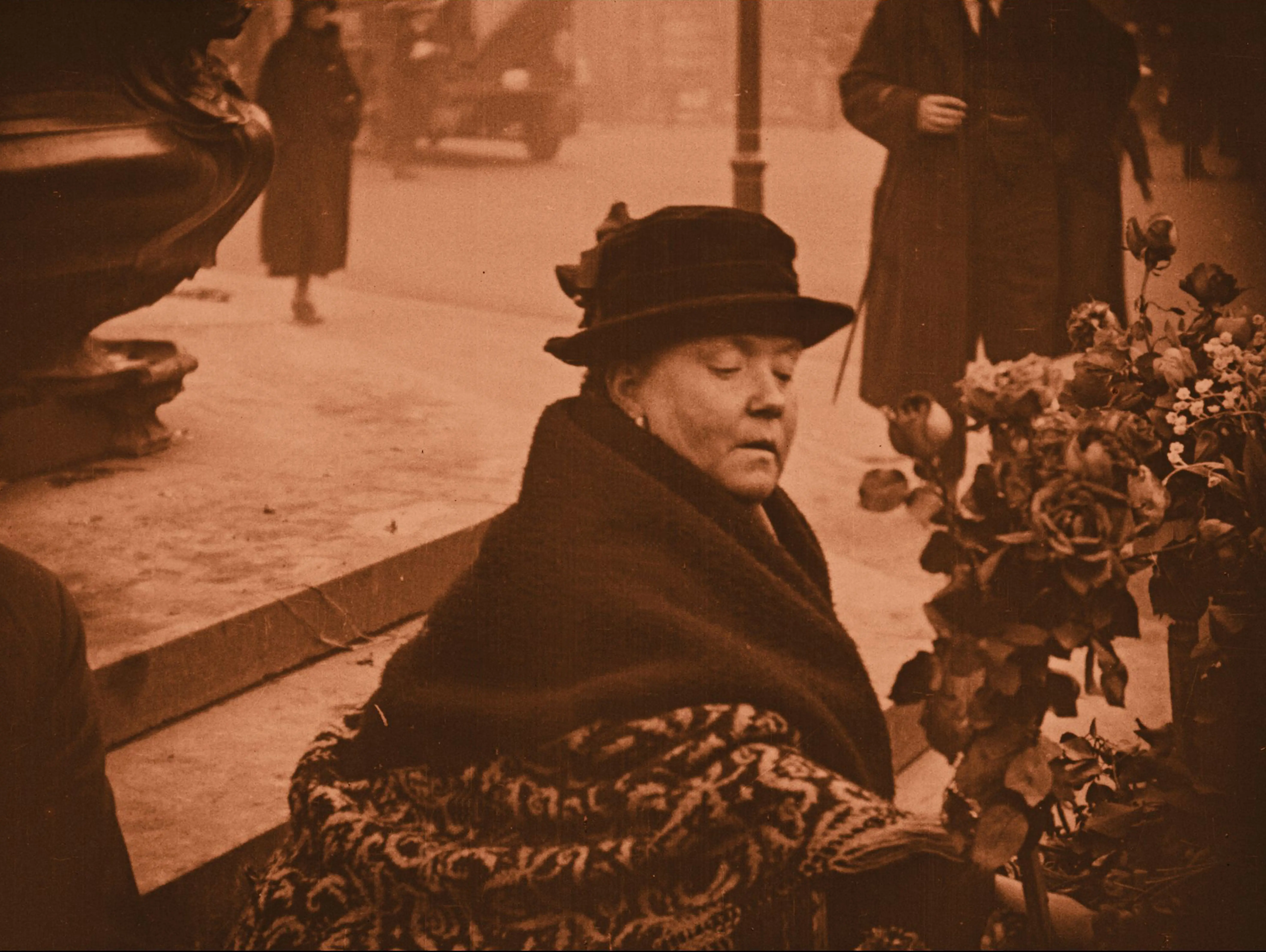
Central to the film’s emotional core is the figure of the 'Flower Girl.' In the 1920s, these women were iconic fixtures of the London landscape, immortalized in literature and song. However, Miller and Parkinson strip away the romanticized veneer often found in works like Romeo and Juliet or other period dramas. Instead, we see the reality: the wind-chilled fingers, the threadbare shawls, and the weary but resilient faces. There is a dignity in their labor that transcends the screen. The filmmakers utilize close-ups with a sensitivity that was rare for the period, allowing the viewer to connect with the individual humanity behind the archetype.
This human-centric approach provides a fascinating counterpoint to the more whimsical elements of silent cinema, such as the slapstick energy of The Champeen or the comedic stylings of Luffar-Petter. While those films sought to entertain through artifice, Flowers of London seeks to captivate through verisimilitude. The flower girls are not playing characters; they are existing within their own ecosystem, unaware that they are being preserved for a future century.
From a technical perspective, the film is a marvel of early location shooting. Parkinson’s eye for composition is evident in every frame. He manages to find geometry in the chaos of the market—the repeating patterns of baskets, the radial symmetry of a blooming dahlia, and the vertical lines of the Victorian architecture. The use of natural light is particularly noteworthy. Without the benefit of modern lighting rigs, the filmmakers had to rely on the fickle British sun and the ambient glow of gas lamps. This creates an organic, almost tactile quality to the footage that modern digital reconstructions struggle to replicate.
When comparing this work to other films of the era, such as the more theatrically staged Die Legende von der heiligen Simplicia, one appreciates the raw, unvarnished aesthetic of the Wonderful London series. There is no heavy-handed symbolism here, only the accumulation of detail. The editing is brisk, mimicking the hurried pace of the morning trade, and then slowing down as the flowers find their way into the parlors of the wealthy or the lapels of gentlemen. This rhythmic pacing is a precursor to the sophisticated montage techniques that would later define the Soviet school of filmmaking.
As the film progresses, it follows the flowers from the mud of the market to the polished doorsteps of the West End. This transition serves as a silent commentary on the British class system. We see the contrast between the 'Cockney' vitality of the market and the stiff, formal elegance of the upper echelons. It is a theme often explored in silent dramas like Idle Tongues or the domestic struggles of The Runaway. However, by using flowers as the connective tissue, Miller and Parkinson highlight the universality of beauty and its eventual decay.
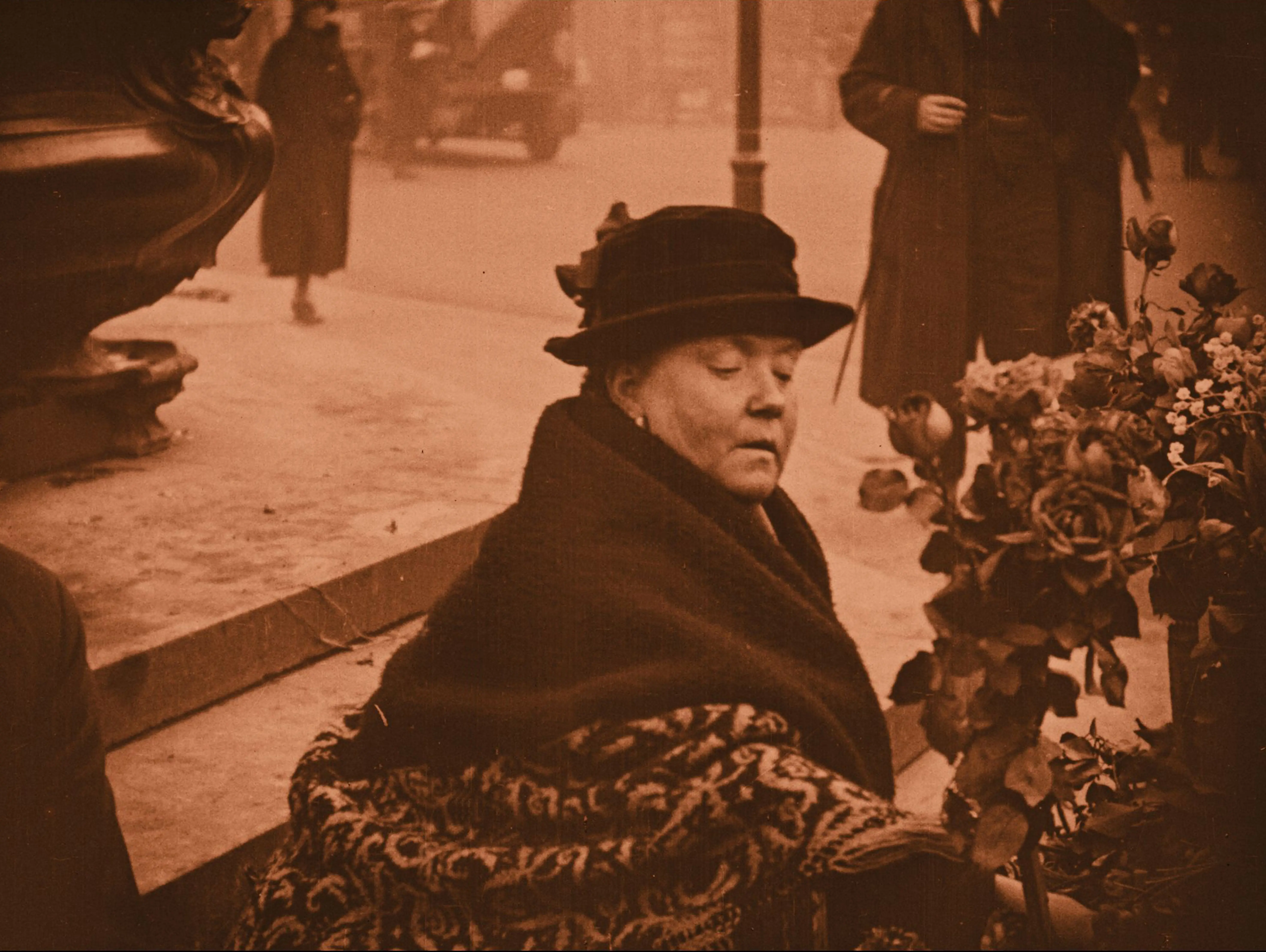
The film also captures the burgeoning modernity of the city. Amidst the traditional horse-drawn carts, we see the occasional motorcar, a harbinger of the industrial shift that would eventually render this version of London unrecognizable. There is a melancholy underlying the beauty; the viewer is aware that this world is on the precipice of vanishing. The innocence found in Solskinsbørnene or the childhood antics of The Stork's Mistake feels worlds away from the weary realism of these London streets.
In the grand tapestry of film history, Flowers of London is a vital thread. It belongs to a tradition of British filmmaking that prioritized the 'real' over the 'fantastical.' While international cinema was exploring the surrealism of the avant-garde or the high-budget spectacle of films like Három hét, the British documentary movement was laying the groundwork for a style that would eventually lead to the Free Cinema movement of the 1950s. The film’s preservation by the BFI is a gift to historians and cinephiles alike, offering a window into a sensory experience that has long since been paved over.
Comparing it to other shorts of the time, such as Three Strikes or the narrative-heavy L'assassino del corriere di Lione, one notices a lack of artifice that is incredibly refreshing. There are no villains here, no heroes, only the relentless passage of time and the cyclical nature of life. The flowers bloom, they are sold, they wither, and the cycle begins anew. It is a philosophy of cinema that values the observation of life over the manipulation of it.
To watch Wonderful London: Flowers of London is to participate in a séance. We are looking at ghosts—ghosts of buildings, ghosts of horses, and ghosts of a way of life. Yet, the vibrancy of the flowers remains. The film succeeds because it does not try to be an epic; it is content to be a miniature. It captures the 'haecceity'—the 'thisness'—of a specific moment in time. Whether it is the way a flower girl adjusts her hat or the specific angle of the sun hitting a puddle on the cobblestones, the film is an accumulation of small, perfect truths.
For those who appreciate the historical depth of The College Orphan or the atmospheric tension of early European cinema, this short is essential viewing. It reminds us that cinema’s greatest strength is its ability to stop time, to hold a wilting rose in a state of permanent bloom, and to allow us to walk through a market that closed its doors nearly a century ago. Frank Miller and Harry B. Parkinson did not just film London; they bottled its essence, and Flowers of London is the most fragrant bottle in their collection. In the end, we are left with a profound sense of gratitude for the camera’s ability to find the extraordinary within the ordinary, and the eternal within the evanescent.
IMDb 6.9
1932
Community
Log in to comment.