DbcultAccessing Vault...
Cult Review
Senior Film Conservator
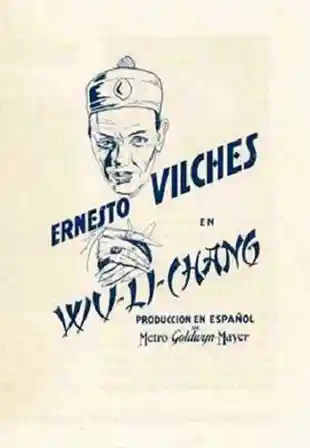
The title Wu Li Chang, what a name, huh? It kinda hangs there. If you’re looking for something that just feels old, something that really takes you back to a specific kind of early cinema, then yeah, this might be worth a look. Especially if you’re into silent film aesthetics or early sound efforts where the stage roots are super obvious. But if you want a tight, modern narrative, or anything that moves at a clip, you’re gonna have a rough time. This one’s for the patient, the curious, and probably the slightly masochistic film historians out there. Everyone else? Probably best to skip it. 😴
The film, from what I can piece together, tries to weave a tale around a Spanish traveler, José Soriano Viosca, who finds himself in, well, Chang. Or a very stylized version of it. It’s all very exoticized, as you’d expect from the era. Think heavy silk robes and sets that look like they were built with exactly one trip to the prop house and a lot of imagination.
Ura Mita, as the titular figure (or a key figure named Wu Li Chang, it’s a bit vague at times), has this incredible screen presence. Her eyes, even in grainy black and white, really do something. There’s a scene where she’s just standing there, absolutely still, and the camera just holds on her. For maybe a good twenty seconds. It’s intense. You keep waiting for her to move, to speak, to do anything, and she just... doesn't. You can feel the weight of whatever she's thinking, or trying not to show.
Then you have José Soriano Viosca, our main guy. He's got this earnest, almost bewildered look through most of the runtime. His character is supposed to be strong, I think, but he often seems more confused than heroic. Like when he’s trying to decipher the "ancient scroll" – the close-up on his face is less "aha!" and more "oh dear." 😂 It’s a very specific kind of acting, you know? Big gestures, but sometimes the emotion doesn't quite land. You find yourself wondering if he even knows what he's supposed to be looking at.
The entire pacing is just different. Scenes stretch out. Dialogue, when it’s there, often feels a bit like it’s being read from cue cards just off camera. Ernesto Vilches, as the antagonist — or at least the guy causing a lot of trouble — chews scenery with gusto. His villainous laugh? It goes on a long time. So long, you almost start to laugh along with him, even though it’s supposed to be menacing. It reminds me a bit of the exaggerated expressions in The Uneasy Three, where everything is just dialed up past eleven.
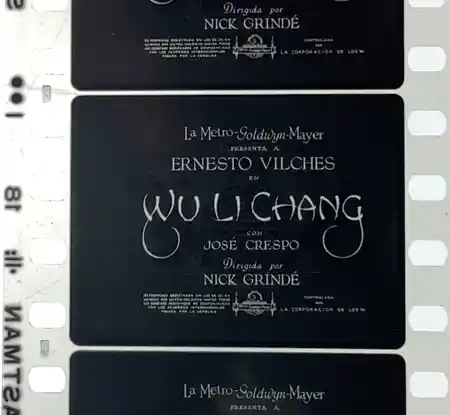
There’s a sequence involving a market street that’s just fascinating. Not for the plot, mind you. But for the sheer number of extras they managed to cram into the frame. And how unaware some of them seem of the actual filming. You catch glimpses of people just sort of… milling about. One guy picks his nose. Another looks directly into the camera and then quickly looks away. It’s these tiny, almost accidental moments that give it a weird authenticity that the main plot sometimes misses. It's a glimpse behind the curtain, almost.
Marcela Nivón, playing the "damsel in distress" role, has this one scene where she’s tied up, but her hair is perfectly coiffed. It’s such a small detail, but it just sticks with you. Like, who did her hair right before she got captured? It's a silly observation, I know, but it breaks the illusion just a little bit.
The plot itself is… well, it's there. Something about a stolen artifact, a love triangle, and cultural misunderstandings. Martin Garralaga pops up in a few scenes as a kind of wise elder, but his advice is delivered with such gravity that it feels almost unintentionally funny sometimes. Like he’s sharing the secret to the universe, but really he’s just telling Soriano Viosca to "be patient." 🤔 And then he just vanishes for a good chunk of the film.
What really struck me was the use of shadow. There are these deep, inky shadows in so many interior scenes. It’s not always clear what’s happening in them. Sometimes it feels like a deliberate artistic choice, other times like maybe the lighting guy just went on break. But it creates this atmosphere, a sort of visual murkiness that kinda sticks with you. It lends a certain mystery, even when the scene is fairly mundane.
The ending. Oh, the ending. It’s abrupt. Really abrupt. Like they just ran out of film, or perhaps budget. There’s no grand resolution, just a sort of… fade to black, leaving you with more questions than answers. It’s not unsatisfying in a modern sense, but it definitely leaves you feeling like you missed a page or two of the script. Or maybe they did. You just have to
IMDb 7.5
1921
Community
Log in to comment.