DbcultAccessing Vault...
Cult Review
Senior Film Conservator
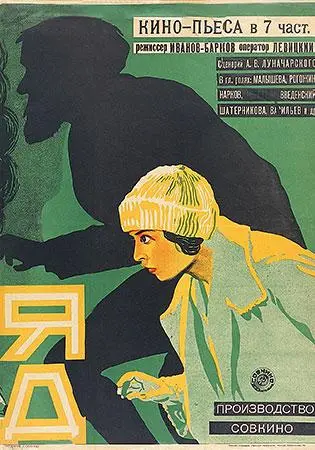
Is Yad worth watching today? Short answer: yes, but with significant caveats that demand a particular viewing mindset. This Russian silent drama, while undeniably a product of its era, offers a fascinating, albeit flawed, glimpse into early cinematic storytelling, making it ideal for cinephiles, film historians, and those with a deep appreciation for the foundational grammar of cinema, but likely a challenging and perhaps unrewarding experience for casual viewers accustomed to modern narrative conventions.
This film works because of its audacious thematic ambition and the raw, unpolished power of its lead performances, particularly Nina Shaternikova's compelling turn. It fails because its narrative can feel disjointed and its pacing, by contemporary standards, is often glacial, demanding immense patience. You should watch it if you are eager to explore the roots of cinematic expression and appreciate the unique artistry of silent-era melodrama.
At its core, Yad plunges us into a world where societal pressures clash violently with personal desires. We follow Nina, a young woman caught between two strikingly different men: the earnest, reliable Nikolai, and the enigmatic, dangerously alluring Mikhail. This classic love triangle, however, is merely the surface of a deeper, more insidious conflict.
As the film unfolds, it becomes clear that Mikhail's past is shrouded in mystery, hinting at connections to clandestine activities or perhaps a desperate scientific endeavor. These hidden truths, the metaphorical 'poison' of the title, begin to seep into every aspect of Nina's life, threatening not just her romantic future but the very moral fabric of her community. The film masterfully builds a sense of impending doom, where every choice carries a heavy, often tragic, consequence.
The narrative, though sometimes meandering, ultimately delivers a powerful message about ambition, deception, and the corrosive power of secrets. It’s a classic melodrama, certainly, but one infused with a distinct Russian sensibility that elevates it beyond mere histrionics, pushing it towards a more profound social commentary akin to the gravitas found in Prestuplenie i nakazanie, albeit in a different stylistic register.
The unnamed director of Yad demonstrates a surprisingly sophisticated understanding of visual storytelling, especially for an early silent film. The use of deep focus in scenes depicting the opulent drawing-rooms of the elite is particularly striking. These shots don't just frame the characters; they immerse them in a suffocating environment, visually mirroring Nina's emotional plight and the societal traps closing in around her.
Pacing, a frequent challenge for modern viewers of silent cinema, is handled with a deliberate hand. While the initial exposition might feel protracted, the film’s measured rhythm allows for an almost suffocating build-up of tension. This slow burn culminates in a series of rapid-fire intercuts during the final confrontation, a sequence that showcases a surprisingly modern editing sensibility, reminiscent of the dynamic shifts seen in some American thrillers of the same era, like His Majesty, the American.
The director also employs stark contrasts in setting and lighting to underscore thematic elements. The gritty realism of the working-class districts, often bathed in a muted, natural light, stands in sharp relief against the theatrical, almost artificial glow of the aristocratic salons. This visual dichotomy isn’t just aesthetic; it’s a powerful, unspoken commentary on the class divisions that fuel the film’s central conflict. It’s a demanding watch, yes, but one that rewards patience with a profound understanding of cinema’s foundational power.
In silent cinema, acting is an art of exaggeration and precision, and the cast of Yad largely rises to the challenge. Nina Shaternikova, as the conflicted protagonist, delivers a performance that oscillates between fragile innocence and steely resolve. Her facial expressions, particularly her wide, searching eyes, convey a depth of emotion that transcends the limitations of the medium. There’s a particular scene where she receives a devastating letter, and her subtle shift from hopeful anticipation to crushing despair is rendered with heartbreaking clarity, without a single intertitle needed to explain her agony.
Mikhail Narokov's portrayal of the charismatic antagonist is a masterclass in silent villainy. He avoids cartoonish evil, instead imbuing Mikhail with a dangerous charm that makes his eventual betrayal all the more impactful. His subtle shifts from charming suitor to menacing manipulator are conveyed through a single, darting glance or the tightening of a jawline. It’s a performance that might have felt at home in a more overtly dramatic piece like The She Wolf, but here, it serves a quieter, more insidious purpose.
Nikolai Tsereteli, as the steadfast Nikolai, provides a grounded counterpoint to the more flamboyant performances. His earnestness and quiet strength anchor the emotional turmoil, making his eventual heartbreak genuinely poignant. The ensemble, including supporting turns from Aleksandr Gromov and Olga Malysheva, consistently maintains the film's melodramatic tone, ensuring that even the smallest gesture contributes to the overall narrative.
The visual language of Yad is one of its most compelling aspects. The stark chiaroscuro lighting, a hallmark of early Russian cinema, is deployed with remarkable effect. Particularly in the film's climactic sequence, set in a rain-swept alleyway, each shadow deepens the sense of impending doom, elevating the melodrama into something approaching expressionistic horror. The contrast between light and shadow isn't merely stylistic; it's a narrative tool, hinting at hidden dangers and moral ambiguities.
Set design and costumes, while perhaps not as lavish as some contemporary Hollywood productions, are meticulously crafted to convey character and status. Nina’s simple, unadorned dresses speak to her purity and vulnerability, contrasting sharply with the more elaborate, almost suffocating attire of the upper-class characters. This attention to detail extends to the film's use of intertitles, which are not merely text but often integrate visually with the preceding or following shots, creating a more cohesive viewing experience.
One unconventional observation: the true star, however, might be the film's audacious use of negative space. Empty frames, especially after a dramatic revelation, are turned into pregnant pauses of emotional turmoil. This deliberate emptiness forces the viewer to linger, to feel the weight of what has just transpired, making the unseen as powerful as the seen. It is a time capsule, certainly, but one crafted with an artist's eye.
Yad is more than just a tragic love story; it's a biting piece of social commentary. The film doesn't shy away from depicting the moral decay of the aristocratic class, presenting their decadence and hypocrisy as the true 'poison' infecting society. This critique is subtle in places, overt in others, with scenes of lavish parties contrasted sharply with glimpses into the struggles of the common people. It’s a bold stance for a film of its time, reflecting a growing societal unease.
The film also delves into the destructive nature of ambition and deceit. Mikhail's machinations, driven by a desire for power or wealth, ultimately lead to ruin, not just for himself but for those around him. This exploration of cause and effect, where moral compromises inevitably lead to devastating consequences, gives the film a timeless resonance. It’s a narrative that, despite its period trappings, speaks to universal truths about human nature.
Frankly, many modern viewers will find its narrative structure baffling, accustomed as we are to tighter, more explicit plot development. Yet, for those willing to engage with its nuances, Yad offers a rich tapestry of social critique and emotional depth. It works. But it’s flawed. The tension is palpable, even if the journey to get there requires a certain dedication.
This film is a must-see for serious students of cinema history, particularly those interested in early Russian filmmaking. It offers valuable insights into the evolution of cinematic language and narrative conventions before the advent of sound. It also appeals to viewers who appreciate the raw, unpolished charm of silent-era melodrama and character-driven drama. If you are looking to delve into the roots of film as an art form, Yad provides a compelling, if challenging, experience.
Casual filmgoers seeking fast-paced plots, clear-cut resolutions, or modern special effects will likely find Yad a struggle. Its deliberate pacing, reliance on visual storytelling without dialogue, and occasionally melodramatic acting styles can be off-putting for those unfamiliar with silent cinema. If you prefer contemporary blockbusters or easily digestible narratives, this film is probably not for you. It demands patience and a willingness to meet the film on its own terms.
Yad is not an easy film. It is a product of its time, with all the strengths and weaknesses that implies for a modern audience. Yet, to dismiss it would be to overlook a vital piece of cinematic history, a film that, despite its flaws, speaks volumes about the burgeoning art form of silent cinema and the social anxieties of its era. Its performances are often captivating, its visual style surprisingly sophisticated, and its thematic ambition admirable.
For those willing to invest the time and embrace the unique rhythm of early filmmaking, Yad offers a profoundly rewarding experience. It’s a testament to the power of pure visual storytelling and a compelling argument for revisiting the foundational works that shaped the medium we know today. It might not be a 'masterpiece' in the conventional sense, but it is undeniably a significant and thought-provoking cinematic artifact that deserves our attention.
IMDb 5.5
1920
Community
Log in to comment.