DbcultAccessing Vault...
5.2/10
Senior Film Conservator
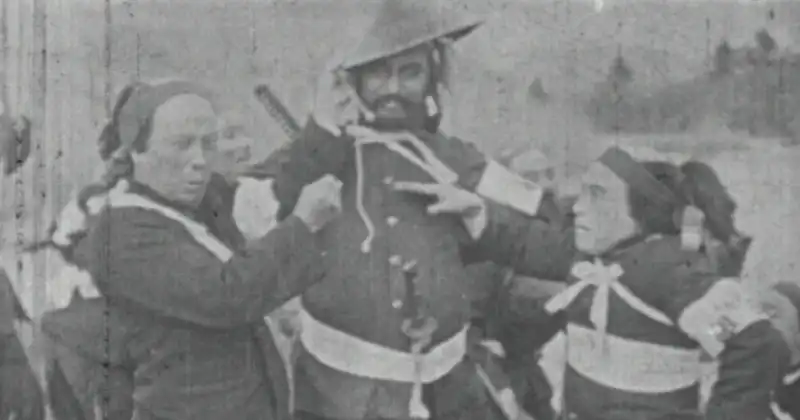
A definitive 5.2/10 rating for a film that redefined the boundaries of cult cinema. Yajikita Fushimi Toba no maki remains a cornerstone of transgressive art.
Alright, let's talk about Yajikita Fushimi Toba no maki. This one isn't for everyone, I'll be straight with you. If you’re looking for a fast-paced, modern narrative, you'll probably want to give it a miss. But for the film history buffs, or anyone with a deep appreciation for the **unique rhythm of early Japanese cinema**, this could be a really interesting watch. You definitely need to be in the right headspace; patience is key here. 😌
The whole thing feels like a journey, almost literally. You've got these two main characters, presumably the 'Yaji' and 'Kita' from the title, wandering through the Edo period. A lot of the movie is just… them walking, or interacting in small, often very quiet ways. It’s less about a huge plot twist and more about the small moments. The scenery, even in black and white, has this kind of stark beauty to it. You really feel the dust on the road.
One thing that really sticks with you is the acting style. It’s so different from today. Sometimes, a reaction feels *huge*, almost theatrical, like it's meant to be seen from the back row of a very large theater. Then, other times, there's a subtlety that you almost miss, just a flicker in Denjirō Ōkōchi's eyes that tells you everything. He's got such a presence, even in these older films. You can see why he was a big deal.
There's a scene, I can't even tell you exactly where it fits in the 'plot,' but it's just one of the travelers trying to negotiate for food at a roadside stall. The back-and-forth, the way the stall owner haggles, it goes on for a surprisingly long time. You almost feel the *actual* awkwardness of the moment. It’s not just exposition; it’s a slice of life, **unhurried and a little bit clunky**, but real.
The camera work, it's often fixed, just watching things unfold. When it does move, it’s often a slow pan, deliberate, almost like the camera itself is a character, taking its time to observe. You get a lot of wide shots. It gives you a real sense of place, of the *world* these characters inhabit. Like, you see the whole street, the people moving, the small details of the buildings.
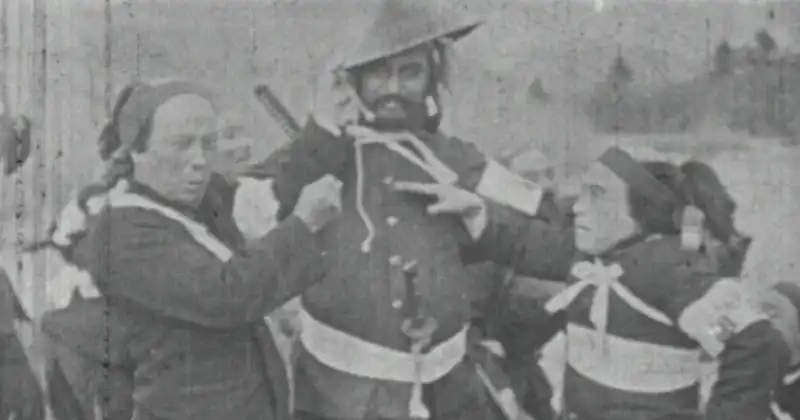
And the humor? Oh, it’s there, but it’s a different kind of humor. It’s often slapstick, but it's *gentle* slapstick. One character slips on a banana peel (or maybe an old persimmon skin, it's hard to tell), and it’s not this big, cartoonish fall. It’s more of a surprised stumble, followed by a sheepish grin. The crowd scenes have this slightly staged feel, like everyone knows where they should be standing, but then a kid in the background will fidget, and it feels **so much more authentic** because of that one small thing.
There's this moment where one of the main guys, I think it's Shōzō Nanbu, tries to tell a dramatic story, and the other just keeps interrupting him with mundane questions. It completely undercuts the tension, and it’s actually pretty funny. It’s not a laugh-out-loud moment, but it’s a definite chuckle. It reminds me of those old traveling shows where the performers would banter with each other. Sometimes the dialogue feels a little bit… *much*, almost like they’re shouting across a river, even when they’re standing right next to each other. 🗣️
I found myself getting really absorbed in the small details, like the way the kimonos are tied, or the specific kind of teacup someone uses. These little things, they transport you. It’s not about special effects, obviously. It’s about creating a world through careful, if sometimes a bit static, observation.
The pacing is something else. It moves at its own speed, not beholden to modern expectations. You might find yourself checking your watch, but then something will happen – a beautifully framed shot of a mountain path, or an unexpectedly heartfelt exchange – and you’re pulled right back in. It’s not a film that tries to force you to care; it just *is*.
Honestly, I think the movie gets noticeably better once you just let go of what you *expect* a movie to be. Once you stop looking for a 'plot' in the traditional sense and just embrace it as a kind of historical travelogue with character vignettes. It’s a very humble film, but it has this quiet dignity.
Is it a masterpiece? Probably not in the way we use that word today. But it’s a **fascinating artifact**, a window into a time and a filmmaking style that feels worlds away. You finish it feeling like you've actually taken a small journey yourself. A bit tired, maybe, but also strangely satisfied. 🚶♂️
IMDb 5.3
1913
Community
Log in to comment.