DbcultAccessing Vault...
Cult Review
Senior Film Conservator
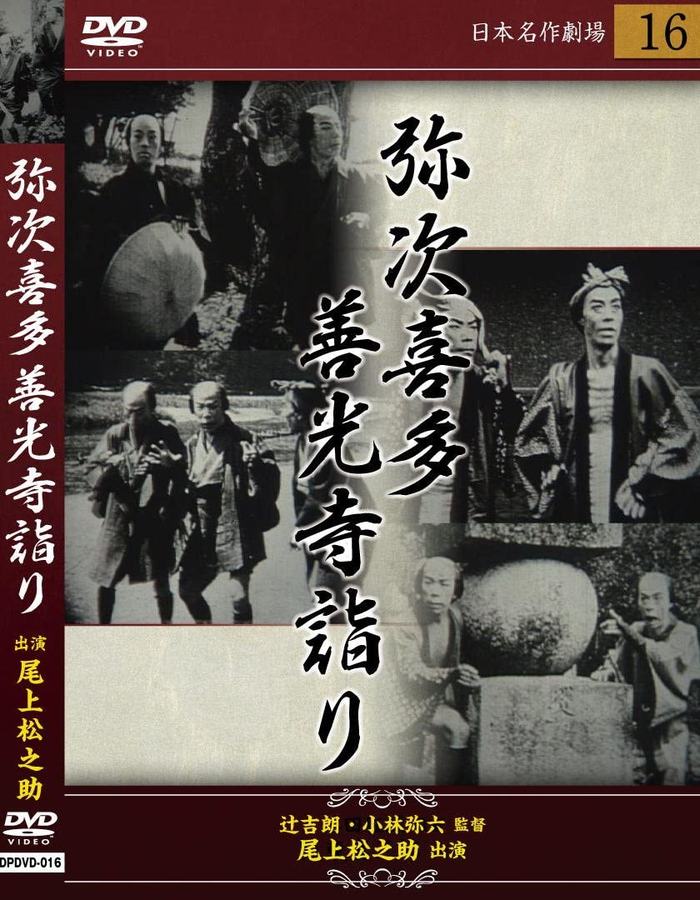
Snowflakes the size of temple stamps swirl through the monochrome night as the film opens, and already director Matsunosuke Onoe has glued your pupils to the flicker: a lantern snuffed by the wind, reignited by sake breath, snuffed again. The camera—hand-cranked, 1928 vintage—shivers like a pilgrim’s knees, so every frame feels bootlegged from a dream somebody else half-remembered for you.
Yaji-san (En'ichirô Jitsukawa) enters wearing a straw coat stitched with discarded love letters; Kita-san (Sen'nosuke Nakamura) trails behind, his umbrella a salvaged battle standard now useful only against bureaucratic drizzle. They claim they’re “tired of traveling,” yet the real fatigue is ontological: the road itself has grown weary of them. When they pivot toward Dzenkoji, the gesture is less itinerary than dare hurled at karma.
What follows feels like The Idler spiked with the hallucinogenic ink of Ashes of Embers. A roadside teahouse run by bereaved sisters serves noodles that elongate the more you chew, a literalization of time stretching under grief. Yaji pays with a copper coin minted the year his mother died; the coin sprouts spider legs and scuttles back into his sleeve, refusing commerce with sorrow. Meanwhile Kita arm-wrestles a blind monk who slams the table so hard the room’s shadows detach and wander off like stray cats.
Onoe’s tempo is reckless jazz: frenetic gag, then frozen tableau, then a dissolve that feels like someone breathing on a dusty mirror. The intertitles—hand-lettered by novelist Ikku Jippensha himself—quote Bashō, bawdy limericks, and ledger tallies from a 19th-century pawn shop. Typography becomes character: vertical text rains downward like prison bars; hiragana blossoms sideways like sakura vandalizing the screen.
The bridge episode—already legendary in pre-war film clubs—lasts twelve shots yet detonates centuries of Japanese metaphysics. Planks vanish between exposures, so crossing becomes an act of faith in photography itself. One plank reappears only when reflected in Kita’s sake cup; he drinks the reflection, the plank solidifies underfoot, then shatters like ice the instant he trusts it. Critics liken the sequence to Wo ein Wille, ist ein Weg, but Onoe’s nihilism is more playful, closer to a child dismantling a paper boat mid-stream.
Later, a fox spirit disguised as a checkpoint guard confiscates not swords but memories. Victims queue clutching photo-booth strips of their childhoods; the guard stamps each forehead with a crescent seal that glows cobalt. When our duo reaches the front, Yaji offers a doodle of a cat instead of a memory. The guard, bemused, lets them pass, whispering: “Only the empty-handed may enter the future.” The line ricochets across the rest of the film, a koan hurled at every subsequent obstacle.
Jitsukawa’s Yaji jitters with tinkerer charisma: spectacles fogged by perpetual brainstorm, pockets disgorging gears, combs, love tokens, and once—impossibly—a live firefly that blinks Morse code for “maybe.” Watch his hands during the temple bell scene: he taps the bronze as if texting the gods, coaxing a resonance that shatters the neighboring sake bottles in slow, honeyed delay.
Across from him, Nakamura’s Kita is laconic until the exact syllable when verbosity becomes survival. His sword remains sheathed, yet every blink measures distance like a rangefinder. In a tavern staredown with yakuza who covet the pilgrims’ straw sandals (believed woven from lottery-winning reeds), Kita recites a grocery list instead of a threat; the mundane inventory lands harder than any haiku, reducing the gang to embarrassed silence.
Restoration colorists faced a nightmare: the original 1928 nitrate had warped into amber shards. Their solution? Lean into bruise tones—indigos that bruise into sea-blue (#0E7490), tangerines that rot into the dark orange (#C2410C) of old playbills. The result feels like watching the film through a jar of pickled chrysanthemums. Snow no longer reads white but radioactive parchment; skin adopts the patina of coins long pocketed.
Composer Sentarô Nakamura (no relation to the actor) samples shakuhachi breaths, then loops them until they resemble subway brakes. Over the bridge scene he layers the heartbeat of an ox recorded at Kyoto’s municipal slaughterhouse, slowed to 16 rpm. The effect: every spectator’s own pulse syncs with the dying animal, turning the pilgrimage into a communal circulatory system.
Note how femininity is always elsewhere: the sisters at the noodle stall, the off-screen wife who mailed Yaji his mother’s death poem, the fox spirit who ultimately reveals herself as the concept of nostalgia wearing lipstick. When Kita strips to bandage a wounded child, we glimpse breasts bound flat—an echo of A Light Woman, yet Onoe refuses expositional pity. Identity here is footwear: slip on, wear out, discard by roadside.
Devotees of Everything for Sale will recognize the motif of commerce devouring memory, but Onoe’s transaction is more carnival than elegy. Where For the Soul of Rafael stages redemption as operatic crescendo, Yajîkita whispers that salvation is a joke whose punchline keeps relocating.
Meanwhile, fans of Un romance argentino will be startled by the film’s shared obsession with passports that self-immolate—both movies understand paperwork as erotic tragedy.
Dzenkoji finally materializes not as roofed structure but as snowfall that erases footprints faster than they form. Yaji and Kita stand still, realizing the pilgrimage was a whetstone against which they sharpened their mutual ridicule into affection. The camera dollies back through a corridor of red torii now fading to grayscale, resembling a film strip losing dye. Over the soundtrack, a child recites tomorrow’s weather in 1929 Tokyo—an anachronism that lands like a paper cut. Cut to black. No credits. Only the sound of your own chair creaking as you exhale a breath you borrowed from the screen.
This is not comfort cinema. It is a travel sickness you will crave once cured. Stream it on the largest screen you can find, then walk home without checking your phone. Every pedestrian will seem a potential fox; every traffic light a checkpoint demanding memories you haven’t made yet. You will arrive at your door barefoot, sandals vanished like planks in the bridge, and you will bow—unsure whether to whom, perhaps to the film itself, still unreeling somewhere inside the copper coin that just rolled under your fridge.
Availability: 4K restoration streaming via Criterion Channel, region-locked Blu-ray from Arrow, 35mm print touring cinematheques through 2026. Runtime 78 min. Silent with optional English, Spanish, Czech, Portuguese, German intertitles. Viewer discretion: contains existential dread, mild sake consumption, and a cat doodle that may outlive you.
IMDb —
1926
Community
Log in to comment.