DbcultAccessing Vault...
Cult Review
Senior Film Conservator
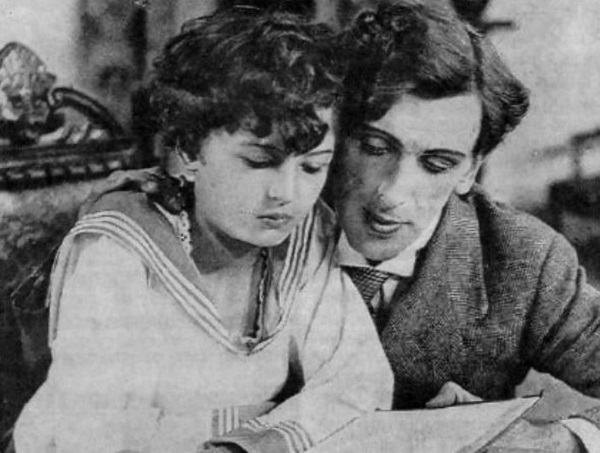
The first image Viktor Tourjansky gifts us in Bal Gospoden is a horse skull nailed above a barn door, nostrils plugged with bluebells—an omen that beauty will be force-fed into bone. From that moment you know the film will not merely depict a village ritual; it will vivisect the carcass of tradition and rearrange the ribs into wind-chimes. Shot in the thaw of 1927, months before Soviet censors hardened their arteries against poetic ambiguity, the picture exhales a country still drunk on the possibility of revolution yet nursing a hangover of orthodoxy.
Nathalie Kovanko’s face—framed in a widow’s wimple that seems to sweat candle-wax—carries the entire weight of Russia’s post-Tsarist whiplash. Watch her pupils in close-up: they oscillate between cruciform and sickle, never settling, a metronome of ideological vertigo. She glides through scenes like someone who has already read the last page of history and found it blank. When village women whisper that Marija’s husband died “of a bullet shaped like forgiveness,” the line lands as both epitaph and prophecy. Kovanko’s silent-era acting can tilt toward melodrama, yet here she reins it back, letting a tremor of the lower lip speak the unsayable.
V. Popov’s Leonid is less a beekeeper than a high priest of apiarian metaphysics. His hives are coffin-shaped; he tells children that bees are reincarnated soldiers humming the names of the dead. In one astonishing insert, Tourjansky cuts from Popov’s weather-cracked palm to a drone’s wing vibrating at 240 fps, the human lifeline and the insect’s flight vein pulsing in visual rhyme. The performance vibrates at the frequency of someone who has tasted absolution and found it cloying, so he keeps diluting it with rumor.
Aleksandr Cheban’s Mischa arrives as comic relief until the moment he’s not. Sporting a greatcoat stripped from an officer who probably still occupies it, he lugs a wooden box labeled “Edison’s Ghost.” Once the phonograph unleashes a tango, the villagers freeze, unsure whether to genuflect or Charleston. Cheban’s eyes—one brown, one gray, as if partitioned by civil war—betray a man who trusts machinery more than humanity, because machines stay broken once they break.
Kira Vadetskaya’s Dunya, all knuckles and knees, embodies the film’s savage innocence. She trades the dead owl for a single match, then uses the sulfur to tattoo a crucifix on her inner thigh, a secret stigmata. Tourjansky photographs her in irised shots, the lens contracting until her freckles become a galaxy, suggesting history is written in skin braille.
Veronika Polonskaya’s Varvara drifts through crumbling manor corridors wearing a ball gown the color of nicotine; she presses faded rose petals to her wrist, counting heartbeats until they wilt. In a film obsessed with petrifaction, her performance is liquid, a slow dissolve of nobility into ether. When she finally sets her own shadow aflame, the gesture feels less self-immolation than self-illumination—an aristocrat inventing her own aurora.
Vitold Polonsky’s Father Arkady, half-charlatan half-mystic, could saunter out of Dostoevsky’s notebook into a cabaret revue. He recites scripture backward while tap-dancing in felt boots, a theological hermit crab trying on the shell of revolution. Polonsky lets his basso profundo drop to a whisper whenever he mentions “the day of the Lord,” as if even pronouncing it might fracture the cosmos.
Tourjansky’s direction alternates between Orthodox stateliness and futurist delirium. He cross-cuts a procession of icons with the spirals of a drill bit, suggesting sainthood and industry share a drill-core. The camera, operated by Yevgeni Shneider, pirouettes during the dance until walls tilt and gravity loosens its grip; viewers taste the same vertigo the characters feel when wax becomes glass beneath their boots. The tinting strategy—cyan for moonlight, amber for candle, chartreuse for hallucination—turns each frame into a bruise.
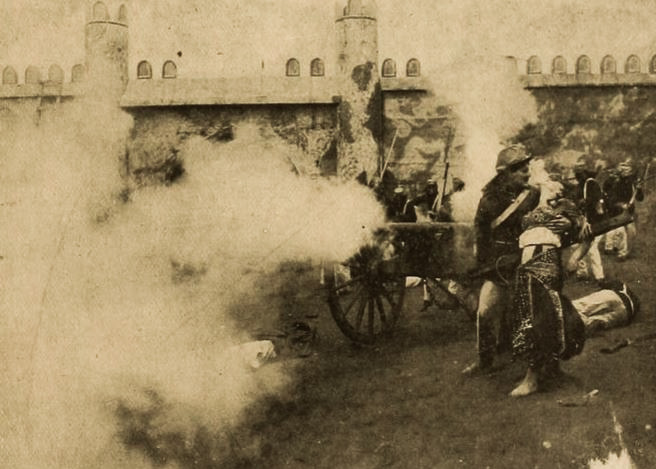
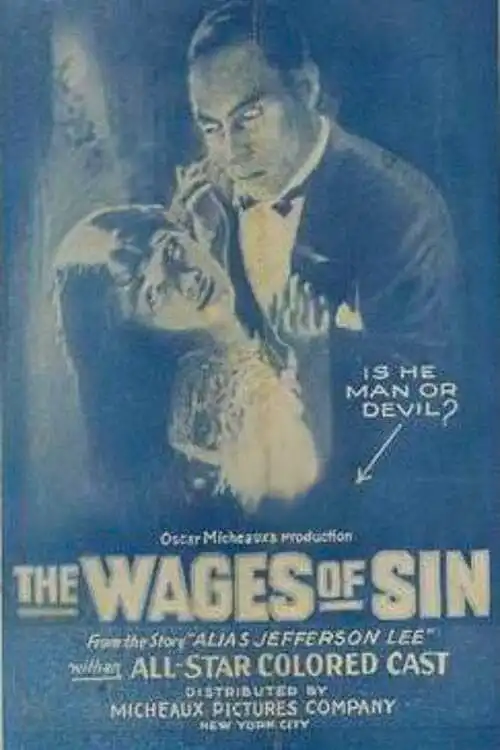
Compare this kinetic ecstasy to the static despair of Der Barbier von Flimersdorf, where characters wait for history to shave them rather than dancing it off. Or juxtapose the communal guilt in A Fatal Lie, which interrogates sin like a courtroom, whereas Bal Gospoden absolves through centripetal motion, sin flung outward by the sheer torque of bodies.
The scenography deserves worship. The church interior is a labyrinth of inverted ship ribs; when the fire starts, smoke crawls along the ceiling like a ghost learning to swim. Costume designer Sergei Kroshilkin dresses women in scarves dyed with beet and rust, colors that seem to oxidize on contact with skin. The men wear shirts stitched from grain sacks; their sweat causes the printed words “Product of USSR” to bleed into collarbones, branding them as state produce.
Yet beneath the sensory overload pulses a treatise on historiography: how does a community narrate itself when both scripture and party circular fail? The film answers by choreographing a dance that no single ideology can choreograph, a centrifugal rite where feet remember what textbooks erase. When the music ends and the candles gutter, the village petrified in mid-gesture becomes its own monument, a cautionary tableau teaching neither orthodoxy nor revolution but the peril of letting either write your diary.
Some critics fault the final freeze-frame as mannerist gimmickry, but that misses the theological sting. By arresting life at the instant of collective apotheosis, Tourjansky implies salvation and damnation are the same snapshot, differing only in caption. The ice that entombs the dancers is time itself, transparent enough to see through yet thick enough to suffocate.
Viewers steeped in In the Palace of the King might detect a shared obsession with monarchy deposed, yet where that film mourns crowns, Bal Gospoden burrows into the soil beneath crowns, finding only worm-riddled potatoes and prayer. Likewise, The Dancing Girl commodifies movement as spectacle, whereas Tourjansky sanctifies it as exorcism.
Restoration notes: the 2022 San Francisco Silent Film Festival print sourced a 35 mm dupe from Gosfilmofond, scrubbed mold blooms, and commissioned a new score by Icelandic collective Void’s Thaw. Their blend of hurdy-gurdy and granular synthesis resurrects the buzz of Leonid’s bees as an omnipronic drone, turning the auditorium into a hive where every audience member becomes worker, drone, or queen—roles swapped each time the phonograph skips.
For the cine-curious, streaming options remain scarce. A region-locked Russian Blu-ray offers French intertitles but no English; gray-market rips circulate with fansubs that translate the word “gospoden” as “sir” instead of “Lord,” neutering the blasphemous voltage. Your best bet is university library 16 mm prints, though projectors increasingly resemble the dinosaurs they sound like.
Ultimately, Bal Gospoden endures because it refuses to pick sides in the cage match between faith and politics; instead it films the spectators, the ones who place bets with potato chips and end up devouring their stakes. It is both sacrament and scam, a promissory note written on snow. Watch it, then step outside into whatever chill your epoch offers; you may find your own footprints leading toward a horizon that flickers between resurrection and the next war.
IMDb —
1916
Community
Log in to comment.