DbcultAccessing Vault...
5.8/10
Senior Film Conservator
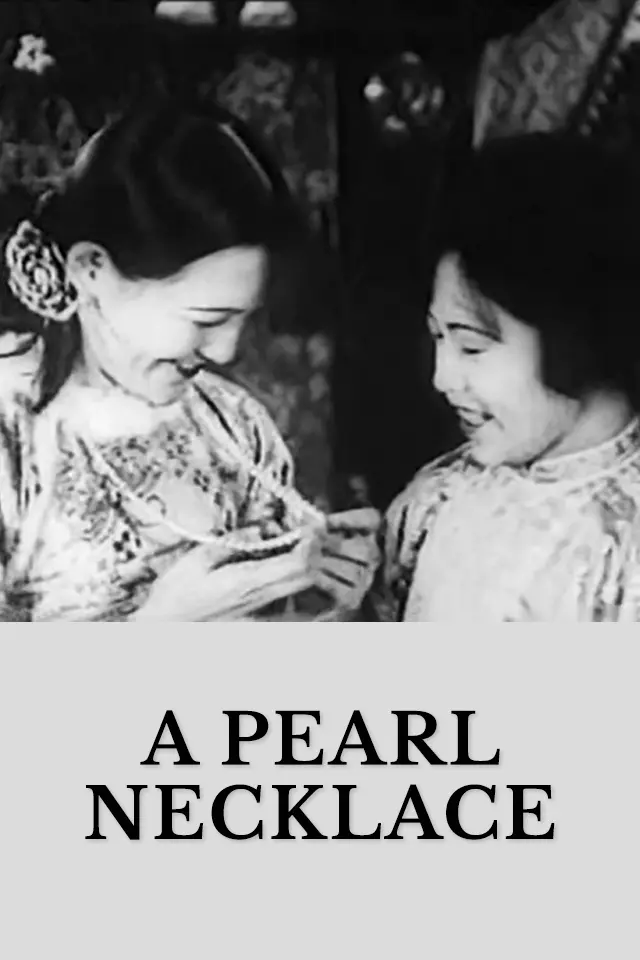
A definitive 5.8/10 rating for a film that redefined the boundaries of cult cinema. Yichuan zhenzhu remains a cornerstone of transgressive art.
Does Yichuan zhenzhu hold up as a piece of narrative art a century after its release? Short answer: yes, but it requires a viewer comfortable with the heavy-handed moralism and specific pacing of the silent era.
This film is for historians of Asian cinema and those who enjoy the heightened emotionality of early 20th-century melodrama. It is not for viewers who demand modern pacing or the cynical, unresolved endings typical of contemporary noir.
1) This film works because: it masterfully adapts a Western literary classic into a culturally specific Shanghai context, adding layers of criminal intrigue that heighten the stakes.
2) This film fails because: the final act relies on a series of coincidences so improbable they threaten to break the emotional immersion of the audience.
3) You should watch it if: you want to see how early Chinese filmmakers used the 'shadowplay' tradition to explore the anxieties of the emerging middle class.
Most audiences familiar with 'The Necklace' expect a gut-punch ending where the lost jewelry is revealed to be a worthless fake. Hou Yao, however, takes a different path. He chooses a narrative of redemption over one of sheer irony.
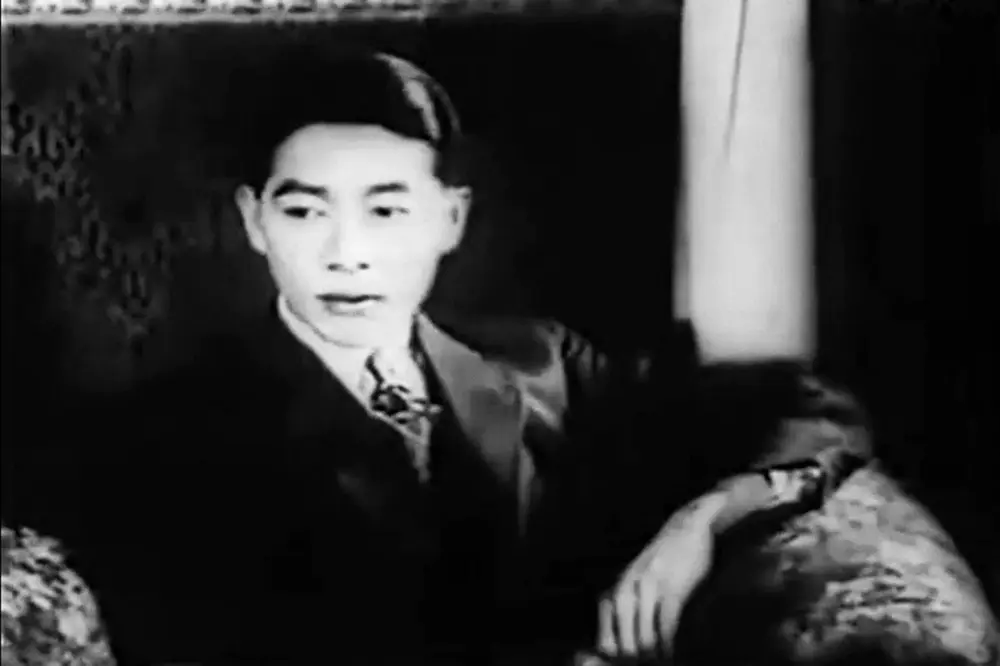
In the film, the necklace is real, but its theft was a calculated move by a suitor—now the husband’s supervisor—to win a woman’s heart. This change shifts the film from a critique of class vanity to a study of the interconnectedness of human lives.
It is a bold choice. It turns the husband’s suffering from a tragic mistake into a sacrificial act of integrity. The moment he decides to steal from his employer to cover the loss is played with a frantic, sweating intensity that rivals the tension found in You're Pinched.
The cinematography in Yichuan zhenzhu is surprisingly sophisticated for 1926. The party scene, where the wife first debuts the pearls, is shot with a sense of depth that emphasizes her isolation despite being surrounded by people.
Hou Yao uses shadows not just for lighting, but as moral indicators. The burglary scene is a standout. The way the intruder is framed—a dark silhouette against the domestic comfort of the couple's home—feels like a precursor to the noir elements seen in La banda del automóvil o la dama enlutada.
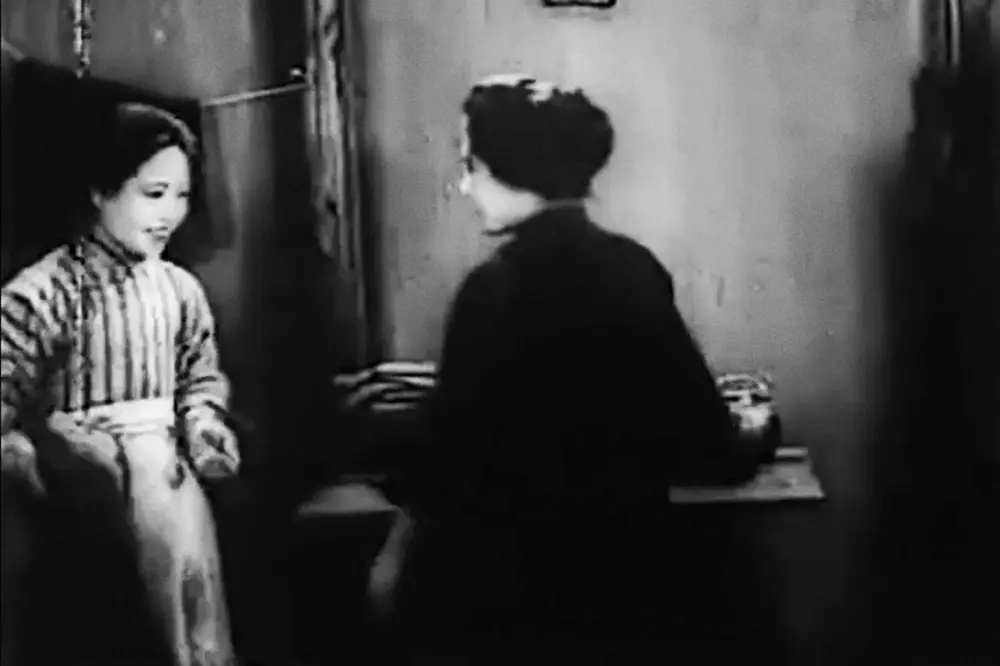
The contrast between the glittering ballroom and the damp, cramped quarters of their later poverty is striking. The set design tells the story of their decline more effectively than any title card could. It is visceral. It is uncomfortable.
Xiadian Lei delivers a performance that evolves from flighty social climber to a woman hardened by labor. Her physical transformation is the film's emotional anchor. When she reproaches herself for her vanity, it doesn't feel like a scripted lecture; it feels like genuine exhaustion.
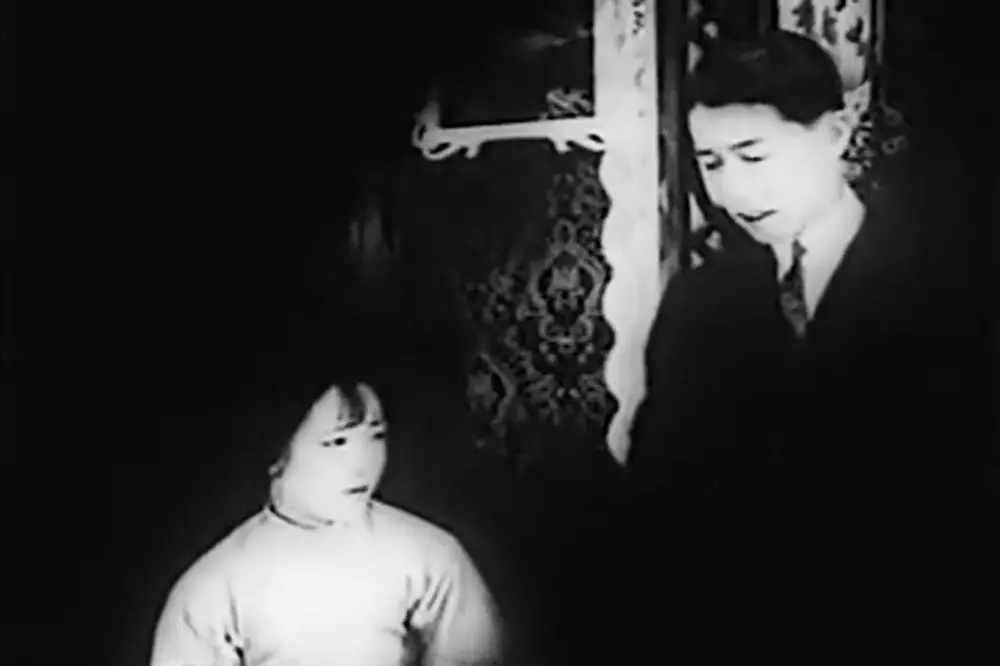
Hangou Liu, as the husband, carries the film’s moral weight. His descent into crime is portrayed with a desperate vulnerability. He isn't a criminal by nature; he is a man crushed by the social expectations of his time.
Compare his performance to the stoic leads in The Man from Glengarry. While the latter focuses on rugged survival, Liu focuses on the internal erosion of a man’s pride. It’s a nuanced, quiet performance that holds the screen.
Is Yichuan zhenzhu worth watching in the 21st century?
Yes, it is essential viewing for anyone interested in the roots of global cinema. While the moralizing can feel dated, the craft behind the camera is undeniable. It offers a window into the social anxieties of 1920s Shanghai that history books cannot replicate.
The film manages to be both a cautionary tale and a thriller. The blackmail subplot involving the supervisor adds a layer of genre fiction that keeps the middle act from dragging. It moves with a purpose that many of its contemporaries, like Solid Ivory, lack.
Pros:
Cons:
The film isn't just about a necklace; it's about the fear of being 'less than.' In the 1920s, Shanghai was a city of extreme wealth and extreme poverty. This film captures that divide perfectly.
The necklace represents the 'face' that the couple feels they must maintain. When they lose the necklace, they lose their place in the world. This is a recurring theme in early Chinese cinema, often explored in films like Charity.
The husband’s act of saving his supervisor from a blackmailer is a pivotal moment. It suggests that while money can be stolen, character is something that must be proven through action. It is a very Confucian approach to a French story.
"The pearls were a burden of vanity; the labor was the price of a soul."
Yichuan zhenzhu is a fascinating anomaly. It takes a cynical Western story and injects it with a sense of karmic justice that feels uniquely Eastern. It works. But it’s flawed.
The film’s greatest strength is its refusal to let its characters remain victims of their own vanity. By giving them a path to redemption, Hou Yao creates a more satisfying, if less realistic, experience than Maupassant did. It’s a beautifully shot, well-acted piece of history that deserves more than just a footnote in film textbooks.
If you can look past the 1920s melodrama, you will find a story that is surprisingly human. Vanity is a hell of a drug, and Yichuan zhenzhu shows us the long, painful detox that follows.
IMDb 7.1
1922
Community
Log in to comment.