DbcultAccessing Vault...
6.7/10
Senior Film Conservator
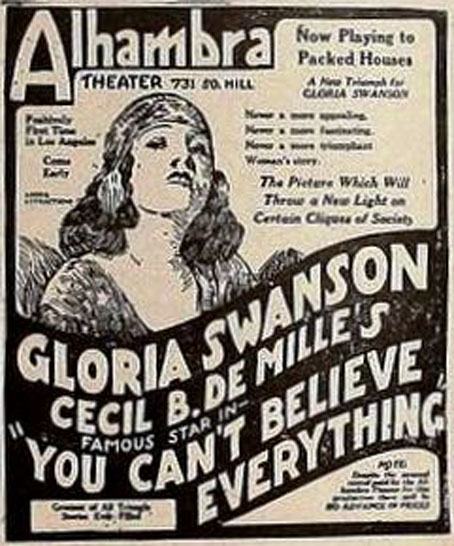
A definitive 6.7/10 rating for a film that redefined the boundaries of cult cinema. You Can't Believe Everything remains a cornerstone of transgressive art.
Ah, the silent era! A time when stories unfolded not through dialogue, but through the eloquent dance of gesture, the intensity of expression, and the sheer force of narrative momentum. In this fascinating cinematic crucible, 1918's You Can't Believe Everything emerges as a particularly potent melodrama, a vivid tapestry woven with threads of societal judgment, personal sacrifice, and the often-perilous path to redemption. Penned by Norman Sherbrook, this film plunges us into a world where reputation is everything, and a single misstep, or even the perception of one, can unravel a life.
The film, a captivating relic from a bygone era, asks us to suspend our modern sensibilities and immerse ourselves in a narrative where a woman's honor is perpetually under scrutiny, and the truth is a malleable construct, easily twisted by jealousy and rumor. It's a testament to the enduring power of silent cinema that such intricate emotional landscapes could be so vividly rendered without a single spoken word. The visual storytelling, the carefully choreographed performances, and the dramatic pacing coalesce to create an experience that, even a century later, still grips the viewer with its earnest portrayal of human frailty and resilience.
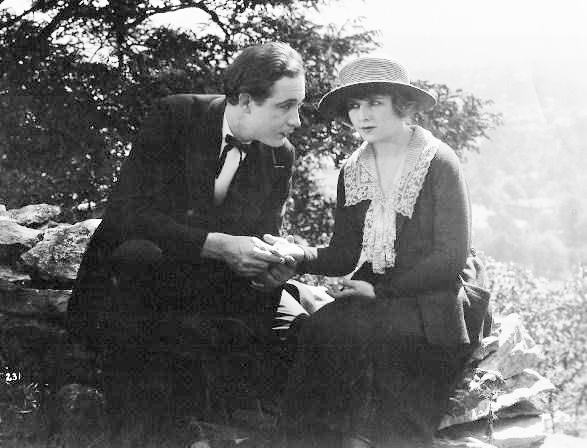
At its core, You Can't Believe Everything is a searing examination of the precariousness of a woman's social standing in early 20th-century society. We are introduced to Patricia Reynolds, portrayed with a compelling blend of vulnerability and strength by Gloria Swanson, who is enjoying a summer retreat with her friend, Amy Powellson (Iris Ashton). Patricia, with her inherent charm, inadvertently captures the attention of Arthur Kirby (Grover Franke), a man Amy secretly adores. This romantic triangulation immediately sets the stage for a simmering rivalry, a classic melodramatic trope that rarely ends well for the innocent party.
The initial catalyst for Patricia's woes is a seemingly innocuous evening drive with Arthur. His subsequent attempt to kiss her—an unwelcome advance—prompts her to leap from the car and walk home, a defiant act of self-preservation that, ironically, becomes the very seed of her undoing. This single event, devoid of any genuine transgression on Patricia's part, is then expertly manipulated by the scheming Amy. While Patricia is making her solitary, principled journey home, Amy, cunningly disguised in Patricia's attire, seizes the opportunity to accompany Arthur to a roadhouse. This act of impersonation, a clever device of mistaken identity, is crucial to the film's unfolding drama, reminiscent of the narrative twists found in films like A Pair of Silk Stockings, where apparel plays a significant role in comedic or dramatic misunderstandings.
The plot thickens with a genuinely dramatic turn. As Patricia walks near the beach, she witnesses her invalid friend, Jim Wheeler (Darrell Foss), plunge into the ocean in a desperate attempt to end his life. Her heroic intervention saves him, and she persuades him to seek specialized medical help. This act of profound compassion, however, becomes entangled with Amy's malicious machinations. When Patricia is later accused of spending the night with Arthur—a scandalous charge exacerbated by Amy's impersonation—she faces a terrible dilemma. To defend herself would mean revealing Jim's suicide attempt, a secret she believes would jeopardize his fragile recovery and public image. In a remarkable display of self-sacrifice, Patricia chooses to endure the ignominy, refusing to defend her reputation to protect her friend. This noble, yet agonizing, decision throws her into a social maelstrom, where rumor and innuendo quickly become accepted truth. The weight of this choice is palpable, a central pillar of the film's emotional resonance.
The characters in You Can't Believe Everything are archetypal figures of early melodrama, yet they are imbued with enough depth to make their struggles compelling. Patricia Reynolds, as embodied by Gloria Swanson, is the quintessential wronged heroine, pure of heart but caught in a web of circumstance and calumny. Her stoic suffering, her refusal to betray a confidence even at the cost of her own good name, defines her character. Swanson, even in these nascent stages of her career, demonstrates the magnetic screen presence that would later define her. Her large, expressive eyes and graceful movements convey a world of unspoken emotion, making her plight deeply sympathetic.
Amy Powellson, on the other hand, is the envious antagonist, driven by a potent mix of unrequited love and petty jealousy. Iris Ashton plays her with a subtle venom, making her actions believable within the melodramatic framework. Her deception is not merely a plot device; it serves as a stark contrast to Patricia's integrity, highlighting the film's thematic exploration of truth versus appearance. Arthur Kirby, the object of both women's affections, is a somewhat weak-willed character, easily swayed and ultimately responsible for the initial misunderstanding. Grover Franke portrays him as charming but ultimately superficial, a man whose casual indiscretion sets off a chain reaction of dramatic events.
Jim Wheeler, the invalid friend, is Patricia's moral compass and, eventually, her savior. Darrell Foss conveys Jim's initial despair and his gradual return to health with earnestness. His character arc—from suicidal despair to resolute protector—is pivotal to the film's resolution. The film's narrative relies heavily on his transformation, providing a much-needed sense of justice and hope amidst the pervasive gloom. His return, cured and determined, is a classic dramatic payoff, ensuring that virtue is ultimately rewarded.
Then there's Hastings Carson (Jack Richardson), a character who initially appears as a potential rescuer, attempting to "save" Patricia's reputation. However, his true intentions are revealed to be far less noble, culminating in an attack on Patricia that forces her to swim from his yacht to shore in a desperate bid for freedom. This incident further underscores the dangers faced by women in a society quick to judge and slow to protect, and serves as a stark reminder that not all saviors are benevolent. This dramatic escape, a literal plunge into the unknown for survival, parallels the emotional depths Patricia has already traversed. It adds another layer of peril to her already beleaguered existence, illustrating the sheer tenacity required to navigate such a treacherous social landscape. This kind of sudden, physical peril and subsequent escape is a common thread in many silent films, used to heighten tension and demonstrate character resolve, much like the thrilling sequences in Manhattan Madness.
Even at this relatively early stage in her prolific career, Gloria Swanson's performance as Patricia Reynolds is nothing short of captivating. She possesses an innate ability to convey deep emotion through subtle gestures and powerful expressions, a hallmark of great silent film acting. Her portrayal of Patricia's quiet dignity amidst public shaming is particularly striking. Swanson manages to infuse Patricia with both vulnerability and an unyielding strength, making her a heroine worthy of the audience's unwavering empathy. Her star power, even then, was undeniable, setting her apart from many of her contemporaries. Her ability to command the screen with such effortless grace and emotional depth is a testament to her inherent talent, a quality that would carry her through decades of cinematic innovation.
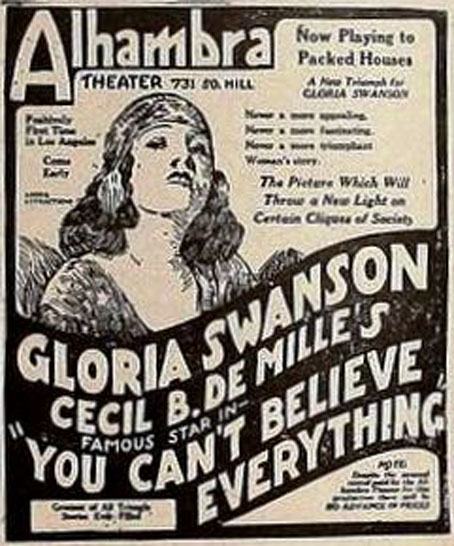
The supporting cast, including the experienced George Hernandez, Claire McDowell, and Edward Peil Sr., provides a solid foundation for the central drama. Their collective performances, though often in smaller roles, contribute significantly to the film's atmosphere and realism. They populate the world of the resort with believable figures, from gossiping socialites to concerned friends, creating a rich backdrop against which Patricia's ordeal unfolds. The ensemble's collective effort in conveying the societal pressures and judgments of the era is crucial, making the stakes for Patricia feel genuinely high. Each actor, through their nuanced expressions and body language, contributes to the overall narrative, allowing the audience to fully grasp the moral and social complexities at play.
Silent films, by their very nature, demanded a heightened sense of visual storytelling, and You Can't Believe Everything is a superb example of this artistry. The reliance on strong visual cues, carefully framed shots, and expressive intertitles to convey dialogue and internal monologues is masterfully handled. The camera often lingers on faces, allowing the audience to read the emotions etched there, drawing us deeper into the characters' inner worlds. The use of dramatic close-ups to emphasize a moment of realization or despair is particularly effective, a technique that was still evolving at the time but already showing its immense power.
The director, while not explicitly named in the provided information, skillfully orchestrates the various plot threads, building suspense and emotional intensity. The pacing, though deliberate by modern standards, perfectly suits the melodramatic genre, allowing each dramatic beat to resonate. The visual contrasts, such as the idyllic summer resort juxtaposed with the dark undercurrents of betrayal and despair, add layers of meaning to the narrative. The scene of Patricia's desperate swim from Hastings Carson's yacht, for instance, is not just a thrilling escape but a powerful visual metaphor for her struggle against overwhelming societal currents, a desperate fight for her very identity. This raw, physical challenge mirrors the emotional and social challenges she faces, creating a compelling visual parallel.
The film's use of space and setting also contributes significantly to its atmosphere. The summer resort, with its veneer of leisure and propriety, becomes a crucible for moral conflict. The beach, initially a place of solace, transforms into a site of crisis with Jim's suicide attempt, and later, a place of renewed hope. These shifts in the emotional resonance of locations are subtly but effectively conveyed through the visual language of the film. The way light and shadow are employed also plays a role, with darker scenes often reflecting the moral ambiguity or the characters' internal struggles, while brighter, more open settings symbolize hope or clarity.
The central theme of You Can't Believe Everything revolves around the destructive power of rumor and the profound impact of societal judgment on individual lives, particularly those of women. Patricia's unwavering commitment to Jim's secret, even at the cost of her own reputation, highlights a potent moral dilemma. It challenges the audience to consider the true meaning of honor and sacrifice. In an era where a woman's virtue was meticulously policed, Patricia's choice to remain silent in the face of public scorn is a radical act of defiance, albeit one born of compassion rather than rebellion.
The film also touches upon the theme of redemption, not just for Patricia, but significantly for Jim. His journey from despair to renewed purpose, culminating in his return to marry Patricia and extricate her from her social quagmire, provides a satisfying, if somewhat conventional, resolution. This narrative arc—where the initially weak or suffering character finds strength to save the virtuous one—is a classic melodramatic trope, offering a sense of hope and order restored. It speaks to a fundamental human desire for justice and for good to ultimately triumph over adversity.
The film's title itself serves as a meta-commentary on its narrative. It's a direct address to the audience, urging skepticism towards appearances and gossip, aligning with the film's central message about the dangers of unchecked rumors. This theme of deceptive appearances and the search for underlying truth can be seen echoed in other silent era dramas, such as A Study in Scarlet, where superficial clues often lead to erroneous conclusions. The film, in its own way, advocates for a deeper, more empathetic understanding of human actions, rather than a quick condemnation based on circumstantial evidence.
While You Can't Believe Everything is firmly rooted in the melodramatic conventions of its time, its core themes of sacrifice, reputation, and the search for truth continue to resonate. The film offers a fascinating glimpse into the social mores of the early 20th century, particularly concerning gender roles and the immense pressure placed on women to maintain an impeccable public image. Norman Sherbrook's screenplay, with its intricate plotting and compelling character arcs, demonstrates a keen understanding of dramatic construction, crafting a story that, despite its century-old vintage, remains engaging.
The enduring appeal of films like this lies in their ability to transcend their historical context and speak to universal human experiences. The struggle against injustice, the power of selfless love, and the ultimate triumph of integrity are narratives that never truly go out of style. Watching You Can't Believe Everything today is not just an exercise in historical appreciation; it's an opportunity to connect with a powerful story, brought to life by the extraordinary talents of silent era stars like Gloria Swanson and the dedicated craft of its filmmakers. It stands as a compelling example of how early cinema, even without the benefit of sound, could deliver profound emotional impact and thought-provoking social commentary. This film, like many of its contemporaries such as Out of the Wreck, showcases the compelling narrative structures and intense emotionality that defined the silent film era, proving that sometimes, the loudest stories are told in silence.
In conclusion, You Can't Believe Everything is more than just a historical artifact; it is a vibrant, emotionally charged drama that continues to captivate. Its intricate plot, memorable characters, and powerful performances, particularly by Gloria Swanson, make it a significant piece of silent cinema. It reminds us that appearances can be deceiving, and that true character is often revealed not in the spotlight of public approval, but in the quiet, courageous choices made in the face of adversity. A definite watch for any enthusiast of classic cinema, it’s a compelling narrative that proves that some stories, and the lessons they impart, are truly timeless.
IMDb —
1921
Community
Log in to comment.