DbcultAccessing Vault...
Cult Review
Senior Film Conservator
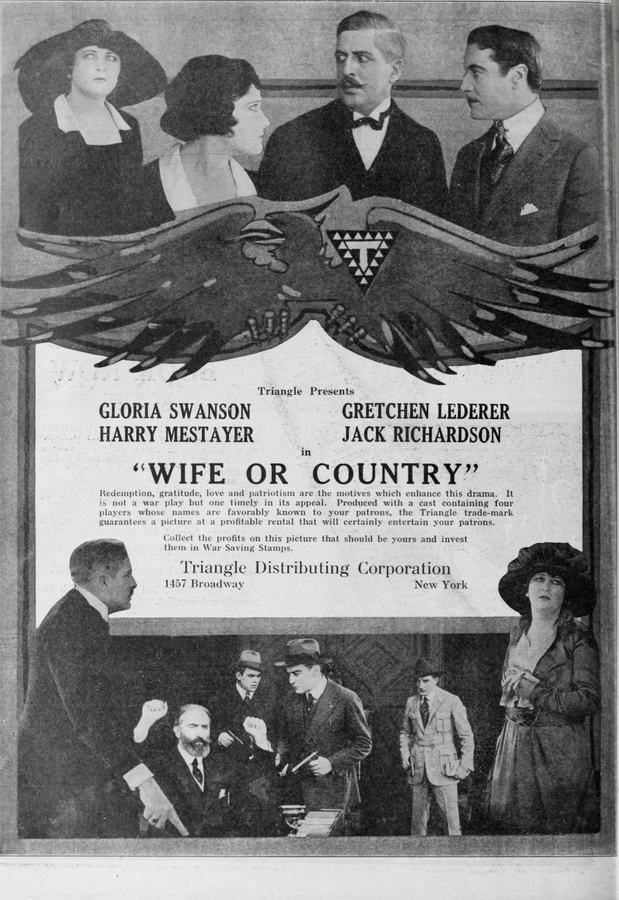
There's an enduring, almost spectral power to silent cinema, a unique ability to convey profound human drama through gesture, expression, and the sheer force of narrative. Wife or Country, a 1918 production, emerges from the crucible of World War I, a period when the lines between personal loyalty and national duty became agonizingly blurred. This film isn't merely a historical artifact; it's a raw, compelling exploration of sacrifice, redemption, and the insidious nature of moral compromise, all brought to vivid, if silent, life by a cast navigating the treacherous emotional terrain of wartime.
At its heart lies Sylia Hamilton, portrayed with a compelling blend of vulnerability and steely resolve by the nascent star, Gloria Swanson. Before her iconic turns in later, more celebrated works, Swanson here is a revelation, embodying a woman whose innate compassion sets her on a path fraught with peril. We meet Sylia as a beacon of hope for a man drowning in the abyss of alcoholism – a once-respected attorney, now stripped of his dignity and career. Her unwavering belief in his potential for rehabilitation is not just a plot device; it's the very foundation upon which the entire tragedy is built. It’s a testament to the era’s fascination with moral reclamation, a theme not uncommon in films of the period, such as Going Straight, which also explored the difficult journey of societal reintegration after personal failings, or even Giving Becky a Chance, where the possibility of a fresh start for a troubled character often drives the narrative. Sylia's tireless efforts to guide him back from the brink define her character and establish the depth of her commitment.
Sylia's success in rescuing the attorney, played with suitable gravitas by Jack Richardson, from his self-destructive spiral is genuinely affecting. Their subsequent marriage is presented not as a whirlwind romance, but as a union forged in the fires of gratitude and mutual respect, a quiet triumph against adversity. This establishment of a stable, ostensibly happy domestic sphere is crucial, as it provides the stark contrast for the devastation that is to follow. The film subtly builds this foundation, allowing the audience to invest in their happiness, making the impending unraveling all the more poignant. It speaks to a common narrative trope of the era, where domestic bliss was often depicted as a hard-won prize, vulnerable to external forces. The meticulous way the film constructs this initial period of peace only serves to heighten the sense of impending doom, a narrative technique that masterfully manipulates audience empathy.
However, the world outside their carefully constructed haven is rapidly descending into chaos. The outbreak of World War I acts as a seismic shock, reverberating through every facet of society, and Wife or Country masterfully uses this global conflict as the ultimate antagonist. The film doesn't shy away from depicting the intense nationalistic fervor and the suspicion that permeated everyday life. It’s within this charged atmosphere that Sylia, perhaps out of a misguided sense of obligation, or perhaps through subtle manipulation, is drawn into aiding the German cause. The specifics of her persuasion are deliberately vague, lending an air of tragic inevitability to her predicament rather than reducing her to a mere villain. This ambiguity allows for a deeper exploration of her character, suggesting a woman caught between conflicting loyalties, rather than one acting purely out of malice. The silent screen excels at conveying such internal turmoil through visual cues, and Swanson's expressions are pivotal here, showing a woman increasingly burdened by an impossible secret. This moral quagmire, where personal convictions clash with nationalistic pressures, resonates deeply with the French film La course du flambeau, which also explores the complex burden of duty and legacy in challenging times.
The narrative then becomes a tense tightrope walk, as Sylia navigates her secret activities while her husband, now a respected and influential figure in his profession, remains blissfully unaware. The irony is palpable: his career, so carefully rebuilt, now stands on the precipice of ruin, threatened by the very woman who saved him. This creates an unbearable dramatic tension, a ticking clock counting down to inevitable exposure. The film brilliantly uses the visual language of silent cinema to convey this growing dread – stolen glances, furtive movements, the ever-present shadow of discovery. It’s a theme that resonates with other contemporary thrillers of the era, such as The Lone Wolf or The Man Hunt, where espionage and hidden identities drive the plot, though Wife or Country grounds its intrigue in a far more personal, tragic sacrifice. The internal conflict of Sylia is a psychological thriller in itself, a constant battle against discovery and the crushing weight of her choices.
Gloria Swanson’s performance as Sylia is nothing short of captivating. Even in these early stages of her career, she possessed an undeniable screen presence, an ability to convey complex emotional states without uttering a single word. Her eyes, her posture, the subtle trembling of her hands – every detail speaks volumes about her internal conflict. We witness her struggle, her growing despair as the walls close in, the anguish (or 'angoisse', as in the film Angoisse) she silently endures. It's a masterclass in silent acting, demonstrating why she would become one of the most enduring stars of her generation. Her portrayal here sets the stage for the dramatic intensity she would later bring to roles that demanded profound emotional depth, showcasing a talent for melodrama that was both subtle and overwhelmingly powerful. The nuanced way she communicates Sylia’s deteriorating mental state, from hopeful wife to tormented conspirator, is a testament to her profound understanding of her craft and the silent medium's unique demands.
The climax of the film is an emotional gut-punch, a testament to the brutal realities of the time and the extreme measures individuals felt compelled to take. Faced with the imminent revelation of her wartime activities and the catastrophic impact it would have on her husband’s career and reputation – a career she painstakingly helped him rebuild – Sylia makes the ultimate, agonizing choice. Her suicide is not an act of cowardice, but one of profound, desperate love and self-sacrifice. It is her final, tragic act of preservation, ensuring that his hard-won stability remains intact, even if it costs her everything. This stark conclusion resonates with the fatalistic undertones found in other melodramas of the era, where characters often faced impossible moral quandaries, sometimes with similarly dire outcomes, as seen in films like The Triumph of the Weak or Forbidden Paths, which explored the crushing weight of societal expectations and personal failings. The film's unflinching portrayal of this ultimate sacrifice elevates it beyond mere melodrama, imbuing it with a tragic grandeur.
The film’s title, Wife or Country, encapsulates this central dilemma with stark simplicity. It forces the audience to confront the question: where do our loyalties truly lie when pitted against each other? Is it to the individual we cherish, or to the abstract concept of the nation? In a time of war, this question takes on a particularly sharp edge, and the film doesn't offer easy answers. Instead, it presents a harrowing scenario where the noblest intentions can lead to the most tragic ends. The screenplay, penned by Harry Mestayer and Charles J. Wilson, demonstrates a keen understanding of human psychology under duress, crafting a narrative that feels both grand in its scope and intimately personal in its impact. Their ability to construct a narrative around such a devastating moral choice is a testament to their storytelling prowess in the silent era, creating a profound sense of dramatic tension that permeates every frame.
While specific directorial credits for this era can sometimes be fluid, the overall aesthetic of Wife or Country speaks to a growing sophistication in silent filmmaking. The cinematography, though perhaps not groundbreaking by later standards, effectively utilizes lighting and framing to enhance the dramatic tension. Close-ups are employed judiciously to emphasize Swanson's powerful expressions, drawing the audience into her inner turmoil. The pacing, a crucial element in silent film, maintains a steady, inexorable march towards the tragic conclusion, allowing moments of quiet reflection to underscore the building suspense. The visual storytelling is paramount, relying on established cinematic conventions to communicate complex emotional states and plot developments without the aid of spoken dialogue. The camera acts as a silent confidante, capturing every flicker of emotion and every agonizing choice with a stark, unblinking gaze, making the audience complicit in Sylia's unfolding tragedy.
The supporting cast, including Gretchen Lederer and Charles West, provide solid performances that anchor Swanson’s more prominent role. Their reactions and interactions help to build the world around Sylia, making her isolation and ultimate sacrifice feel all the more profound. The ensemble cast, though often overshadowed by Swanson's star power, contributes significantly to the film's overall emotional resonance, ensuring that the audience experiences the full weight of the community's impact on individual lives. Harry Mestayer, also one of the writers, makes an appearance, adding another layer of authenticity to the ensemble. Their collective efforts create a believable backdrop against which Sylia's extraordinary choices play out, amplifying the sense of a society caught in the grip of war and suspicion. The subtle performances of these actors enhance the atmosphere of secrecy and impending doom, making the eventual revelation of Sylia’s activities all the more impactful.
One might draw parallels between the fragile foundation of the Hamiltons' marriage, built on a secret, and the themes explored in The House Built Upon Sand (1917). Both films delve into the consequences of hidden truths and the precariousness of lives constructed on deception, albeit with different narrative specifics. The overarching sense of impending doom, of a carefully constructed reality on the verge of collapse, is a powerful through-line connecting these narratives from the same prolific cinematic period. This fragile edifice of secrets also echoes the intricate, often treacherous, personal relationships depicted in films like Tangled Fates, where the intertwining destinies of characters are often determined by hidden pasts and difficult choices.
Wife or Country stands as a powerful testament to the human capacity for self-sacrifice and the devastating toll of war, not just on battlefields, but within the intimate confines of personal relationships. It's a film that asks uncomfortable questions about where ultimate allegiance lies and the price one is willing to pay for love, honor, and country. Its legacy lies not just in its early showcasing of Gloria Swanson's formidable talent, but in its unflinching portrayal of a moral quandary that remains, tragically, timeless. The film’s ability to evoke such profound ethical dilemmas without the aid of spoken dialogue is a remarkable achievement, underscoring the universal resonance of its themes.
While the stylistic conventions of silent film might require a different kind of engagement from modern audiences, the raw emotion and universal themes presented in Wife or Country transcend the limitations of its era. It reminds us that the choices we make, particularly in times of profound crisis, can have far-reaching and often devastating consequences, echoing the moral complexity found in other contemporary dramas like Forbidden Paths, where characters also grapple with difficult ethical decisions. The film serves as a potent reminder of the personal cost of geopolitical conflicts, a narrative that regrettably continues to find resonance in our contemporary world. The silent era, often dismissed as primitive, here demonstrates its capacity for sophisticated psychological portraiture, proving that emotional depth is not contingent on sound.
In an age where cinematic spectacle often overshadows nuanced storytelling, returning to films like Wife or Country offers a refreshing perspective. It's a drama that relies on the power of performance and narrative structure to evoke deep emotional responses, proving that some stories, particularly those centered on the human heart in conflict with itself, require no spoken dialogue to be profoundly heard. The film is a significant piece of cinematic history, offering insights into the social anxieties and moral compass of America during a pivotal global conflict, and a compelling watch for anyone interested in the foundational works of dramatic cinema. The careful construction of its plot, the compelling character arcs, and the sheer emotional weight of its conclusion combine to make it a memorable and thought-provoking experience, a true gem from the golden age of silent film that continues to speak volumes without uttering a single word.
The film’s exploration of espionage, though not overtly action-packed, builds a psychological tension that is arguably more potent than many overt thrillers. It’s the constant threat of exposure, the internal battle Sylia wages, that drives the narrative forward. This psychological depth, rather than physical confrontation, is where the film finds its strength, making it a compelling study of character under duress. The writers, Harry Mestayer and Charles J. Wilson, crafted a narrative that, while adhering to the melodramatic conventions of the time, delves into the ethical quagmire of wartime allegiances with surprising complexity. Their ability to weave personal tragedy into the fabric of a global conflict is commendable, resulting in a story that feels both epic and intimately devastating. The film's conclusion, while bleak, is a powerful statement on the ultimate price of loyalty and the crushing weight of secrets, leaving a lasting impression on the viewer, much like other dramas that grapple with profound moral trade-offs and their lasting repercussions.
Even today, over a century since its release, the silent film Wife or Country retains a melancholic charm and a powerful message. It's a stark reminder of the sacrifices made in the shadows of grand historical events, and a testament to the enduring power of silent cinema to communicate profound human experiences. It’s a film that deserves to be rediscovered, not just for its historical significance, but for its timeless exploration of the human spirit's capacity for both redemption and ultimate, heartbreaking sacrifice. Its narrative, though set in a specific historical moment, speaks to universal truths about love, duty, and the tragic consequences of choices made under duress, solidifying its place as a poignant and enduring work of art.

IMDb —
1927
Community
Log in to comment.